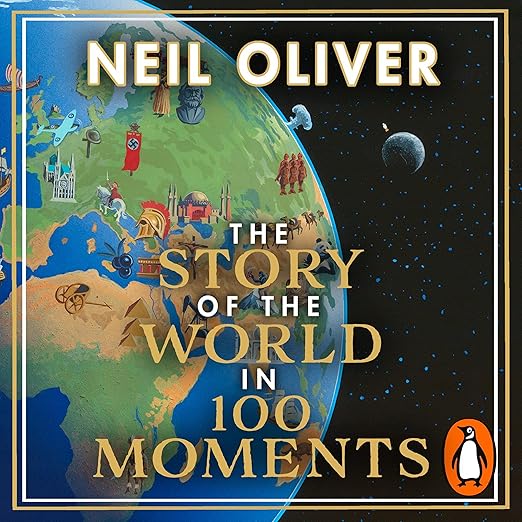
Clara’s Verdict
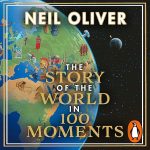
Neil Oliver is, above almost anyone else working in popular history today, a man who understands that a story told well is a story remembered. The Story of the World in 100 Moments is an ambitious, sweeping attempt to compress a million years of human experience into one hundred stepping-stones – and for the most part, it works handsomely. At nearly thirteen hours, this is proper company for a long journey, and Oliver’s voice, familiar from his television work, gives the whole enterprise the feel of sitting beside a very knowledgeable, very enthusiastic companion with an endless supply of remarkable anecdotes.
I should say upfront: this is popular history, not academic history. If you want footnotes and rigorous source citations, look elsewhere. If you want to come away from an audiobook feeling genuinely lit up about the breadth and strangeness of the human story, this belongs on your queue. Oliver’s gift has always been making the past feel immediate, and at twelve hours and fifty-five minutes, he has room to do it properly.
About the Audiobook
Oliver’s 100 moments range across continents and centuries, from the first evidence of human tool use through Genghis Khan’s conquests, the printing press, the first moon landing, and the birth of the internet. But it is the less obvious entries that make the book worth your time – the moments you would not find in a standard curriculum, the stories from civilisations that rarely appear in Western popular history. This is not a Eurocentric survey; Oliver genuinely ranges east to west and north to south, fulfilling the promise of the title.
The structure is deliberately impressionistic rather than chronological. Oliver is not trying to give you a timeline so much as a mosaic: stand back far enough, and the patterns of human aspiration, catastrophe, ingenuity, and folly become visible across the centuries. Each of the 100 chapters is relatively brief, making the collection well suited to listening in shorter sessions – though the cumulative effect, after a dozen or so moments, is considerable. You begin to feel the weight of all that accumulated human effort.
Published by Penguin Audio in September 2021, this arrived in the middle of a period when popular history was flourishing, and it has held up well against the competition. The breadth of the coverage means there will almost certainly be sections that surprise even well-read listeners.
The Narration
Neil Oliver narrates his own material, which is the right decision. He has a measured, slightly lyrical quality on the page that could easily tip into over-writing in less capable hands; when he reads it himself, the prose breathes naturally and the enthusiasms feel genuine rather than performed. The pacing is thoughtful rather than theatrical, which suits the material – this is a book that wants you to reflect, not merely to be carried along.
One reviewer noted the language is occasionally “florid,” and there is something to that. Oliver does have a fondness for the extended metaphor and the resonant adjective. If you prefer your history lean and plain-spoken, that may occasionally grate. For those who appreciate a writer who genuinely loves language and is not embarrassed about it, it is part of the pleasure rather than a distraction from it.
What Readers Say
Rated 4.6 out of 5 from 256 listeners, the response has been enthusiastic and consistent. Readers call it “a really interesting book” and “cleverly constructed,” with several describing it as a genuine page-turner – high praise for a work of narrative non-fiction. One reviewer appreciated the range: “so many interesting things in this wonderful book.” Another noted that Oliver is “a great storyteller” and recommended it unreservedly to those who do not typically seek out history books, which is the best possible compliment for a work of popular scholarship.
The critical minority flag the occasional verbosity, but no one comes away from the book feeling that their time was wasted. The consensus is that Oliver has produced something genuinely pleasurable and, in the best sense of that slightly underrated word, educational.
Who Should Listen?
Anyone with a passing curiosity about world history who finds traditional textbooks indigestible. Ideal for long commutes, road trips, or the kind of solitary weekend walks where a strong narrative voice makes the miles disappear. Also excellent for those who have enjoyed Oliver’s television series and want something with the depth and nuance that a thirteen-hour audiobook affords. Parents looking to introduce older teenagers to a love of history might find this a painless and genuinely engaging gateway.
The book has received attention not just as popular history but as a piece of sustained radio-style narration – the format suits it perfectly, because Oliver has always been a broadcaster first. The oral quality of his prose, which can feel slightly overwrought in print, becomes natural and engaging when heard aloud. This is one of those rare cases where the audio format is not a compromise but the ideal delivery mechanism for the material.
Discover all 100 moments on Audible UK – listen now.