Clara’s Verdict
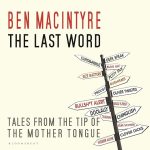
Ben Macintyre is one of Britain’s finest popular historians – his work on wartime espionage (Operation Mincemeat, A Spy Among Friends) has set a standard for the genre. The Last Word is something different: a collection of his columns on language, lexicography, and the endlessly strange life of English words, originally published in The Times. It is witty, erudite, and best consumed in small doses – which makes it, as it turns out, peculiarly well-suited to audio.
Macintyre reads his own work here, and the self-aware playfulness of the writing comes through in his delivery with a naturalness that suggests someone who genuinely enjoys being clever about language. That’s a narrower quality than it sounds. There’s a meaningful difference between the person who enjoys their own wit too much and the person who simply can’t help being funny. Macintyre is firmly in the latter camp.
About the Audiobook
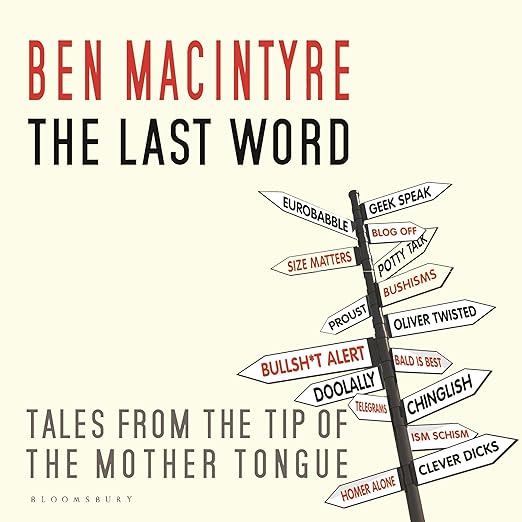
The book is, structurally, a collection of short pieces – the individual columns typically run three or four minutes in audio – covering the origins and evolution of English words, phrases, and usages. The range is considerable: from geek-speak and loophemisms to the advantages of having a personal signature word; from Spanglish and Chinglish to why the House of Commons lifts speak in plummy tones; from what JFK should have said in Berlin to the unexpected etymology of “avocado.”
This episodic structure is both the book’s greatest strength and its inherent limitation. As a collection rather than a sustained argument, it rewards dipping rather than marathon listening. Each piece is entirely self-contained, which makes it ideal for commutes or for filling the awkward ten minutes before sleep – less ideal for a long train journey where you might want to follow a continuous thread of thought. Macintyre himself acknowledges this in the original columns; he is writing for a newspaper readership that might encounter any individual piece in isolation.
The erudition is real, not performed. Macintyre has read widely and his observations carry the authority of someone who has been paying careful attention to language for a long time. The piece on the intersection of Conan Doyle and the historical antecedents of his characters is a particular delight. The section on collective nouns for professions is the kind of thing that will make you immediately want to share it with someone.
Published by Bloomsbury in September 2025, running to 11 hours and 55 minutes – a substantial collection that reflects the breadth of the original newspaper columns.
The Narration
Macintyre reads his own work with the dry wit that distinguishes the columns themselves. He doesn’t push the comedy, which is the right instinct; he trusts the material, delivering it with the timing of a writer who knows exactly which words carry the weight. This is harder than it sounds – many authors who read their own work push too hard, telegraphing the joke before it arrives. Macintyre doesn’t. The Daily Telegraph called the book “a sprinkling of delightful nuggets,” and Macintyre’s narration gives each nugget the space it needs to settle.
What Readers Say
The Last Word holds a 4.0 rating on Audible UK from 81 reviews. The responses cluster into two recognisable camps: those who find the episodic structure perfectly suited to their reading habits, dipping in over weeks and finding consistent pleasure in each encounter; and those who find the lack of sustained argument slightly monotonous in longer stretches. Both reactions are legitimate, and both say something true about the book. One reviewer compared it unfavourably to Alan Coren; another called it “an entertaining book, elegantly written and containing a fund of literary and philological anecdotes – good reading for anyone who cherishes language.” The Times found “myriad delights” in his language musings, naming it among its Books of the Year.
Who Should Listen?
A final note on the format question: Macintyre’s columns were written to be read in a newspaper, which means they were written to be consumed in a brief, focused burst and then set aside until tomorrow’s edition. The audiobook format – with its ability to be paused and resumed, dipped into and withdrawn from – actually replicates the original reading experience more faithfully than a physical book does. You can listen to three or four pieces on the commute in, come back to three or four more on the way home, and never feel you’ve missed anything by not reading straight through. This is how the material was designed to be encountered, and the audio format honours that design.
Anyone who reads The Times and appreciates good journalistic prose; lovers of language who want their reading to be pleasurable rather than pedagogical; commuters who want their journey time to be instructive without demanding sustained concentration. This is a book for people who find themselves irritated by sloppy usage and charmed by surprising etymologies – an overlap that describes a significant portion of the British reading public. Listen in small instalments and enjoy each piece on its own terms.
Find The Last Word on Audible UK. Also available on Kobo, Scribd, and Storytel.