Clara’s Verdict
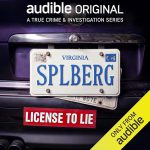
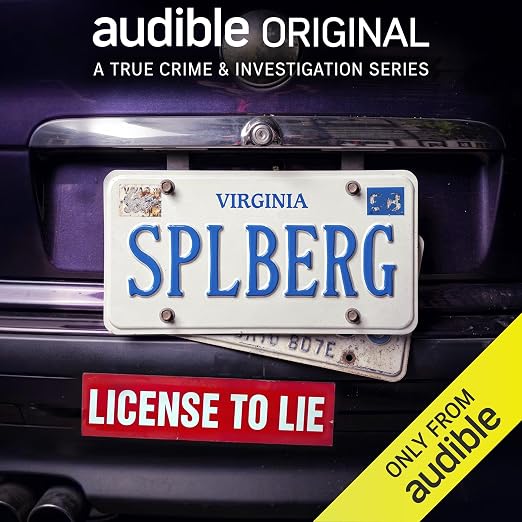
SPLBERG is the most peculiar audiobook I have picked up in a long while, and I mean that as a recommendation. It is not a novel and it is not a conventional narrated book. It is a piece of reported documentary journalism by Charlie Webster, told across episodes, running five hours and eight minutes, about a fourteen-year-old boy who arrived at a Catholic high school in suburban Virginia in the late nineteen-nineties claiming to be Steven Spielberg’s nephew, and about what became of the people who believed him.
Webster’s instinct for this material is very sound. She does not open with the debunking, which would be the obvious and much duller move. She opens with the arrival: a blue BMW pulling up outside a school, a vanity plate reading SPLBERG, the Prince of Hollywood stepping out. For the first stretch you are inside the spell rather than outside it, and that is the only honest way to tell a story about people who were taken in, because it makes you briefly complicit in the taking.
About the Audiobook
The setup is almost too neat to be true. Jonathan Taylor Spielberg is fourteen, he is filming his latest movie close by, and he is untouchable. He promises his new classmates that he will hook them up with Hollywood agents. It is the late nineties, so an invitation to the MTV Awards is close to the most valuable currency a teenager can be offered. Word about the new arrival travels through the year group at speed, and the school rearranges itself around him. Then, as the description puts it, the students start to realise they have been unwillingly cast in a twisted real-life drama.
The second movement is what makes this more than an anecdote. Twenty-six years later Webster’s own path collides with his, and she is, in her word, blindsided. The story stops being a period curiosity about credulous teenagers and turns present tense, with a journalist who has covered this territory before finding herself inside the story rather than reporting it from a safe distance. The listing invites you to stick with her until the end, and that framing is not idle. The last stretch is where the thing pays off, and it pays off on Webster rather than on the school.
It is structured in episodes with individual titles. Episode one, Uncle Steven, covers the arrival at the school and the vanity plate that turns heads. Episode two, Rock On Fakhran, has the promises getting bigger while, over in Hollywood, the real Steven Spielberg goes about his business entirely unaware. The published description is cut off partway through that second summary, so the full episode list is not visible on the listing. Audible Originals released it on 25 June 2026 and it has climbed into the current Audible UK charts.
The Narration
No narrator is credited on the listing at all, which is a metadata gap rather than a mystery. This is presenter-led journalism of the kind Webster has built a career on, and she is the voice guiding you through it. The description makes that explicit when it asks you to stay with her until the end, so what you are hearing is the reporter telling her own investigation rather than an actor performing somebody else’s script.
That matters a great deal for how the five hours feel. A hired narrator reading a script about another person’s investigation produces a fundamentally different listening experience from a journalist who was in the room, and the difference is the audibility of stake. When Webster says she was blindsided, you are hearing it from the person to whom it actually happened. Documentary audio lives or dies on exactly that, and it is why this format suits the story better than a printed book would have done.
The trade-off is that presenter-led documentary is a register some people find intrusive. Webster is present throughout, shaping and interpreting and occasionally steering you towards a reaction, and if you prefer your true crime delivered flat and neutral you will notice her hand on the material. I did not mind it, partly because the story genuinely does turn on her involvement rather than merely being introduced by her, but it is a matter of taste and worth knowing in advance.
What Readers Say
Nothing has accumulated yet. The UK listing carries no average score and not a single piece of written feedback, which is unsurprising for a title released at the end of June 2026 in a format that gathers responses slowly at the best of times. What the listing does have is chart placement, and for a five-hour documentary with no famous novelist attached to it, breaking into the Audible UK charts largely on word of mouth is itself a meaningful data point about how the material is landing.
Since I cannot report a listener consensus, here are my own hesitations. The episodic structure brings a certain amount of recapping between instalments, which is invisible when you listen weekly and mildly grating when you go through the whole thing in two sittings, as most audiobook listeners will. And Webster’s storytelling occasionally reaches for suspense that the material does not need. The facts of this case are strange enough on their own that the teasing is surplus to requirements, and the moments where she simply lays out what happened are consistently the strongest in the programme.
Who Should Listen?
Impostor stories have a devoted following and this is a good one, so if you have worked through the recent run of documentaries about people who talked their way into lives that were not theirs, this belongs on your list. It also rewards anyone interested in the specific texture of the late nineteen-nineties, when a claimed connection to a famous name simply could not be checked in thirty seconds on a phone. That impossibility is the entire reason the story was able to happen at all.
Steer clear if what you want is fiction, because this is reported nonfiction and the pleasures on offer are different in kind. Steer clear too if unresolved endings frustrate you, since real cases do not always close as neatly as invented ones and Webster is honest about the limits of what she could establish. At five hours it is a small commitment, and going in expecting journalism rather than a thriller will get you a great deal more out of it.