Clara’s Verdict
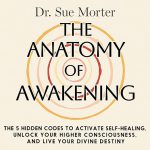
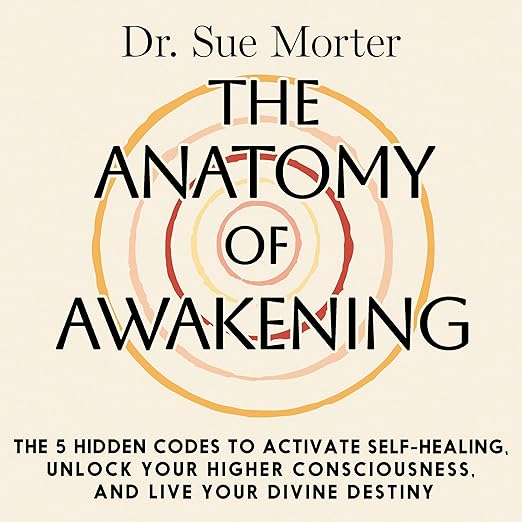
Dr Sue Morter operates at the intersection of quantum science, nervous system regulation, and what she describes as “embodied spirituality” – a space that can, in less careful hands, produce books that are simultaneously grandiose in their claims and frustratingly vague in their prescriptions. The Anatomy of Awakening is more grounded than its endorsement copy might initially suggest. Building on her previous work in The Energy Codes, Morter provides a framework that is specific enough to be genuinely useful, even for readers who approach the more metaphysical framing with some caution. At just over eleven hours it is a substantial listen, best experienced in dedicated portions rather than as background audio.
This is not a book for sceptics seeking a pure neuroscience lecture. It is a book for people who feel that something important is missing from their experience of themselves and their lives, and who are open to a framework that addresses both the scientific and the spiritual dimensions of that feeling. Within those parameters, it is a serious and thoughtful work.
About the Audiobook
Morter’s central argument is that conventional self-improvement operates at the wrong level of the self. Thinking differently is insufficient when the patterns we most want to change – the stress reactivity, the disconnection, the looping anxiety – are held in the body and in what she calls the “lower brain” stress circuits that routinely override conscious intention. The book’s project is to activate what she terms the “high brain centres” – the areas associated with creativity, compassion, integrated perception, and what she describes as the capacity to embody divine love.
This is pursued through five “quantum codes,” each corresponding to a transformative principle: accessing inner guidance and clarity; moving from overthinking into aligned action; regulating the nervous system at the somatic level; seeing through and beyond limiting narratives; and integrating shadow and light in everyday experience. The language is explicitly spiritual – there is invocation of a Greater Love beyond stress-driven reaction, of a “vibrational combination lock” within human consciousness – but the practical exercises draw from somatic work, breathwork, and established neuroscience. Morter takes care to situate her framework within scientific understanding rather than against it.
The book comes with a supplementary PDF of supporting materials, available within the Audible library. Endorsements come from Anita Moorjani, author of Dying to Be Me, and Michael Bernard Beckwith of the Agape International Spiritual Center – figures with credibility within the consciousness and wellness space. The book is published by Hay House, which positions it within the broader mind-body-spirit tradition while maintaining higher production standards than many in that genre.
The Narration
No narrator credit is available in the source data, which may indicate that Morter reads the book herself – a common choice for deeply personal spiritual and self-development work where the sense of transmission from author to listener is part of what is being offered. Listeners should verify the narration details on Audible before purchase if this matters to their experience. The reviews suggest the material lands with considerable emotional power in audio form, which implies the narration is well-suited to the content regardless of who delivers it.
What Readers Say
The audiobook holds a perfect 5.0 from 11 ratings. Andrea Wilhelms offered the brisk assessment: “It will change your life.” Alex108 described being “guided to connect with higher, invisible realms” and praised the cross-cultural breadth of Morter’s references and the practical framework she offers for personal awakening. Nick was moved to tears by the introduction alone, describing the book as “profound and so needed in today’s world.” Just_Me offered perhaps the most analytically precise review, distinguishing between “enlightenment as momentary experience” and “awakening as a life lived enlightened,” and positioning Morter’s contribution as showing how to make the former sustainable as the latter – a subtle but important distinction. Lynette May described it as “a living roadmap to a life you love living” rather than merely a book to be read and set aside.
Who Should Listen?
For listeners already engaged with spiritual practice – meditation, contemplative traditions, energy work, or consciousness studies – who want a more structured and scientifically informed framework. Also for those who have found purely cognitive self-help insufficient and who are open to somatic and energetic approaches to the patterns that purely mental techniques haven’t successfully shifted. The key question to ask before starting is whether you are comfortable with language drawn from both neuroscience and spiritual tradition; if you need one without the other, this book will not entirely satisfy you.
Followers of Morter’s previous work in The Energy Codes will find this a natural and deepened continuation of that framework, with more attention to the universal principles and the embodiment practices. New readers can begin here, though the earlier book provides useful grounding for some of the concepts.
Available on Audible UK, Kobo, Scribd, and Storytel. Listen to The Anatomy of Awakening on Audible UK.