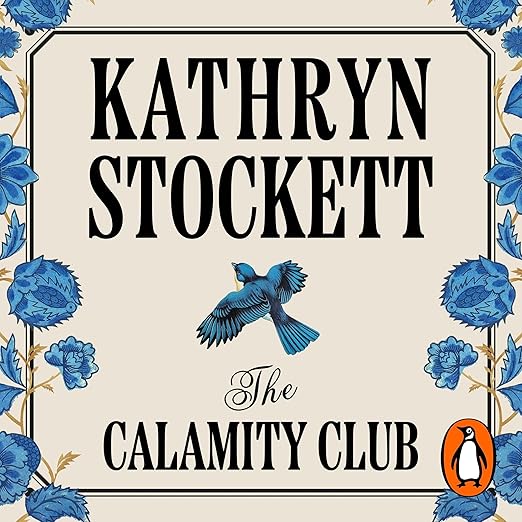
Clara’s Verdict
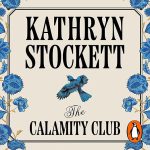
Twenty-eight hours and forty-five minutes. Kathryn Stockett’s first novel since The Help is not something you slip into a gap in your week, and I want to be clear about the scale before anything else, because the length is inseparable from both the book’s greatest strength and its one real problem.
Oxford, Mississippi, 1933. Eleven-year-old Meg Lefleur has been at the town’s orphanage since the Christmas Eve her mother did not come home, and has worked out the hard way that nobody is coming for her. Stockett gives her a voice that is sharp, funny and entirely without self-pity, and the first half of this novel is as good as anything I have listened to this year. It sits comfortably on the Audible UK bestseller list and deservedly so, though I will have something to say further down about what happens after the halfway mark.
About the Audiobook
Penguin brought this out on 5 May 2026, with January LaVoy narrating and a runtime just short of twenty-nine hours. Meg is one of the girls the orphanage has quietly classified as unadoptable, and she fights daily to stay sharp and to keep from being broken. Then Birdie arrives, a young woman who has travelled to Oxford to make her socialite sister remember the poor relations she walked away from, and for the first time in years it seems somebody might care what becomes of Meg.
Birdie has her own investigation running alongside. As the Depression tightens its grip, she begins to suspect that her sister’s charmed life rests on a great deal of untruth. Then she meets Charlie, a woman haunted by loss and pushed to the point of having nothing left to lose. The three of them find kinship among what the listing calls a disreputable, determined band of women, in a town where even the smallest act of defiance carries a genuine cost.
Stockett’s epigraph tells you the register she is working in: “You give a girl a taste of fresh air and then you take it away”. The listing describes the book as bold, heartwarming and riotously funny, and the last of those is accurate in a way that surprised me. There is a great deal of comedy here, most of it in Meg’s observations of the adults around her, and it earns the darker material rather than undercutting it.
The Narration
January LaVoy has an assignment of unusual scale here, and two distinct problems to solve within it. The first is Meg. An eleven-year-old first-person narrator is the most common casualty of audiobook narration, because the temptation to make her sound like a child is almost irresistible and always fatal. LaVoy declines it completely. Her Meg is resolute rather than cute, pitched at the age the character actually is rather than at an adult’s idea of a plucky orphan, and the effect is that Meg’s jokes are funny and her losses genuinely hurt.
The second problem is the ensemble across a listen this long. A large cast of women in a small Mississippi town, divided by class as much as by anything else, has to stay individually identifiable across nearly twenty-nine hours, much of which most people will hear days apart. LaVoy handles the class distinctions as carefully as the regional ones, so that Birdie’s socialite sister and the women of the orphanage are separated by more than accent alone. Her stamina is the quiet achievement: the performance at hour twenty-six is calibrated exactly as it was at hour two, with no sense at all of a reader running down. If you have hesitated over a listen of this length, the narration is the strongest argument for taking it on.
What Readers Say
Thirty thousand ratings sit behind an average of 4.7, which for a book barely three months old indicates the sort of reception publishers dream about. Helen Ward’s response is representative of the enthusiasm, and contains, buried within it, the most acute structural observation anybody has made about this novel.
It did feel like two books put together in one which I loved, I wished it had 600 more pages telling us what happened to all the girls!
Mrs SLT is more succinct, calling it “a great story of strong women” and adding “Just sad it had to end.” But the four-star review from Jacquimen is the one prospective listeners should read, because it identifies that same two-part structure and reaches precisely the opposite conclusion. Having found the opening irresistible and loved the Meg material especially, she reports that “the second half I speed read and found it so drawn out”, and says a firmer edit would have earned the fifth star. I am closer to Jacquimen than to Helen Ward on this one. The second movement is looser, and at this runtime looseness is expensive.
Who Should Listen?
Nearly twenty-nine hours is a season of company rather than a book, and that is the right way to approach it. Anyone who wants to live inside a place and a period, who reads historical fiction for character and voice above plot, and who has been waiting a long time for Stockett to publish again will find this repays the investment many times over. Meg alone is worth the commitment, and the audio format suits a novel this conversational, because Stockett writes for the ear and LaVoy simply hands the sentences back to you as they were built.
Set it aside if you want a tightly plotted narrative, because the pacing in the back half genuinely sags and more than one reader has said so plainly. Depression-era poverty, child abandonment and institutional cruelty are handled with warmth but not with distance, so it can be a heavy listen in stretches. Anyone prepared for a long, discursive, generous novel about women improvising their way through a bad decade will find it a considerable pleasure.