Clara’s Verdict
The idea at the centre of this audiobook is one I wish somebody had put to me at twenty-six, when I was still convinced that the people who spoke first in meetings knew something I did not. Confidence, the argument runs, is not the absence of fear. It is the willingness to move while your knees are still shaking. Any woman who waits to feel completely certain before putting a big idea on the table, or before asking to be paid more, will be waiting a very long time. That single reframe is worth anybody’s attention, and it is put here without hedging.
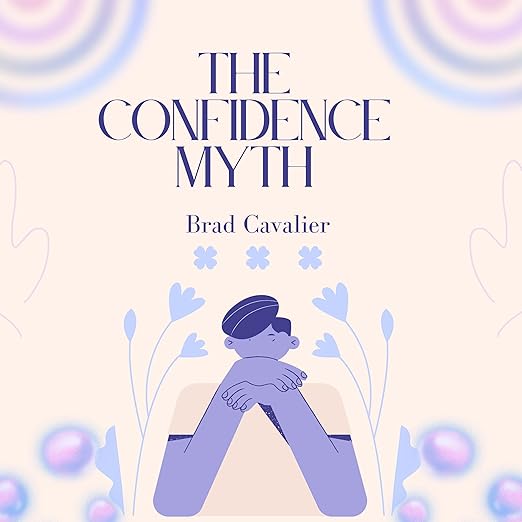
What I cannot tell you with the same certainty is what you are actually buying, because this listing contradicts itself in two specific places and I would rather set them out at the top than bury them politely. The author credit reads Brad Cavalier, while the description names Helene Lerner as the source of the argument, the survey behind it and the strategies it lays out. Separately, all three of the reviews attached to this entry were written before the stated release date of 1 March 2021, two of them as far back as 2015. The approval you can see on the page belongs to a text that has been circulating for years. It says nothing whatever about this recording.
About the Audiobook
The case is stated plainly. We need more women running things, and more women at every level of business, government and the non-profit sector. The obstacle, on this account, is not a shortage of confidence but a misunderstanding of what confidence is, which is why the definition above carries so much of the book’s weight. Gender bias is named directly as one of the obstacles in the way, so it is at least on the page, even though the strategies on offer are individual ones.
The evidence base mixes the personal and the surveyed: Lerner’s own experience, the experiences of other women in senior roles, and a survey of more than five hundred working women. What makes it a practical book rather than a theoretical one is the apparatus. The description promises dozens of what it calls Confidence Sparks, “simple but powerful exercises and techniques” meant to be used rather than admired. That is a sensible structure for a career book and a demanding one for audio, a point I will come back to.
Two production notes. The publisher field names Gildan Audio and Blackstone Publishing together, two imprints on one entry. The running time is missing altogether, which is a real gap on a book built out of exercises, since length is the only clue you have as to whether those exercises are given room or simply listed. Check the duration for yourself before buying.
The Narration
The narrator field on this listing is empty. That is not a trivial gap on a title of this kind, and the muddle over the author credit makes it worse, because I cannot even tell you whether the person at the microphone is the woman whose work the description sets out, a hired reader, or the name sitting in the author slot. Guessing would not help you. Play the sample and treat it as the only real evidence available about the performance.
It is worth knowing what the material asks of whoever is reading it, because instructional non-fiction is harder to read well than it looks. On the page, an exercise announces itself with white space, a heading, a change of typeface. In your ears it has to be signalled entirely by pace and pitch, and a reader who barrels through a Confidence Spark at the same tempo as the surrounding prose leaves you unsure whether you were meant to stop and think. The description says the book draws on the author’s own experience and on that of other female leaders, and where those two registers sit side by side they need holding apart, or the testimony blurs into the argument and stops functioning as evidence.
Then comes the question of tone, which on encouraging material is where most readings go wrong. Warmth is the right instinct and it is easily overdone. Push it too hard and a serious argument about bias in the workplace turns into a pep talk, which is precisely what would undercut it. What this needs is the register of a colleague who has been through the same rooms, not a coach with a whistle.
What Readers Say
The score stands at 3.8 out of five from 28 ratings, a modest pool in which individual opinions carry a great deal of weight. Three written reviews are attached, and all three are warm.
Vee, at five stars, supplies the most useful detail in the set, which is how the book behaved in company: “Easy read with real life useful information. Read this for a Women’s group book club meeting and everyone had positive feedback.” A book that plays well in a group is doing something a solo read cannot test, and this is the kind of material that lives or dies on being discussed rather than absorbed.
Four stars from Pebblesk777, whose review describes the effect rather than the content, reporting that it “gives you the tools you need to move forward with more confidence and pursue the things that fear may have held you back from in the past.” Beth, five stars from Brazil and the earliest of the three, broadens the framing:
A book that motivates men and women to continue their journey in life. It is not only about career, but the principles shared can be applied in any aspect of life we need to influence others.
One pattern matters more than any individual verdict here. Vee mentions reading twice over, and not one of the three says a word about how the book sounds. The dates said as much already, and the reviews confirm it: these are responses to the text, and the audio edition still has no public verdict on it that I can see.
Who Should Listen?
The natural audience here is early- or mid-career and recognises the specific habit of waiting to feel ready, along with anyone who manages people who do. It suits a commute and, on Vee’s evidence, a book group, because the exercises are the kind of thing you can carry around and argue with. Anyone who prefers usable prompts to long theoretical chapters is buying exactly the right book.
Give it a miss if what you want is a data-led anatomy of structural bias, because the description promises practical strategies and exercises rather than a study of the structures themselves. Approach with caution, too, if production credits matter to you, because on this entry you can see neither who is reading nor how long you will be listening. That is a lot of unknowns for a book whose central argument I happen to think is right.