Clara’s Verdict
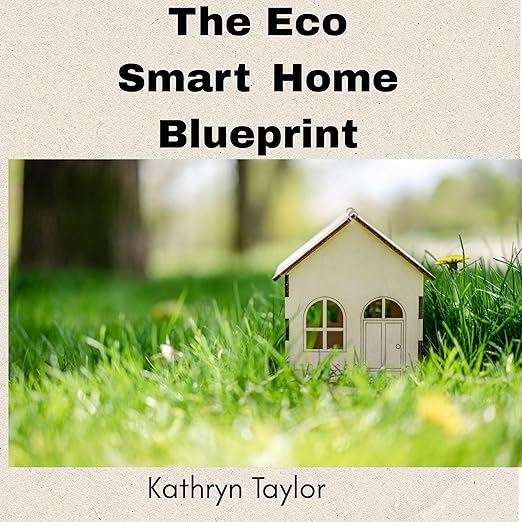
Sustainable building has suffered, as a subject, from an excess of evangelism and a shortage of practical specificity. Too many books on eco-home design begin with the assumption that the listener needs to be converted to caring about the environment rather than simply helped to build a better house. Kathryn Taylor’s The Eco-Smart Home Blueprint is refreshingly free of this tendency. It assumes you already want to build or renovate efficiently and gets directly to the question of how, which makes for a more useful and more honest listen than much of what the genre currently offers.
At just over an hour, this is necessarily a primer rather than a comprehensive guide. But within that constraint, Taylor covers the fundamental principles of eco-smart home design with clarity and practical intelligence. The advice is grounded in real building and renovation choices rather than aspirational technology that most homeowners cannot access or afford, and the emphasis on intelligent design over expensive gadgetry gives it a durability that more product-focused guides lack.
About the Audiobook
The blueprint Taylor offers is built around passive design rather than expensive active systems. The core insight is that intelligently designed buildings use less energy by virtue of how they are oriented, insulated, and ventilated, before any smart technology is introduced. This is an important distinction that the book makes clearly and early: the most cost-effective eco-home improvements are design decisions made before construction begins, or during renovation, rather than technology bolted on afterwards at significant expense. The book is explicitly not about gadgets, and Taylor is direct in arguing that intelligent design choices pay for themselves over time in ways that consumer technology rarely does.
The content covers heat-retention strategies through insulation and material choice, layout principles that maximise natural light and airflow, sustainable building materials with realistic assessments of their cost and availability in the UK market, and the cost-benefit analysis of various energy systems. Taylor is careful to frame everything in terms of long-term financial payback rather than upfront cost, which keeps the guidance practical for homeowners working with real budgets rather than aspirational renovation programmes.
The audiobook also makes the case that energy-efficient homes are not cold, dark sacrifices but genuinely more pleasant environments to inhabit. This argument needs making more often than it does. Popular culture still tends to associate green building with austerity rather than quality, and Taylor makes the counter-argument well, drawing on examples of passive house design and traditional building techniques that produced comfortable, thermally stable environments long before anyone had thought about sustainability as a concept.
The Narration
David Reynolds reads with an authority and directness appropriate for technical guidance. His delivery is clear and precise, which matters for material that requires listeners to follow spatial and structural concepts by ear alone, without the diagrams and illustrations that a print or visual format could provide. The lack of visual aids is the inherent challenge for any construction guide in audio format, and Reynolds compensates by articulating concepts at a pace that allows for mental visualisation. He does not rush through technical terminology, and when he introduces concepts like passive solar gain or thermal mass, he takes the time to make them concrete rather than leaving them as abstractions. A competent, purposeful performance that gets out of the way of the content.
What Readers Say
The Eco-Smart Home Blueprint has not yet accumulated listener reviews on Audible UK. Published in March 2026, it is early days for a specialised title of this kind. The subject matter has a clear and growing audience among UK homeowners navigating both rising energy costs and increasing regulatory requirements around building performance, including the new requirements around energy performance certificates that have become relevant to anyone buying, selling, or renovating property in recent years. That audience should find this title in time through relevant communities and recommendations.
A word on what the book does not cover: it does not address the planning permission landscape for eco-home alterations in the UK, which is a significant practical barrier that homeowners will need to navigate separately with their local authority. Similarly, the guide does not delve into building-integrated photovoltaics or community energy schemes, both of which are increasingly relevant to UK homeowners. These are omissions rather than failures. The book has chosen its scope deliberately, and within that scope it is thorough and practically useful for the homeowner approaching eco-design for the first time.
Who Should Listen?
Homeowners considering new builds or significant renovations who want a principled framework for thinking about energy efficiency before engaging with architects or contractors will find this a useful starting point. It is also worth a listen for anyone who suspects they have been given conflicting or self-serving advice by the energy systems industry and wants an independent perspective on what actually makes a difference. At just over an hour, the commitment is minimal. For a complete picture of both passive design and active solar generation, consider pairing it with James Anthony Sheils’ From Rooftop to Return, also available on Audible UK, which covers the solar investment side with the same practical clarity.