Clara’s Verdict
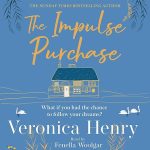
I have a weakness for novels about women who do something impetuous with property and are consequently required to rebuild their lives around the consequences. It is a subgenre with a distinguished ancestry – Maeve Binchy, Rosamunde Pilcher, and a great many novels involving unreliable farmhouses in Provence and their emotionally complicated purchasers. Veronica Henry’s The Impulse Purchase belongs to this tradition and honours it well. Three generations of women, a rundown Somerset pub, and a community that rediscovers its heart through them – it sounds cosy, because it is, and it is the better for knowing exactly what it is and proceeding with confidence. Fenella Woolgar’s narration is pitch-perfect, the reviews from UK listeners are warm and genuine, and this is exactly the kind of audiobook that justifies the medium: the Somerset countryside and the hum of a pub returning to life are more present on audio than they could ever be on a page.
About the Audiobook
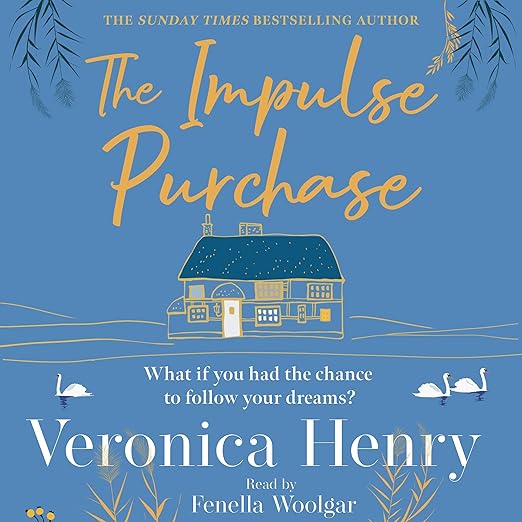
Cherry has a moment of impulse – the kind that solicitors and mortgage advisers have nightmares about – and buys a gorgeous but entirely neglected pub in Rushbrook, the Somerset village she grew up in. The Swan has seen considerably better decades. What Cherry has not quite considered is that restoring it will require not just her own energy and capital but that of her daughter Maggie and granddaughter Rose, who find themselves uprooted and installed alongside her in varying degrees of willingness and apprehension.
Henry structures the narrative around these three women with skill and evident affection for all of them. Cherry drives the project with the unreasonable optimism that impulse purchases require – the kind of optimism that looks like either inspiration or delusion depending on how things turn out. Maggie is placed in charge of the kitchen, and the way Henry uses food – the menu, the sourcing, the daily rhythm of a pub kitchen coming back to life – as a mirror for Maggie’s emotional journey is one of the novel’s more accomplished structural moves. Rose tends the garden that slopes down to the river and brings a younger woman’s particular combination of vulnerability and openness to experience that provides the novel’s most tender storyline.
The Somerset setting is rendered with genuine specificity – not the generic British countryside of lazy pastoral fiction, but a particular landscape with its own loyalties, rhythms, and textures. The village community that slowly returns to The Swan as the restoration progresses is rendered with the kind of affectionate attention to minor characters that distinguishes writers who have actually observed community life from those who have merely imagined it. The local GP, the eccentric regular, the initially resistant neighbours – they all feel like people rather than types.
At thirteen hours and twenty-three minutes, this is a generous listen – long enough to settle properly into the world, not so long that it outruns its emotional resources. The pacing is assured, and the novel earns its warmth rather than simply asserting it.
The Narration
Fenella Woolgar is one of those narrators who understands that contemporary uplifting fiction does not want to be acted; it wants to be inhabited. She finds the emotional register of the novel – warm but never saccharine, hopeful without denying difficulty – and sustains it with apparent ease across the full thirteen hours. The three central characters are distinct without requiring theatrical differentiation; you know who you are with from the quality of attention Woolgar brings to each woman’s voice. The village characters feel present rather than sketched, which matters in a novel where community is a central subject. This is the kind of narration that makes you want to listen rather than read, which is not always the case with this genre.
What Readers Say
The Impulse Purchase holds a 4.5 out of 5 from seven UK listeners, all writing with evident personal engagement with the novel. One called it “a hug of a book” – which captures something real about its quality and intent. Another praised the descriptions of food as “simply sublime” and the village life as genuinely idyllic. A listener who had never read Henry before said they would be buying more of her books immediately. One thoughtful reviewer noted that the title drew her in because she recognises the impulse, and that the novel earns its conclusion – that the heart overruling the head is not always a mistake. Jill Mansell called it “gorgeous,” Milly Johnson described it as “an exquisite story bursting at the seams with summer, hope and love,” and Sarah Morgan called it “uplifting, inspiring and guaranteed to make you hungry.” These are not blurbs assembled from indifference.
Who Should Listen?
Ideal for anyone who loves uplifting, character-driven fiction about second chances, family bonds, and the possibility of community. Particularly well suited to anyone who has ever harboured an impulse towards doing something impractical with a property and making it wonderful. Also excellent holiday listening – or the kind of audiobook you put on during a long walk in the sort of landscape the novel describes, which will make you want to move to Somerset immediately. Fans of Jojo Moyes, Jill Mansell, and Rosamunde Pilcher will find this entirely satisfying and are likely to seek out Henry’s other novels upon finishing.
Find The Impulse Purchase on Audible UK, or via Kobo, Scribd, and Storytel.