Clara’s Verdict
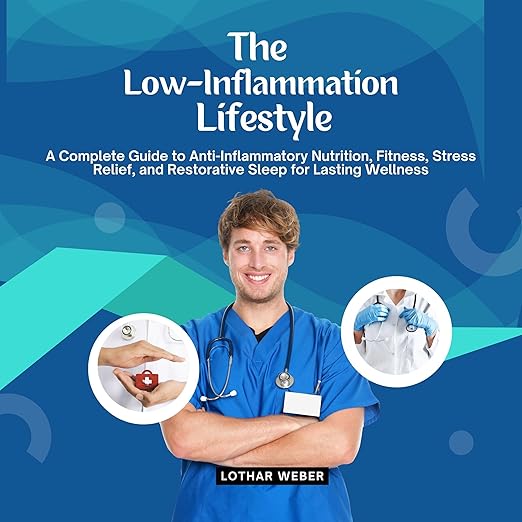
Chronic inflammation has become something of a catch-all concept in popular wellness writing, which means that books on the subject range from the genuinely evidence-based to the frankly credulous. The Low-Inflammation Lifestyle by Lothar Weber positions itself firmly at the practical, accessible end of the spectrum – this is not a book about miracle cures or dramatic dietary overhauls, but about the cumulative effect of realistic, sustainable daily habits. That is a more useful framing than many in the genre manage, and the 73-minute runtime forces a welcome concision.
Jake Andrews narrates with a calm authority that suits both the subject matter and the intended listening context – this is a book designed to be heard rather than read, and the narration reflects that.
About the Audiobook
Weber begins by addressing a fundamental confusion: the difference between healthy and chronic inflammation. Acute inflammation is the immune system doing its job – responding to injury or infection, then resolving when the threat passes. Chronic inflammation is something different: a persistent, low-grade immune activation that has been linked to a wide range of conditions, from joint pain and fatigue to cardiovascular disease and metabolic dysfunction. Understanding that distinction is the foundation from which everything else in the book follows.
The practical content covers several interconnected areas: anti-inflammatory eating principles that emphasise affordable food choices rather than expensive superfoods; gentle movement practices that reduce inflammation without adding physical stress; stress management techniques that calm the nervous system rather than overriding it through effort; sleep habits that support immune balance; and environmental factors – household products, pollutant exposure, sedentary patterns – that quietly increase chronic inflammation without obvious symptoms. Throughout, Weber emphasises progress over perfection and realistic habit formation over dramatic change.
At 1 hour and 13 minutes, this is an audiobook designed to be listened to in a single session, or returned to repeatedly as a reference for specific areas. It does not replace professional medical advice, and it says so clearly.
The Narration
Jake Andrews narrates with a measured, unhurried pace well-suited to health and wellness content. The calm delivery – neither clinical nor performatively warm – creates a listening environment in which the practical information can be absorbed without distraction. For a book explicitly designed for listeners managing fatigue, pain, or stress-related symptoms, the tonal register matters: Andrews sounds like someone giving sensible advice rather than selling something. The short runtime means there is no opportunity for fatigue to set in, and the pacing keeps the material moving without rushing it.
What Readers Say
The Low-Inflammation Lifestyle was published in February 2026 and does not yet have a substantial Audible UK review base at the time of writing. The audiobook occupies a crowded but genuinely useful niche – health and wellness content that is short enough to actually be consumed by people who are, by definition, managing energy limitations. The emphasis on affordable, realistic habits rather than expensive supplements or dramatic elimination diets addresses one of the most common frustrations with mainstream wellness content: the assumption that listeners have both unlimited time and unlimited budget for their health. Weber’s approach does not make that assumption.
Who Should Listen?
Anyone managing chronic fatigue, joint discomfort, stress-related symptoms, or persistent low-grade illness who wants a practical, evidence-grounded overview of the lifestyle factors that influence inflammation. Also valuable for listeners who have encountered inflammation in the context of specific conditions – rheumatoid arthritis, IBD, cardiovascular disease, autoimmune conditions – and want to understand what dietary and lifestyle changes are supported by evidence. Not a medical resource, but a thoughtful and realistic starting point for a conversation about daily habits and long-term health.