Clara’s Verdict
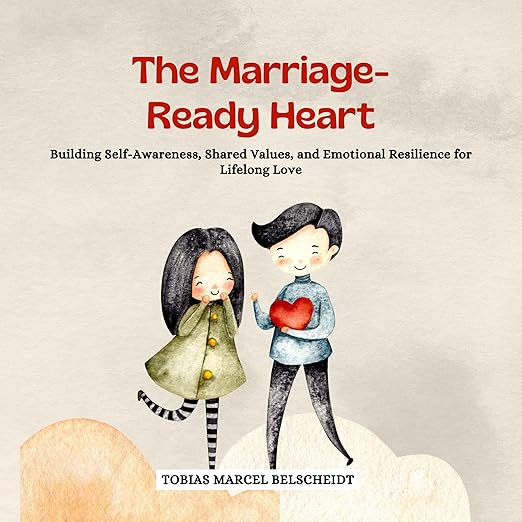
Self-help books about relationships tend to cluster into two unhelpful camps: the blandly optimistic, full of affirmations about deserving love and finding the right person, and the pseudo-therapeutic, drowning the reader in attachment-theory jargon while delivering rather less practical guidance than the packaging promises. The Marriage-Ready Heart lands in neither. Tobias Marcel Belscheidt has written a genuinely thoughtful guide that addresses something most relationship books actively avoid: the internal work that needs to happen before a commitment, rather than the relational dynamics that unfold afterwards. It is an unusual and useful distinction, and the book makes the most of it.
At just over four hours, this is not a sweeping overview of relationship psychology. It is a targeted, focused guide for people at a specific moment: approaching a serious commitment and wanting to do so with clarity and genuine readiness rather than assumption and optimism. For the right reader, at the right moment, this is a quietly valuable listen.
About the Audiobook
Rather than focusing on weddings, proposals, or the practical logistics of shared life, Belscheidt works inward – examining the personal history, emotional patterns, communication styles, and unresolved wounds that each individual brings to a partnership long before any vows are exchanged. The premise, stated clearly early in the book, is that readiness for marriage is not primarily about having found the right person. It is about having done sufficient work on yourself to be capable of the kind of sustained, honest, and adaptable partnership that a lasting marriage requires.
The book moves through emotional intelligence, the development of self-awareness, value alignment, conflict resolution, trust, and intimacy – covering each with genuine care and without the padding that inflates many personal development titles. Belscheidt draws on reflective practice throughout, asking readers to examine their emotional triggers, their expectations, and the ways they have learned to manage (or avoid) difficulty in previous relationships. The guidance is practical in the best sense: not a set of rules, but a set of honest questions that help the reader locate themselves accurately.
The emphasis on emotional maturity over romantic feeling is the book’s strongest intellectual contribution. Belscheidt argues, persuasively, that the idealised view of marriage – as something sustained primarily by love and mutual attraction – sets people up for difficulty when the inevitable challenges of sustained partnership arrive. Understanding that the work is continuous, and developing the skills to engage with it honestly, is the more reliable foundation.
Belscheidt is notably careful not to moralize. He does not tell readers that they should or should not marry, or that any particular communication style is correct. The book’s ethical framework is one of honesty and self-awareness rather than prescription, which gives it a respect for the reader’s autonomy that more directive self-help titles tend to lack. That respect is one of the reasons the guidance feels genuinely useful rather than performative.
The Narration
Jake Andrews narrates in a warm, measured tone well-suited to the material. Content of this kind – reflective, practical, occasionally challenging – benefits from a voice that conveys genuine engagement rather than clinical detachment, and Andrews delivers that consistently. His pacing is unhurried in a way that actually serves the listener: there is space to sit with each idea before the next arrives, which is a quality you want in a book that is essentially asking you to slow down and reflect. At four hours, this is a focused listen that does not overstay its welcome.
What Readers Say
As a newly released title published in early 2026, The Marriage-Ready Heart does not yet carry a public rating on the platform, which is entirely typical for specialist personal development titles in their first weeks on the platform. Books of this specificity tend to find their readership slowly and through personal recommendation rather than through algorithmic discovery, which is also why their eventual reviews tend to be notably more considered and specific than the responses that broad-audience titles attract. The book’s specific focus makes it more likely to find its audience through word-of-mouth among readers who are actively engaged with pre-marital preparation, couples counselling, or personal growth work, rather than through broad platform discovery. The quality of the writing and the seriousness of the approach suggest it will find the readers it is looking for.
Who Should Listen?
Particularly relevant for individuals approaching a serious commitment who want to prepare thoughtfully and honestly rather than assume everything will work itself out. Also genuinely valuable for couples who have been together for some time and want to understand their established patterns more clearly before making things formal. Useful, too, for anyone who has experienced significant relationship difficulties and wants to understand their own contribution more clearly before moving forward. A grounded, intelligent alternative to more sensational relationship content, and a thoughtful companion for one of life’s more consequential decisions.