Clara’s Verdict
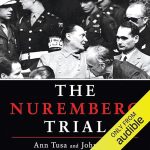
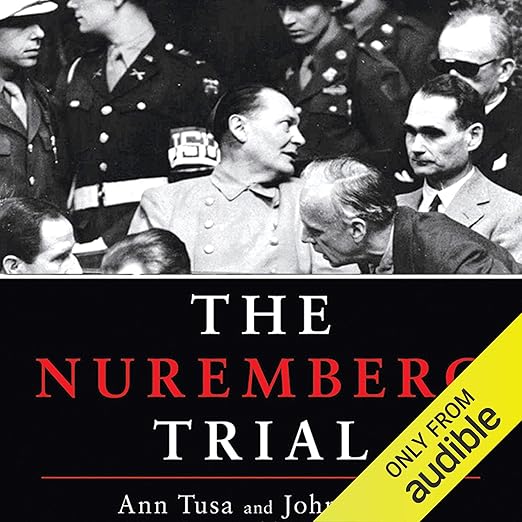
I came to The Nuremberg Trial by John Tusa in the middle of a week when I had been reading about the origins of international humanitarian law, and the timing could not have been more apt. At twenty-five hours and forty-five minutes, this is a substantial commitment — and it earns every minute of it. Tusa, a distinguished broadcaster and former BBC correspondent, and his co-author Ann Tusa, bring to Nuremberg the rigour of investigative journalism combined with the sweep of serious historical narrative. The result, first published decades ago and now carrying 772 ratings on Audible UK at 4.3, remains one of the most thorough accounts of the trial in audio form.
What separates The Nuremberg Trial from the many books that have treated this subject is its insistence on taking the legal process seriously. Tusa does not simply dramatise the spectacle of war criminals in the dock. He asks the harder question: how did a group of allied powers, with wildly different legal traditions and sometimes conflicting political agendas, construct a legal framework capable of holding men to account for crimes that had no clear precedent in international law?
About the Audiobook
The trial at Nuremberg, which ran from November 1945 to October 1946, put twenty-four major Nazi figures — including Hermann Goering, Rudolf Hess, Joachim von Ribbentrop, and Albert Speer — before an international military tribunal. Tusa reconstructs the proceedings from the ground up: the months of argument about jurisdiction and the definition of crimes against humanity before a single defendant took the stand; the logistical feat of simultaneous translation across four languages; the tension between the British legal team’s preference for due process and the Soviet delegation’s preference for predetermined outcomes.
The individual portraits are among the book’s great achievements. Goering’s icy intelligence and tactical brilliance during cross-examination; Ribbentrop’s collapse under scrutiny; the strange dignity that some defendants maintained and the absence of it in others. Tusa renders each of these figures with analytical clarity, neither sensationalising nor exculpating. The book also situates the trial within post-war Germany, attending to what ordinary Germans thought of their former leaders standing accused in a building surrounded by the rubble of their thousand-year Reich.
The Narration
Ralph Cosham’s narration is well suited to the material. His voice carries authority without ever becoming pompous, and he manages the book’s considerable tonal range — from the arid procedural to the genuinely harrowing — with consistency. Over twenty-five hours, a narrator’s stamina and intelligence matter as much as their voice quality, and Cosham sustains both. He is particularly effective in the passages that move between courtroom testimony and Tusa’s analytical commentary, where the shift in register requires careful handling.
What Readers Say
The 772-strong Audible UK rating pool tells a consistent story. Reader1, a law graduate, singles out the chapters on the tribunal’s jurisdictional construction as exceptional: “It was the precedent for all the war crimes trials since, which I think shows that they set it up well.” Bookgeek praises the book’s balance between “dry legalistic details and the human stories, without resorting to tabloid-level caricaturing of complex characters.” Mr J Tarbett calls it “a masterly piece on many levels.” The sole dissenting note comes from Sattina, who finds the book too partial toward the British prosecutors — a fair observation that the book itself would probably acknowledge, given its authorship. At 4.3 overall, the consensus is clear: this is serious, substantive history.
Who Should Listen?
The Nuremberg Trial is for listeners who want to understand how international law was invented under impossible pressure, by imperfect people, in the immediate shadow of the worst atrocity in modern history. It rewards attention and patience. If your knowledge of Nuremberg comes primarily from films or Wikipedia entries, this audiobook will substantially revise your understanding. It is not light listening, but it is precisely as important as its subject. Listen on Audible UK for Ralph Cosham’s authoritative narration.