Clara’s Verdict
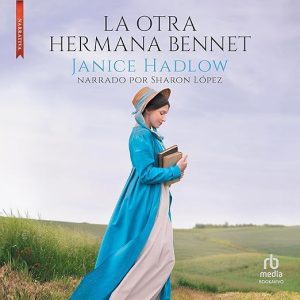
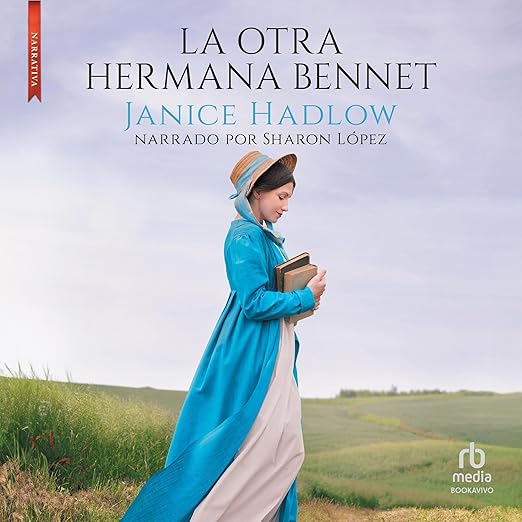
During my commissioning years I lost count of the Austen continuations that crossed my desk, most of them content to borrow the bonnets without any of the brains. The Other Bennet Sister is the rare exception. Janice Hadlow builds her novel on a question Pride and Prejudice never bothered to answer: what becomes of Mary, the plain, bookish middle sister everyone talks over? The answer turns out to be a warm, witty and quietly piercing story about a woman learning to take up space in a world that decided long ago she did not matter.
Let me be honest about the shape of it, though. At twenty hours this is a long, deliberate listen, one that trades in small humiliations and slow growth rather than ballroom fireworks. If you demand Lizzy’s sparkle on every page, you may fidget through the early stretches. But if you have ever felt like the overlooked one at the family table, this story will land somewhere tender and stay there for days.
About the Audiobook
Hadlow returns to the world of Jane Austen’s Pride and Prejudice and hands the stage to its least celebrated daughter. While her sisters are admired for their beauty or their wit, Mary is the ‘plain’ one, the introvert in a family of extroverts and a constant disappointment to her mother. Lonely and short of allies, she retreats to the only place she feels safe: books. Convinced she can never be ‘beautiful’, she resolves instead to be ‘right’, and quietly prepares herself for a life of solitude at Longbourn.
One by one the other sisters find their places, Jane and Lizzy for love, Lydia for respectability, and Mary is left behind to wait. Then her father dies, the house passes to the reviled Mr Collins, and the small, predictable life she expected is turned upside down. What follows is the life-affirming account of a young woman discovering, slowly and against every expectation she holds about herself, that there is hope for the ‘plain’ sister after all.
This is a standalone novel rather than the start of a series, and it has since become a major BBC One television drama starring Richard E. Grant, Ruth Jones and Ella Bruccoleri. The Independent predicted it would delight Pride and Prejudice fans, and for once I find myself nodding along with the press. The themes are the durable ones: self-worth measured against appearance, the limited options open to women of the period, and reading as both armour and escape.
The Narration
Kristin Atherton carries all twenty hours of this production, and the assignment suits her. Mary’s story is interior above all else, a running commentary of self-doubt, wounded pride and hard-won insight, and Atherton pitches that inner voice with real delicacy: earnest, a touch stiff in the early chapters, softening as Mary herself softens. It is a performance that grows with the character, which is precisely what this material demands.
She is just as capable out in the drawing room. The Bennet household offers a gallery of contrasting temperaments, and Atherton keeps them distinct without straining for caricature, letting the comedy of family life breathe while the sadness underneath remains audible. Her pacing is unhurried in the best sense. Twenty hours is a genuine commitment, and a lesser reader would let the long middle stretch sag; Atherton never does. The chapters unfold at a rhythm made for slow evening listening, and by the final third I had stopped noticing the length altogether, which is the highest compliment I can pay a marathon production.
What Readers Say
The audiobook holds a 4.5-star average from 19 ratings, and the written feedback is strikingly consistent. One listener admitted approaching the book with reservations after watching the television adaptation, only to find that Hadlow gets remarkably close to Austen’s tone, and that the story stands entirely on its own, earning a firm recommendation for plot and characterisation alike. Another, clearly well versed in Austen-inspired fiction, relished watching Mary gain wisdom and confidence while negotiating the limited choices available to a woman in her circumstances, and singled out the glimpses of middle-class Regency London as a particular pleasure.
The comparison with the screen version surfaces repeatedly, always to the novel’s advantage. One five-star listener praised the storytelling as brilliant and found the novel the more convincing telling, giving every character a depth the adaptation could not match. Another put it plainly: anyone who enjoyed the television drama will love the original, because the page holds far more than the screen. For a title with a modest count of 19 ratings, the warmth of the response is notable; nobody seems to come away lukewarm.
Who Should Listen?
Austen devotees are the obvious audience, but they are not the only one. If you enjoy quiet, character-led fiction about overlooked women finding their footing, Mary’s story will hold you even if you have never opened Pride and Prejudice, though knowing the original adds a rich layer of irony. Viewers of the BBC One drama who want the fuller, deeper telling will find exactly that here, and romance listeners who prefer a slow bloom to instant fireworks are generously served. The twenty-hour runtime makes it ideal companionship for a fortnight of commutes or a run of long autumn evenings. Skip it only if you need constant incident; this is a novel of small moments, beautifully accumulated.
Ready to give the forgotten Bennet her due? Listen to The Other Bennet Sister free with an Audible trial and let Mary finally speak for herself.