Clara’s Verdict
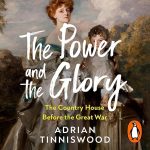
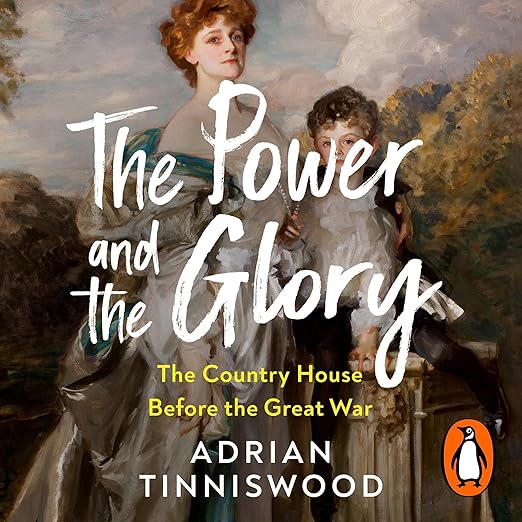
Adrian Tinniswood is the finest writer currently working on the history of the English country house, and The Power and the Glory – the first volume of his trilogy on the subject, covering the late Victorian and Edwardian golden age – is the strongest of the three. The country house at this moment in history was not simply a domestic space or even a status symbol; it was a social and political institution of considerable power, and Tinniswood is superb at showing how the great estates functioned as engines of negotiation, spectacle, and the maintenance of an extraordinary and ultimately doomed way of life. Matthew Spencer’s measured and authoritative narration makes this fourteen-hour audiobook one of the more pleasurable stretches of social history I have spent time with.
About the Audiobook
The subject is the country house in the decades between roughly 1880 and 1914 – the high-water mark of British imperial power and, for the owners of the nation’s stately homes, the most opulent period in their long history. This was a world in which nothing seemed beyond reach for those at the top: house parties lasting weeks, staffs numbering hundreds, social rituals of Byzantine complexity governing every aspect of daily life from the breakfast table to the shooting party. The physical fabric of the houses themselves was maintained at extraordinary expense – and Tinniswood writes about the architecture, the art collections, the gardens, and the servants’ quarters with equal fluency.
But the book’s real subject is the social world these houses contained and created. Tinniswood introduces us to the remarkable range of people who now occupied the top of the social order: ancient nobility of impeccably English lineage, Jewish bankers whose financial resources made them indispensable to aristocratic families with depleted estates, Indian princes and maharajas buying their way into English country life, American heiresses imported to shore up aristocratic fortunes, self-made millionaires from the industrial Midlands who had risen through sheer ability to the very heights of a system that was theoretically designed to exclude them, and political hostesses whose informal influence over government policy rivalled that of cabinet ministers.
The world Tinniswood describes was already under pressure from taxation, social change, and the first stirrings of labour politics, and the First World War would end it – at least in its most extravagant form – within a decade. There is something elegiac about the book without it ever becoming sentimental: Tinniswood is too clear-eyed about the injustices that sustained this world to romanticise it, but he is also too fair-minded a historian to dismiss what was genuinely achieved within it. This is the first volume in a trilogy that continues with The Long Weekend (the interwar period) and Noble Ambitions (the post-war survival of the country house); all three reward reading, but The Power and the Glory stands beautifully on its own.
The Narration
Matthew Spencer narrates with the precise, undemonstrative clarity that Penguin Audio consistently achieves for its history titles. He handles the large cast of names, the French phrases, the aristocratic titles, and the occasional Latin without stumbling, and his pacing is well-calibrated: he doesn’t rush through the more complex passages of social analysis, nor does he linger excessively over the set-pieces. At fourteen hours and thirty-five minutes, this is a substantial listening commitment, and Spencer makes it consistently rewarding throughout.
What Readers Say
The book is also unusually illuminating on the question of service – the genuine and often sincere belief held by many country house owners that their role carried obligations as well as privileges. Tinniswood is too honest a historian to accept this self-image uncritically, but he gives it its due as a live element of the period’s culture rather than dismissing it as convenient mythology. The tension between genuine noblesse oblige and structural exploitation is one of the book’s recurring and most interesting themes.
Reviews are uniformly enthusiastic. Listeners describe the book as “both highly entertaining and beautifully written,” and several have sought out Tinniswood’s other work immediately on completing this one – a reliable signal of genuine quality. One particularly engaged reviewer notes that this effectively completes a trilogy with The Long Weekend and Noble Ambitions and praises the depth and breadth of the research throughout. Lucy Worsley, Judith Flanders, and Gareth Russell all provided blurbs reflecting genuine and specific enthusiasm for the work rather than the generic pleasantries that populate most cover endorsements. The audiobook holds a 4.3 out of 5 rating from 72 listeners on Audible UK.
Who Should Listen?
Anyone with an interest in British social history, the architecture and culture of the country house, or the Edwardian period as the moment before the world changed irreversibly. Particularly recommended for listeners who enjoyed Downton Abbey at its best and want to understand the real social dynamics the series was drawing on; for fans of Tinniswood’s other work; and for anyone interested in how extraordinary privilege operates and justifies itself from the inside. Listen to The Power and the Glory on Audible UK and step inside the most opulent world Britain ever produced, rendered with the scholarship and the wit it deserves.