Clara’s Verdict
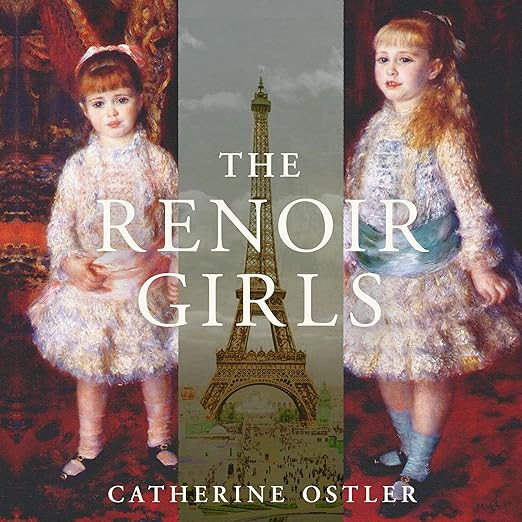
I have been waiting for this one since I first heard about the research. Catherine Ostler’s The Renoir Girls takes as its starting point a specific painting: Pierre-Auguste Renoir’s Pink and Blue, completed in 1881, depicting two young sisters from the Cahen d’Anvers family, a prominent Jewish banking dynasty in Paris’s grand 8th arrondissement. That painting now hangs in the Sao Paulo Museum of Art, and it is one of Renoir’s most reproduced works. What Ostler has done is follow the lives of those two sisters, Elisabeth and Alice, from the Belle Epoque through the Franco-Prussian War aftermath, the Dreyfus Affair, and into the devastation of two world wars. The blurb carries endorsements from Edmund de Waal and Simon Sebag Montefiore, which is a credible signal that this is serious historical narrative rather than merely illustrated social history.
There are no reader ratings at the time of writing. The audiobook was released on 9 April 2026 and the absence of reviews is simply a function of timing. I am reviewing on the basis of the synopsis, the production details, and the critical framing available.
About the Audiobook
The Simon and Schuster Audio UK production runs thirteen hours and twenty-nine minutes. Ostler draws on letters, diaries, and what the synopsis describes as exclusive new research to build her portrait of the Cahen d’Anvers family. The historical arc is substantial: the book moves from the glittering salons and chateaux of the Belle Epoque through the rising antisemitism of the Dreyfus years, across both world wars, and into the longer aftermath of what happened to prominent Jewish families in France during the twentieth century. This is not decorative social history; the tension between the apparent glamour of the period and the violence that ran beneath it is explicitly the subject.
De Waal’s endorsement, describing the book as remarkable and haunting and a revelation, carries weight from an author who has himself worked extensively in the territory of Jewish family histories and European art. Hallie Rubenhold, whose own historical work is meticulous, calls it truly beautiful and melodic.
The Narration
Lucy Scott narrates the production. Scott is an experienced audiobook performer with a strong track record in literary and historical non-fiction, and the material here requires exactly the qualities she brings: the ability to sustain a narrative that shifts between intimate family detail and broad historical sweep without losing its emotional centre. The letter and diary excerpts that Ostler draws on will test the narrator’s capacity for tonal differentiation, and Scott’s experience in this area is reassuring.
What Readers Say
There are no listener reviews to draw on at this stage. The book’s pre-publication reception in the literary press is the only evidence available, and the endorsements from de Waal, Sebag Montefiore, and Rubenhold suggest that readers with serious interests in European history, Jewish family history, and art historical biography will find it substantive. The choice of Times Book to Look Out for in 2026 adds to that framing. I would encourage those interested to return to this review as listener responses accumulate.
Who Should Listen?
Those drawn to the territory of Edmund de Waal’s The Hare with Amber Eyes, Deborah Lipstadt’s work on the Dreyfus Affair, or the broader literature of European Jewish history through the twentieth century will find the subject matter directly in their line of interest. The combination of Impressionist Paris and the longer consequences of antisemitism in France gives the book a double focus that serious historical listeners should find compelling. Those expecting a light cultural biography of the Belle Epoque may find the darker second half demanding. The thirteen-hour runtime is appropriate for the scope of the material.