Clara’s Verdict
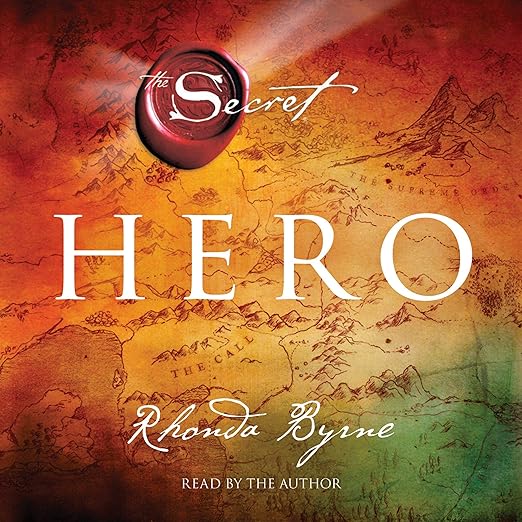
Four hours and twenty-four minutes is a short running time for a book making claims this large, and that compactness is the first thing to understand about this audiobook. The Secret is not a long argument. It is a short, declarative statement of a single principle, applied across every area of life a reader might care about. Whether that reads to you as clarity or as thinness will depend entirely on what you want from it.
Published by Atria Books and Beyond Words on 28 November 2006, it holds a 4.6 average across a very large number of ratings and stands as the first entry in the Secret series that followed it, so this is where to begin if you intend to go further into Rhonda Byrne’s work. Two decades on, the audience is still arriving and still, on the evidence of this page, overwhelmingly positive. I have reservations about some of the claims and I will set them out plainly, but I am not going to pretend the enthusiasm is not real.
About the Audiobook
This book’s origin story is part of the product, and the description leads with it. In 2006 a feature-length film revealed what the copy calls the great mystery of the universe, and later that year Byrne followed it with a book that became a worldwide bestseller. The framing is one of recovery rather than invention. Fragments of a great secret, the description says, have been found in oral traditions, in literature, in religions and in philosophies throughout the centuries, and this is the first time all the pieces have been brought together.
The principle itself is what the copy calls the law that governs all our lives, and it can be used to create a joyful life intentionally and effortlessly. The book then applies it area by area: money, health, relationships, happiness, and every interaction you have in the world. Structurally that makes it a manual rather than a narrative. The supporting material comes from what the copy calls modern-day teachers, men and women who have used the principle to achieve health, wealth and happiness, and their testimony carries much of the persuasive load.
I want to be straightforward about one part of that. The description promises compelling stories of eradicating disease, and that is a claim of an entirely different order from advice about optimism or goal-setting. A book suggesting that thinking differently might change how you approach your work is offering one thing. A book presenting recovery from illness as an outcome of thought is offering something else, and it is the claim on this page that most deserves scrutiny. No empirical support for it appears anywhere on the listing, and none of the three readers here engages with it, and I would not want anyone to encounter it without that context in mind.
The Narration
The narrator field on this listing is blank, which is a real omission for this book in particular. A recording this short, made of directive, second-person, motivational prose, is almost entirely a performance. The text tells you what to do and what to believe, over and again, and the difference between a reading that persuades and one that grates is a matter of warmth, of pace, and of the absence of hard sell. No other machinery is available to fall back on here: no plot, no characters, and very little argument in the analytical sense.
There is a structural question the missing credit leaves open too. The description says the material draws on modern-day teachers and on their accounts of what it did for them, which raises the obvious possibility of a multi-voice production with those contributors reading their own words, and that would be a substantially different listening experience from one reader delivering everything in a single register. The page does not say which this is. Given that the entire persuasive weight of the book rests on the sound of conviction, I would establish who is speaking before pressing play.
What Readers Say
A 4.6 average across tens of thousands of ratings is a formidable number, and the three written responses here are all five stars. They are also all recent, dated 2026, on a book published in 2006, which tells you the audience is still being renewed rather than merely remembered.
The most substantial of the three is careful about what it claims. That reader describes the book as powerful and uplifting and says it made them think about the role mindset plays in shaping a life, praising the way the core idea is explained clearly and supported with personal stories, quotes and simple exercises. Their conclusion is modest and, to my mind, the most defensible reading of the whole book: “It reminded me to be more intentional with my thoughts”.
The other two are shorter and more personal. One writes that they found it great for their mental health and recommend it to friends going through a hard time or wanting fresh ideas, calling it “A new train of thought”. The third simply calls it a good read. The recording itself goes entirely unremarked in all three, and none of them engages with the stronger claims in the description at all, which is informative in its own way. The readers responding most warmly are taking this as encouragement and permission rather than as a set of instructions about illness.
Who Should Listen?
I would separate two groups here rather than give a single answer. If you want a short, warm, endlessly quotable piece of motivational writing that will nudge you towards paying attention to your own habits of thought, this delivers precisely that in a single afternoon, and the readers who love it love it for that reason rather than for its metaphysics. Taken as encouragement, it does what its most thoughtful reviewer says it does, and it asks little enough of your time for the experiment to be worth making.
If you want evidence, mechanisms or a defensible account of why any of this should work, the book is not that and does not try to be. And I would say plainly that nobody should treat the passages about health as guidance on a medical decision, whatever else they take from the running time. Read alongside proper advice, this is a mood. Read in place of it, a risk.