Clara’s Verdict
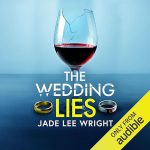
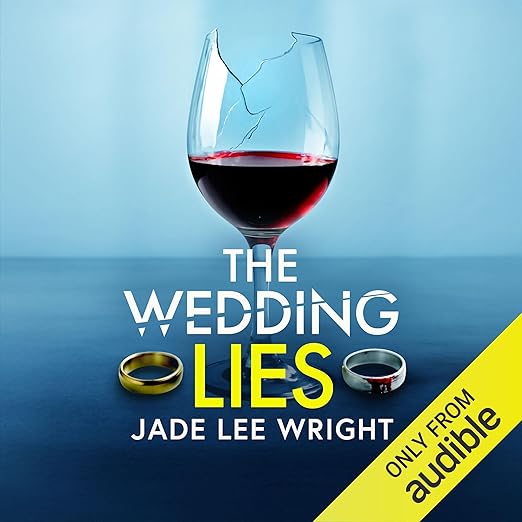
Jade Lee Wright has written the kind of thriller that is engineered rather than composed, and I do not intend that as an insult. Every element in The Wedding Lies is there to do a job. Isolated house, no phone signal, hostile in-laws, a countdown of six days, and a suitcase containing clothes belonging to a woman who has recently vanished. It is a machine, it is built to keep you listening, and across nine hours and fifty-six minutes it largely succeeds at that.
Whether it succeeds at anything else is where opinion divides sharply, and the 4.0 average from 3,946 ratings reflects a genuine split rather than general lukewarmness. This is a book people either race through in two sittings or abandon in irritation, and I found myself somewhere between the two: gripped for long stretches, then pulled out of it by plotting that asks a great deal of a listener’s goodwill. It is holding a position in the UK charts at present, and given a June 2026 release that is a quick ascent.
About the Audiobook
The narrator, whose voice opens the book with the wonderfully blunt question of whether you think your family is weird, is marrying Stephen at Shadowmoor Lodge, his family’s luxurious estate in the frozen Surrey Hills. There is no phone signal and there are no neighbours. There is Stephen’s controlling mother, and a family who love hunting and who watch the bride as though she were the entertainment laid on for the weekend. Wright establishes the atmosphere efficiently and unpleasantly, and the Surrey setting is a smart choice, close enough to London to be plausible and remote enough to cut off every exit.
The inciting moment is excellent. She opens her suitcase and the contents are not hers. Inside is the exact outfit worn by a woman called Charlotte Walker when she disappeared a week earlier. Six days remain until the wedding and the bride already wants to run. As openings for a psychological thriller go, that is close to ideal: specific, physical, and immediately impossible to explain away.
What follows is a countdown structure, which suits audio particularly well because the days give a listener natural stopping points and a constant sense of the deadline closing. The comparisons offered on the listing are Alice Feeney, Shalini Boland, Jane E. James and Sue Watson, and that is an accurate map of the territory: domestic suspense with a large final twist, written to be consumed quickly. This is a standalone, so nothing needs to be read first.
The Narration
Olivia Darnley reads it, and she is well matched to the assignment. The book is first-person throughout, in the voice of a woman whose position becomes steadily more precarious, and that is a specific technical challenge rather than a general one. The reader has to convey mounting fear while remaining a bride making polite conversation with people she is beginning to suspect, and the gap between what is said aloud and what is being thought has to be audible without ever being underlined.
Darnley handles that gap well. Her social register is convincingly pleasant, which makes the private register underneath it far more effective than it would be if she signalled dread constantly. The family are given enough vocal separation that the dinner-table scenes remain legible, and Stephen’s mother in particular lands with the right chilly courtesy rather than as an obvious villain, which is harder than it sounds.
Where I would offer a mild reservation is pace in the closing hours. The final act throws a great deal at the listener in a short space, and the reading pushes forward at a speed that leaves little room to absorb each new revelation. Some listeners will experience that as breathless momentum, which is presumably the intention. Others will find themselves rewinding to check they followed a sequence correctly. A slightly more measured approach through the last ninety minutes would, I think, have helped the twists land rather than accumulate.
What Readers Say
The split I mentioned above is unusually informative here, because the reviews genuinely disagree with one another rather than clustering. On the enthusiastic side, Karen Hamilton found it “Intriguing interesting and intense”, could not put it down, and called it probably her fastest read ever. Sharon was similarly won over by a “Great story line” that “Kept me hooked from start to finish”.
The idea could have been developed into something credible which would have been more thriller in genre.
The three-star review, headed Almost DNF, is worth reading before you buy, because it is specific rather than merely cross. Lynz objects that the book is not really a psychological thriller at all, and lists the implausibilities that broke it: a wedding at which no guests are permitted phones, a bride who has not chosen her own decor, and violence against bridesmaids taking place on the morning of the wedding under the noses of catering staff, event staff and a family of around forty people. Those are fair objections. Whether they matter to you depends entirely on whether you read this kind of book for plausibility or for momentum, and I would say the honest answer is that this one runs on momentum and hopes you will not stop to count the guests.
Who Should Listen?
There are two ways to arrive at this book and they produce very different experiences. Come to it as a fast, propulsive countdown thriller with an unsettling setting and a strong central image, and you will have an extremely good time for ten hours. Come to it expecting the psychological precision of the writers named on the listing, and you may feel the comparison has been generous.
I would recommend it warmly to anyone who devours domestic suspense at a rate of two or three a month, who enjoys the isolated-house setup, and who wants something to fill a week of commutes without demanding much concentration. Darnley’s performance is a genuine asset and lifts the material.
Those who need their thrillers to hold together under scrutiny should probably pass, and I say that with the three-star review in mind rather than out of any wish to be superior about the genre. There is a version of this premise that would have been genuinely frightening and credible at once, and the book does not quite reach it. What it does reach is compulsive, which for a great many listeners on a wet commute is precisely the requirement. Know which of those you want before you begin.