Clara’s Verdict
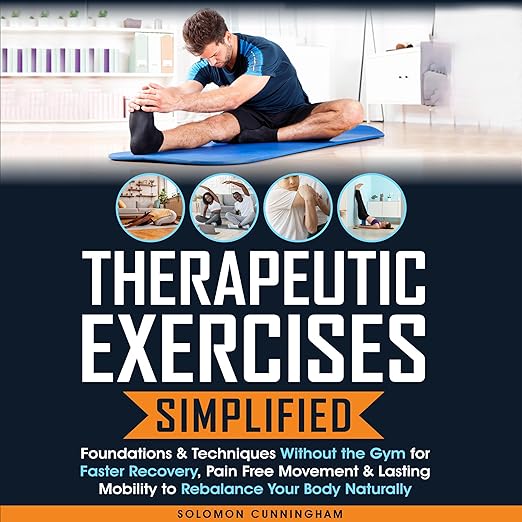
The market for recovery and rehabilitation guidance is crowded with books that either require professional supervision to be useful or are so generic as to be practically useless. Therapeutic Exercises Simplified sits in the more valuable middle ground – structured enough to follow independently, specific enough to address a genuine range of conditions, and honest about when its guidance applies and when you need a physiotherapist instead. Solomon Cunningham has written something that reads as though it comes from genuine clinical knowledge rather than content generation, and that distinction matters when you are dealing with a body that has been injured or compromised.
At five hours and six minutes, this is practical and well-paced. It is the kind of book you listen to once to understand the framework, then return to specific sections as your circumstances require.
About the Audiobook
The book opens by addressing something most exercise guides skip: the psychological barriers to recovery. Fear of re-injury, confusion about which movements help and which harm, the discouragement of slow progress – Cunningham contextualises all of these before moving to the physical programme itself. This ordering is not arbitrary. Many people who struggle to maintain recovery exercises are not lacking motivation; they are lacking confidence that what they are doing is safe. Establishing that confidence is the prerequisite for everything else.
The programme itself is organised around a sensible progressive framework: foundational exercises first, with layered modifications for different levels of mobility and different conditions. Cunningham covers a broad range – post-surgical recovery, arthritis management, back pain, limited mobility from age or inactivity, and injury prevention for those returning to sport. The sections on pain management are thoughtful rather than merely reassuring: the distinction between productive discomfort and warning pain is addressed clearly and repeatedly, which is the guidance most people most need.
The advice on building consistency – establishing habits that fit around ordinary life rather than requiring extraordinary reorganisation – reflects a genuine understanding of how behaviour actually changes over time. The motivational framing is notably free of the kind of relentless positivity that tends to make recovery guides feel slightly unhinged; Cunningham is encouraging without being unrealistic.
The Narration
Desmond Reed narrates with a calm, measured quality that is exactly right for the content. Recovery guidance needs clarity, pacing, and a voice that conveys competence and reassurance. Reed delivers all three consistently. His delivery through the exercise descriptions is particularly careful: deliberate without being tedious, allowing listeners enough time to absorb each movement before the next is introduced. For audio-only content covering physical exercises, this is a significant achievement.
What Readers Say
The audiobook carries an impressive 4.7-star rating from 84 listeners – a substantial count that suggests genuine, repeated usefulness rather than initial enthusiasm. Those returning from specific injuries have been particularly positive: one reviewer recovering from rotator cuff surgery called it “a huge help” that addressed “therapeutic breathing exercises, well-explained workouts, and guidance on nutrition and sleep patterns.” Another praised it as “clear and encouraging” with “modifications for different levels so it doesn’t feel overwhelming.” Reviewers consistently note that it makes recovery “feel more manageable and safe” – precisely the goal.
Who Should Listen?
Anyone navigating injury recovery, managing chronic pain, or seeking to improve mobility safely and independently. Particularly valuable for those discharged from physiotherapy who feel unsupported but hesitant to exercise without guidance, or for older listeners wanting to maintain strength and flexibility without gym intimidation. Also worth recommending for carers supporting someone else’s recovery. This is practical, evidence-based, and designed for real people in real conditions – not ideal athletes in ideal circumstances.
Listen on Audible UK: Get Therapeutic Exercises Simplified on Audible UK. Also available on Kobo, Scribd, and Storytel.