Clara’s Verdict
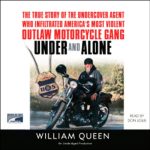
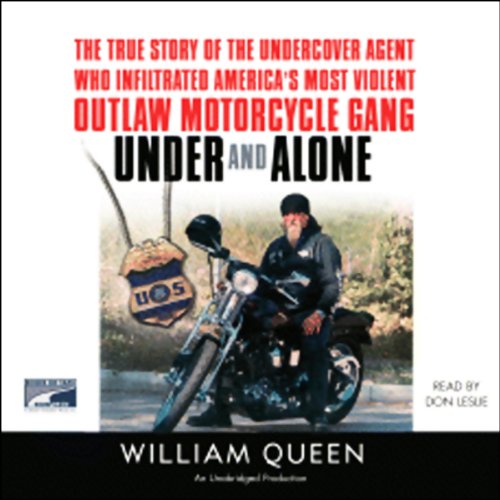
True crime in memoir form carries risks that fiction does not. When a law enforcement officer writes about an undercover operation, the narrative is shaped by three competing forces: what can legally be said, what the writer chooses to remember, and what the institution around them is willing to allow into print. William Queen is honest about some of this, and the gap between what is described and what the reader suspects remains untold is itself part of what makes Under and Alone compelling. A man who spent twenty-eight months as a fully patched-in member of one of the most violent outlaw motorcycle gangs in America, eventually rising to treasurer, cannot have kept his hands entirely clean. Queen’s account has a careful quality to it, and one reviewer identifies that quality precisely.
That caveat registered, what is actually on the page is remarkable. The portrait of identity dissolution, of a man who genuinely cannot separate Billy St. John from Billy Queen by the time his cover is close to breaking, is the most psychologically interesting aspect of the book and the one that stayed with me longest after finishing it.
About the Audiobook
In 1998, Queen was a veteran ATF agent with a lifelong connection to motorcycle culture. When a confidential informant offered access to the San Fernando chapter of the Mongols, described as the scourge of Southern California and one of the most dangerous gangs in America, Queen jumped at the chance without fully understanding what he was initiating. What followed was the most extensive undercover operation inside an outlaw motorcycle gang in American law enforcement history. He worked his way from prospect to patched-in member to treasurer, with unprecedented access to evidence of criminal activity including drugs, arms, stolen motorcycles, and planning for gang violence.
The emotional core of the book is the paradox Queen articulates directly: the Mongols genuinely loved Billy St. John and would have laid down their lives for him. They would also have murdered Billy Queen without hesitation. Living inside that contradiction for over two years, isolated from everyone who knew the real him, produced a psychological displacement that Queen renders with surprising candour for an institutional memoir. The sections describing his increasing immersion in the Mongol identity, and his awareness of that immersion happening, are the most honest passages in the book.
The final section, dealing with the dismantling of the operation and its human aftermath, has an elegiac quality unusual for the genre. Queen is clearly ambivalent about what the operation cost, and that ambivalence is more interesting than straightforward triumphalism would have been.
The Narration
Don Leslie narrates, and his voice has exactly the right quality for this material: steady, authoritative, carrying the weight of experience without dramatising it for effect. The undercover sequences are tense without being overplayed, and Leslie handles the psychological complexity of Queen’s account with intelligence rather than reducing it to thriller momentum. The sections describing Queen’s growing confusion about which identity is his own benefit particularly from a narrator who does not treat this as straightforward heroism. The eight-hour runtime is well-paced throughout, with the climactic sections of the investigation earning their tension through careful build-up.
What Readers Say
The 4.6 rating from just two reviews is a thin sample, but the responses are thoughtful and worth quoting. One reader found it “riveting” and could not put it down, describing it as intense and sorrowful while noting that they kept wondering what stories had not made the final edit. Another offered the most interesting critical note available: that the book has an “I better watch what I say” quality, and that the idea of Queen spending two years mainly drinking beer and playing pool as his cover strains credibility for anyone who understands how you actually earn a patch in an outlaw club. That caveat is honest, probably accurate, and worth holding in mind as you listen.
The publishing history of this book is worth a brief note. Under and Alone was published in 2005, making it a product of the early 2000s true crime memoir boom, and it was developed with the support of a professional writing collaborator in the way that many law enforcement memoirs are. That process involves choices about emphasis, omission, and narrative shaping that are distinct from a writer working alone. The result is a more readable book than a raw ATF report would be, and probably a less complete one than a fully independent account might attempt. Holding both of those things as true simultaneously is the right way to approach it.
Who Should Listen?
For readers drawn to the undercover law enforcement memoir tradition. This sits alongside the best work in the American deep-cover genre: more nuanced than the marketing suggests, and the psychological dimension makes it worth the time even if you come to it primarily for the crime drama. Note that the events date from the late 1990s, so the criminal landscape described reflects a pre-social media world that has since changed significantly in some respects. For listeners who can hold the partial-account caveat in mind while still engaging fully with what is here, this is a compelling eight hours.