Clara’s Verdict
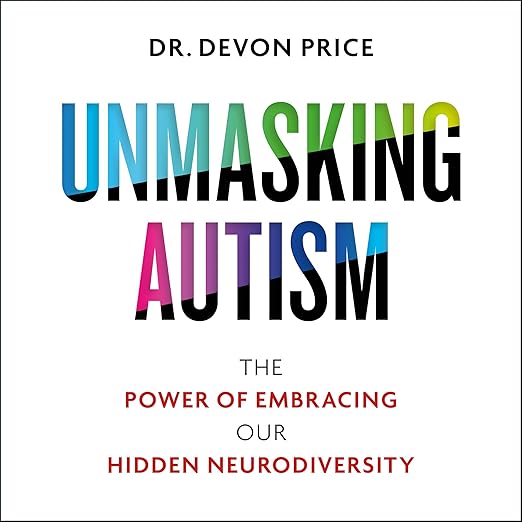
Devon Price’s Unmasking Autism is one of those books that arrives at precisely the right cultural moment and refuses to be modest about what it is trying to do. This is not a self-help book in any conventional sense, and it is not a clinical manual. It is something rarer and more valuable: a compassionate, rigorously researched argument for why autistic people – and particularly those from groups historically marginalised within the already-marginalised autism community – have been systematically failed by a society that demanded they hide who they are.
Price is autistic and non-binary, and the book is written from that position of lived experience as well as academic expertise. That combination gives it a credibility and emotional immediacy that purely clinical accounts lack. Listening to Price narrate their own work adds another layer of authenticity: this is someone telling you their own story, in their own voice. Rated 4.5 out of 5 from listeners, and thoroughly deserving of it.
About the Audiobook
Unmasking Autism opens with a simple but profound observation: for every visibly autistic person you might recognise, there are many more who have spent their lives performing neurotypicality – suppressing stims, forcing eye contact, rehearsing scripts for social situations, and exhausting themselves in the effort to pass. This is masking, and Price argues it is both ubiquitous and deeply harmful.
The book explores who masks and why: the evidence is clear that autism is significantly underdiagnosed in women, people of colour, and transgender and gender non-conforming individuals, partly because the diagnostic criteria were historically built around white, male presentations, and partly because social pressure to conform falls more heavily on those already subject to marginalisation. Price’s account is intersectional in a way that feels earned rather than performative.
Across nine and a half hours, the book moves from research and theory to personal narrative to practical exercises. Price offers tools for recognising one’s own masked behaviours, for beginning the process of unmasking safely, and for building communities and relationships that can support authentic autistic expression. The tone throughout is compassionate and non-prescriptive – Price is clear that unmasking is a process, not an event, and that safety must come first.
The book also makes a broader argument: that the pressure to mask is not merely harmful to autistic individuals, but symptomatic of a society that has difficulty accepting difference of any kind. In this sense, Unmasking Autism is a text with relevance well beyond the autistic community.
The Narration
Devon Price narrates their own book, and the decision pays dividends. There is an intimacy and authority in self-narration that a hired voice cannot replicate – particularly in passages of personal disclosure, which run throughout the text. Price’s voice is measured and thoughtful, and they handle the emotional weight of some sections with evident care.
The nine-hour-fifty-one-minute runtime passes without fatigue. Price’s delivery is clear and well-paced, and the practical exercise sections – which could easily become tedious in a less engaged narration – are given the same attention as the analytical chapters. A genuine pleasure to listen to.
What Readers Say
Rated 4.5 out of 5 from listener reviews. The response from autistic readers has been overwhelming in its gratitude. “Never in my life have I felt such an overwhelming feeling of being seen,” wrote one UK listener who received an autism diagnosis at forty and found in Price’s words an account of experiences they had never before seen articulated. “It was as if someone had opened me up and wrote about what was in my deepest, darkest hidden parts.”
Another described the book as “exceptional” and noted its particular value for therapists and mental health practitioners who may be working with masked autistic clients without realising it. A third commended the practical exercises throughout for providing “direction, comfort and some long awaited peace.”
The single constructive criticism that recurs is that the book is, if anything, too short – particularly in its discussion of what comes after unmasking begins. Price acknowledges this limitation; a follow-up, Unlearning Shame, takes the conversation further.
Who Should Listen?
Anyone who has received – or suspects they may have – an autism diagnosis later in life. Parents and partners of autistic people trying to understand masked presentations. Teachers, therapists, and other practitioners. And, honestly, anyone interested in how social conformity shapes identity and at what cost.
If you found yourself nodding along to Camilla Pang’s Explaining Humans or Barry Prizant’s Uniquely Human, this belongs in the same collection. Price’s voice is a necessary one in the neurodiversity conversation.
Available on Audible UK. Also available via Kobo, Scribd, and Storytel.