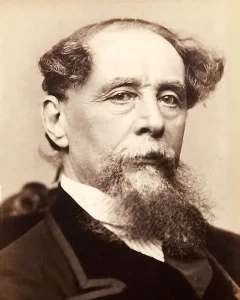
Charles Dickens, born in Portsmouth in 1812, is regarded by many as the greatest novelist of the Victorian era, and his rise remains one of literature’s great stories in itself. He left school at 12 to work in a boot-blacking factory when his father was sent to a debtors’ prison – an experience that marked everything he later wrote about poverty, childhood and injustice. He began as a journalist, and the 1836 serial publication of The Pickwick Papers made him a publishing phenomenon and, soon, an international celebrity.
His industry was staggering: he edited a weekly journal for 20 years, wrote 15 novels, five novellas and hundreds of short stories and articles, performed public readings to enormous demand, and campaigned vigorously for children’s rights, education and social reform. He pioneered the serial publication of fiction, complete with cliffhanger endings, and adjusted plots in response to his readers – the masses of the illiterate poor would each pay a halfpenny to have new episodes read aloud to them. By the 20th century, critics had settled what his readers always knew: this was a literary genius. He died in 1870.

 36 hours and 30 minutes