Clara’s Verdict
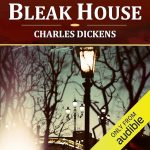
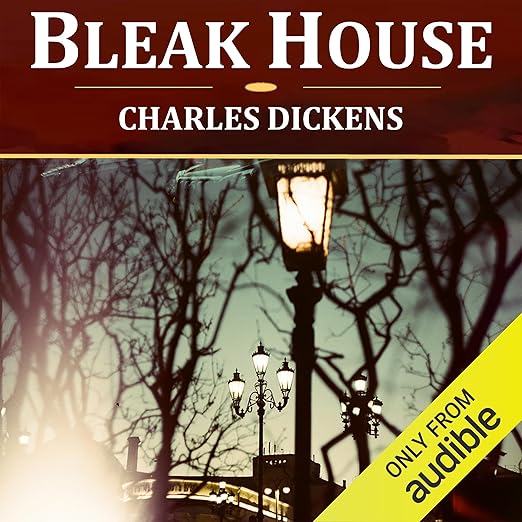
My relationship with Dickens has never been uncomplicated. Twelve years as a commissioning editor gave me enormous respect for his achievement alongside real impatience with his excesses, and Bleak House is the novel where those two responses are most precisely in tension. The fog that opens the book is one of the most famous passages in English literature, and it earns its reputation: Chancery, the law courts, the grinding machinery of Victorian institutional injustice – all of it condensed into weather. This is Dickens at his most formally ambitious and his most politically precise. Peter Cable’s narration for this Hexagon Tech edition is capable and well-paced, and the introductory contribution from Miriam Margolyes adds genuine distinction to an already distinguished text. At nearly thirty-four hours, this is Dickens as he was designed to be experienced: in long, immersive sessions that allow the multiple plotlines to settle into their relationships with each other.
About the Audiobook
The central case – Jarndyce v Jarndyce, a Chancery suit so ancient and so intractably disputed that its continuation has become its own purpose – hangs over everything in the novel as fog hangs over London in the opening pages. Dickens is not being metaphorical; he is being precise. The fog is Chancery; Chancery is everything that is wrong with a society that protects the powerful through process while the weak wait and die in its shadows.
Esther Summerson, orphan of uncertain parentage, narrates her own portion of the novel in a voice Dickens constructs with deliberate and magnificent irony: Esther presents herself as modest, unremarkable, grateful for every small kindness. Readers who follow that self-deprecation at face value miss what Dickens is doing – Esther’s narrative is a masterclass in reliable unreliability, and the gap between what she says about herself and what is actually happening is one of the novel’s central pleasures.
The third-person narrative runs in parallel, colder and more satirical, dealing with Lady Dedlock and her terrible secret, the lawyer Tulkinghorn who has discovered it, the rag-and-bone man Krook, the crossing-sweeper Jo, and the dozens of other characters who populate what may be the most populous novel in the English canon. The mystery plot – what is Lady Dedlock’s secret, and what are its consequences? – is genuinely suspenseful even by contemporary standards. Dickens attacks the law, the class system, the hypocrisy of self-congratulatory philanthropy, and the institution of Chancery with a precision that years of journalism had sharpened into something close to a scalpel. The novel is long, and Dickens is Dickens: the comic asides can sprawl, the sentiment can cloy. But at its best – which is very often – Bleak House is extraordinary.
The Narration
Peter Cable handles the dual narrative structure – Esther’s first-person present-tense and the third-person omniscient – with admirable dexterity. The tonal distinction between these modes is significant, and maintaining it across thirty-three-plus hours requires consistent attention; Cable does so throughout. Miriam Margolyes’s written introduction, which she narrates herself, is a genuine addition: her relationship with Dickens spans decades, her knowledge of the text is intimate, and her few minutes of framing provide a warmth and context that enriches what follows. The Hexagon Tech production is clean and well-mastered. One reviewer observed wisely that reading alongside listening – following the text in print while simultaneously hearing it – may be the ideal Dickens method; the audio enables this beautifully, and many listeners find the combination more accessible than silent reading alone.
What Readers Say
Reviews reflect both Dickens’s particular demands and his particular rewards. Gregory S. Buzwell (★★★★★) – writing with evident critical authority – made the case for this as one of Dickens’s finest achievements: “a terrifically good, perceptive and inventive writer” when at his peak, and this is very near his peak. I Read, Therefore I Blog (★★★★★) was honest about the investment required – “you don’t start to see the storylines coming together until the final third” – while declaring it a masterpiece worth every page. Keiran McAllister (★★★★★), reading Dickens in chronological order, found that the combined reading-and-listening approach unlocked the text in a way that reading alone had not: “somehow Dickens comes alive when listened to and reading the prose together.” Laura McToal (★★★★) acknowledged the purple prose while recommending both the Miriam Margolyes edition specifically and the BBC adaptation as companion pieces. The audiobook holds a 4.3-star rating across 6 ratings.
Who Should Listen?
Dickens readers who have reached the point where they are ready to meet him at full stretch. Those who have tried Bleak House in print and found the density daunting will find the audio format genuinely transformative – Dickens’s theatrical, performative prose was conceived for oral delivery, and hearing it removes a significant barrier to engagement. Those new to Dickens should begin with Great Expectations or David Copperfield, but anyone who has enjoyed those is fully equipped to take on this. A commitment that repays itself many times over. Listen to Bleak House on Audible UK.