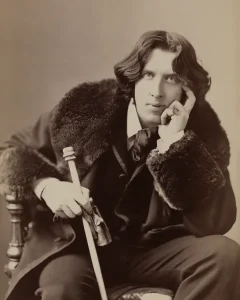
Oscar Wilde (1854 to 1900) was an Irish author, poet and playwright, a key figure in the Aestheticism movement and widely regarded as the greatest playwright of the Victorian era. Born to Anglo-Irish intellectual parents in Dublin, he proved an exceptional classicist at Trinity College Dublin and then Magdalen College, Oxford, before conquering London through sheer force of wit, flamboyant dress and glittering conversation. The early 1890s brought his only novel, the Gothic The Picture of Dorian Gray, and four society comedies – among them An Ideal Husband and The Importance of Being Earnest – that made him the most successful playwright in late-Victorian London.
At the height of that success, a disastrous libel action against the Marquess of Queensberry, father of his lover Lord Alfred Douglas, collapsed and led to Wilde’s own prosecution. Convicted of gross indecency in 1895, he was sentenced to two years’ hard labour, during which he wrote De Profundis. The fall was as complete as the fame had been, and both are now inseparable from how we read him.

 28 minutes
 3 hours and 6 minutes
 25 minutes
 8 hours and 5 minutes
 12 minutes
