Clara’s Verdict
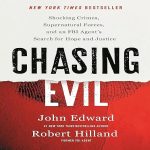
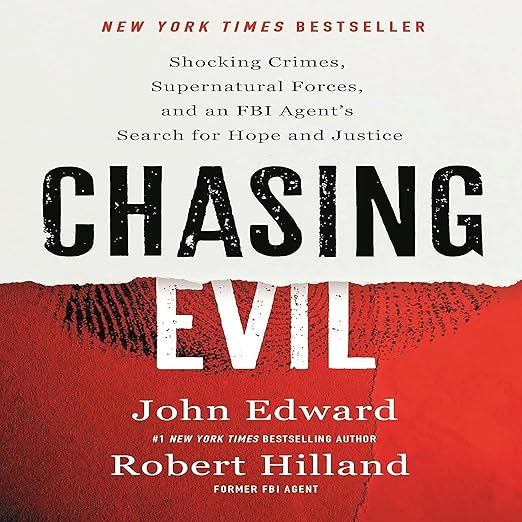
Cold cases and psychic detectives: it is not the most credible combination on paper, and going in I braced myself for sensationalism. What I found in Chasing Evil was considerably more interesting than the title promises. John Edward – the famous medium – and FBI agent Bob Hilland recount twenty-five years of an unlikely partnership with genuine candour, and the result is one of those rare true-crime accounts that is as much about two men’s inner lives as it is about the crimes themselves.
Whether you believe Edward’s abilities are genuine or the product of exceptional intuition and unconscious pattern recognition is, the book argues, somewhat beside the point. What matters is what the partnership produced – and the human cost of sitting with the weight of unsolved violent crime year after year. That is where Chasing Evil earns its emotional power.
About the Audiobook
The book centres on the investigation of the John Smith murders – a case that horrified the United States – and uses it as the backbone around which Edward and Hilland explore how their collaboration actually worked. There are detailed accounts of sittings, the passing of information, the frustration when leads go cold, and the cautious elation when something connects.
What distinguishes this from the standard psychic-detective memoir is the FBI agent’s perspective. Hilland is not a true believer, at least not initially. He picked up the phone in 1998 because he had nothing left to lose, and his scepticism – recorded with admirable honesty – gives the book its grounding. By the time he describes what shifted in his thinking, the reader has earned the right to make their own judgement.
The book also addresses grief, justice, and the strange process of finding resolution in lives devastated by violent crime. It is 11 hours and 23 minutes of material, and it holds your attention throughout.
The Narration
John Edward narrates his own work, which is both a strength and a minor limitation. His voice carries the authenticity of lived experience – there are moments when the weight of particular cases is entirely audible – but it lacks the technical polish of a professional narrator. That roughness is, in this case, appropriate. Edward is not performing his story; he is recounting it, and the distinction matters. The delivery is unhurried, occasionally searching for a word in a way that feels genuinely spontaneous rather than scripted. At 11 hours, some listeners may want occasional relief from a single voice, but it holds.
What Readers Say
UK readers have responded warmly, with the audiobook rated 4.7 out of 5 from early reviews. “I finished this book in two days,” wrote one listener from the United Kingdom. “It completely pulled me in from the very beginning – gripping, unsettling, and deeply fascinating all at once.” Another described it as “immersive and powerful, whether you’re a sceptic, a believer, or somewhere in between.” A third called it “engaging, enlightening, and sad – I couldn’t stop thinking about it.” There is a consistent thread through the reviews: this is not easy reading, but it is necessary.
Who Should Listen?
True-crime listeners who are tired of the procedural format will find this a refreshing alternative – more psychological memoir than forensic reconstruction. It will also appeal strongly to anyone interested in the science and philosophy of consciousness, intuition, and belief. Those who already follow John Edward’s work will obviously gravitate to it, but the book is accessible to the entirely sceptical; Hilland’s voice ensures it stays honest.
This is one of the more thought-provoking releases in the true-crime adjacent space this year. Listen to Chasing Evil on Audible UK and decide for yourself.