Clara’s Verdict
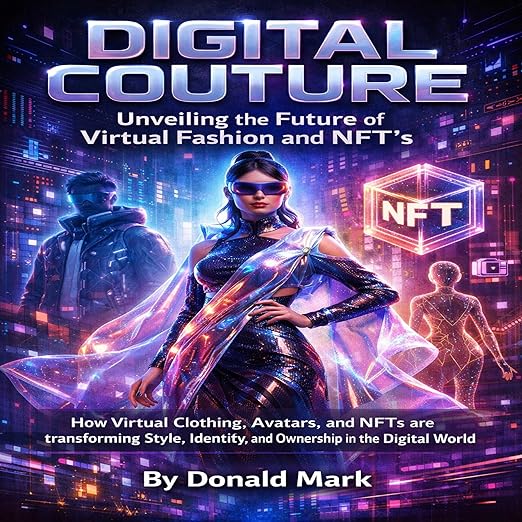
Digital Couture arrives at the intersection of two industries that have both experienced profound instability in recent years: fashion and blockchain. Donald Mark’s guide promises to make sense of how virtual clothing, NFTs, avatars, and the metaverse are reshaping style, identity, and ownership. At 78 minutes, it is necessarily an introduction rather than an analysis, and the question is whether it delivers on the primer function honestly or oversells a subject that is considerably more volatile and contested than the confident promotional tone suggests.
The honest answer is: it is a reasonable orientation with a significant blind spot. The coverage of how designers use 3D modelling tools, how NFTs create artificial scarcity in digital goods, and how gaming platforms and social media are shaping new forms of identity expression is clear and accessible. What is missing, and what would make this a more genuinely useful listening experience, is a frank acknowledgement that the NFT market experienced a significant and dramatic contraction after its 2021 peak. A guide to digital fashion that does not reckon with that market correction, its causes and its consequences for the businesses and creators it describes, is presenting a narrower and more optimistic picture than the subject currently warrants.
About the Audiobook
Published in February 2026 by LICETTE GAUTHIER FRANCOIS and narrated by Jake Andrews, this runs 1 hour and 18 minutes with no Audible ratings at the time of writing. The publisher name suggests a self-published or micro-publisher origin, and the absence of ratings means there is no community response to draw on. The material covers virtual clothing, NFT-powered fashion marketplaces, avatars, AI, AR and VR transformation of shopping, and career pathways in virtual fashion and styling. The breadth is appropriate for an introductory guide and the topics are genuinely relevant to the current evolution of both fashion and digital identity.
The sustainability argument woven through the guide, that digital-only garments require no physical materials or manufacturing processes, is probably its most durable and credible claim. This is a real and growing conversation in the fashion industry and does not depend on the NFT market’s continued health to remain relevant. It is worth separating this thread from the NFT-specific content when assessing the guide’s overall value.
The Narration
Jake Andrews delivers a competent, clear reading that suits the forward-looking, technology-oriented register of the material. His tone avoids both the hard-sell register of promotional content and the cautious academic register of scholarship, landing in the accessible middle that an introductory guide requires. For a 78-minute listen aimed at fashion enthusiasts, tech innovators, and entrepreneurs new to the subject, a conversational clarity is the right approach, and Andrews provides it consistently across the full recording.
The section on career pathways in virtual fashion and digital styling is the guide’s most practically useful passage for anyone considering the sector professionally. The emergence of roles in 3D garment design, virtual wardrobe curation, and NFT fashion consulting represents a genuine shift in where the fashion industry is building new employment. For students in fashion design programmes, this contextualisation of emerging roles is probably more valuable than the broader theoretical content.
The AR and VR applications covered in the guide, including virtual try-on technology and immersive shopping experiences, represent the area of digital fashion most likely to achieve mainstream adoption in the near term regardless of what happens to the NFT market specifically. Several major fashion retailers have already integrated AR try-on tools into their apps, and the technology is improving steadily. This section of the guide, where the speculative and the practical overlap most convincingly, is its strongest passage.
What Readers Say
No Audible reviews are available. The title was released in February 2026 and has not accumulated listener feedback. Prospective listeners are working entirely without community signal, which for a subject as rapidly evolving as digital fashion and NFTs is a meaningful gap. The accuracy and currency of information in a guide like this can shift quickly, and reader responses from people who have tested the content against their own experience in the industry would be particularly valuable here.
The guide also raises the question of digital ownership in a useful way. When you purchase a physical garment you own an object; when you purchase a digital garment linked to an NFT you own a token that represents a claim. The distinction matters in practice: the smart contract underlying the token depends on the platform or marketplace continuing to exist and honour it. The guide introduces this concept without dwelling on its implications, which is one area where a longer treatment would serve the listener better than the constrained runtime allows.
Who Should Listen?
For fashion industry professionals or students curious about where digital technology is taking the sector, this provides a serviceable overview of the vocabulary and the key developments in the space. For anyone already working in digital fashion or who follows the NFT space closely, the content will cover ground already familiar. The one-hour-plus runtime makes this suitable for a single commute listen on a topic you want to get oriented in quickly. Treat it as a glossary-plus-context and entry point rather than a strategic guide, supplement it with recent industry journalism on NFT market developments, and you will not be disappointed by what it delivers within those expectations.