Clara’s Verdict
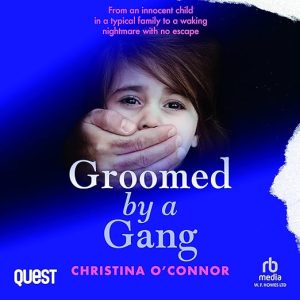
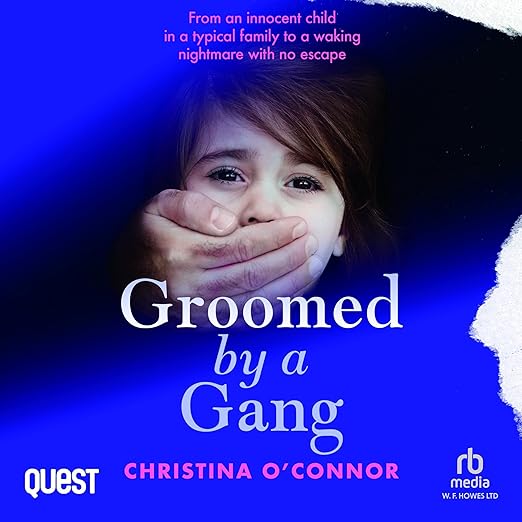
Christina O’Connor’s memoir is not an easy listen, and it is not meant to be. Groomed by a Gang is the account of a woman who was groomed, trafficked, and repeatedly raped from the age of thirteen – one of the central survivors in the Huddersfield grooming gang trials that resulted in eleven convictions and sentences totalling 221 years. O’Connor has waived her right to anonymity to ensure that this story is told in her own voice, on her own terms. That decision deserves respect, and Laura Brydon’s narration carries the weight of it.
At 4.5 stars from 176 listeners, this is a memoir that is finding its readership among people who want to understand, not sensationalise. It is harrowing, and it is important.
About the Audiobook
Christina O’Connor grew up in Huddersfield in a loving family. The account of how a happy child became the target of a grooming gang is both precise and devastating – the incremental nature of the grooming process, the alcohol and cannabis and attention and belonging that were used to lure a thirteen-year-old away from her family and into a world of exploitation, is rendered without euphemism but also without exploitation.
The timeline is stark: five years of near-daily rape. Robberies committed under duress. A prison sentence that, improbably, becomes the turning point – the moment of enforced separation from her abusers that gave Christina the space to begin reclaiming herself. Two years after her release, the police statement she had made during the abuse – and which had been dismissed without action – was found in a filing cabinet, and Operation Tendersea began.
The book is also an account of institutional failure: the parents who watched helplessly as their daughter was stolen from them, the police who initially ignored a child’s testimony. O’Connor does not dwell on bitterness, but the facts speak clearly enough. The 43 offences of which 11 men were ultimately convicted represent a fraction of what was done to her and to others.
What distinguishes this memoir is O’Connor’s insistence on her own agency and survival. This is not a book about victimhood as an identity. It is a book about what survival actually looks like – imperfect, painful, costly – and about the particular courage required to speak when the world has already shown it would rather not listen.
The Narration
Laura Brydon’s narration is sensitive and unflinching in equal measure – precisely the balance this material requires. She does not soften passages that should not be softened, and she brings an appropriate restraint to moments of raw disclosure that might easily be sensationalised. Over eight hours and fifteen minutes, she maintains a consistency of tone that honours the subject without distancing the listener.
The choice to use a professional narrator rather than O’Connor herself reading the text is understandable – the emotional toll of recording this material would be considerable – and Brydon serves as a thoughtful proxy, clearly in command of the material and its weight.
What Readers Say
Rated 4.5 out of 5 from 176 listener ratings. The responses are consistently those of readers who felt the book important rather than merely compelling. “Very hard reading at times, but a must read,” wrote one UK listener. “People must realise what went on and maybe still does.” Another described it as “heartbreaking” and commended O’Connor for her courage in giving up anonymity.
Several reviewers noted feeling anger at the institutional failures documented: “Why did someone not step in and help?” A survivor’s reviewer offered the clearest endorsement: “What a strong woman you are, Christina.”
The tone throughout the reviews is one of gratitude for the book’s existence alongside distress at its content – which is the appropriate response.
Who Should Listen?
This is not recommended for listeners who are currently in a vulnerable state regarding trauma or abuse. For those who can engage with it safely, it is essential reading for anyone who wants to understand the realities of grooming and county lines exploitation, the systemic failures that allowed the Huddersfield cases to continue, and what institutional accountability – and its absence – looks like in practice.
Readers who found Louise Tickle’s journalism on grooming gangs, or the accounts of Sarah Champion’s parliamentary work, valuable will find this a necessary companion text. Professionals in social work, education, and law enforcement for whom this is professionally relevant territory will find it particularly instructive.
Available on Audible UK. Also check Kobo, Scribd, and Storytel.