Clara’s Verdict
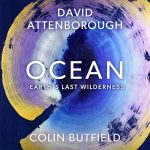
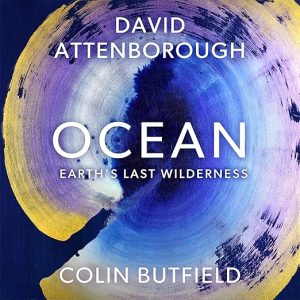
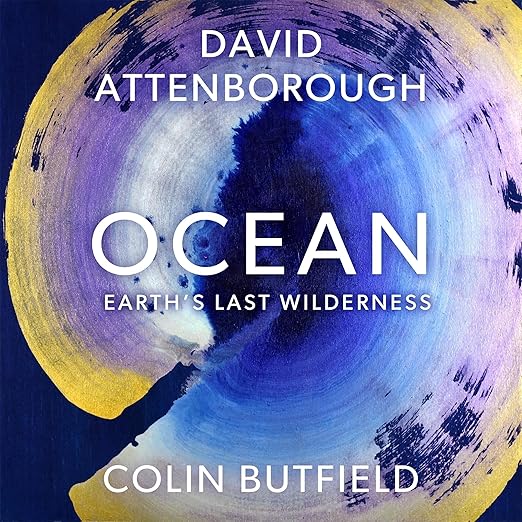
There is a particular kind of authority that comes from ninety-nine years of careful watching. David Attenborough has spent a lifetime filming our planet, and Ocean – his most urgent book – carries the weight of everything he has seen. This is not a coffee-table companion or a gentle nature ramble. It is a passionate, deeply informed argument for the one ecosystem that underpins all others, and it arrives exactly when it needs to.
Read by Attenborough’s long-term collaborator Colin Butfield, this audiobook is one of the most important releases of 2025. I do not use that word lightly. After reviewing audiobooks for over a decade, I’ve developed a well-honed scepticism towards grand claims – but Ocean earns every superlative. This is a book written by someone who has spent a century watching the world change, and who has decided, at the end of it, that the ocean is the thing that matters most.
About the Audiobook
The book is structured around eight saltwater habitats – from polar seas to coral reefs, from kelp forests to the hadal zone nearly eleven kilometres beneath the surface. Attenborough and Butfield move through each with the meticulous wonder that defines the best natural history writing: every creature, every system, every interconnection presented with clarity and evident delight.
What lifts Ocean above the genre is its refusal to wallow in despair. The authors document the damage humanity has inflicted with unflinching honesty – warming waters, acidification, plastic pollution, industrial fishing – but the book’s animating conviction is that the ocean’s capacity for recovery, given the chance, remains extraordinary. The message is not “it’s too late” but “it is not too late, if we act.” That distinction matters enormously, and it’s what separates this from the environmental doom-saying that characterises too much of the genre.
The science here is impeccably presented: accessible without condescension, detailed without becoming a textbook. Listeners encounter vampire squid and headless chicken sea cucumbers alongside blue whales and bioluminescent jellyfish – the strangeness of the deep ocean rendered vivid and astonishing. There are passages in this book that read like science fiction, until you remember that they are simply the ocean as it actually is.
Attenborough has been filming our oceans for more than seventy years, from the early black-and-white footage of his first television expeditions to the high-definition splendour of the Planet Earth and Blue Planet series. What Ocean offers that those landmark documentaries couldn’t is interiority – the private thinking of someone who has watched the same places change across a lifetime, and who now brings the weight of that long observation to bear on a single, urgent argument. The book’s structure around eight habitats gives it shape and discipline; within each habitat, Attenborough and Butfield move freely between the lyrical and the scientific, between the specific and the systemic, in a way that the television format’s visual demands never quite permitted.
Published by John Murray in May 2025, and an instant Sunday Times bestseller. The Evening Standard called it “gripping,” noting that “the wildlife is so fantastical that the images on the page feel like works of the imagination.” They were not wrong.
The Narration
Colin Butfield, who co-wrote the book, brings to the narration a quality that’s genuinely rare: he sounds as if he cares about every sentence, because he wrote every sentence. There’s an intimacy to the reading that contrasts productively with Attenborough’s voice when quoted directly – you get the sense of two people deeply invested in the same urgent project.
At 8 hours and 53 minutes, this is a listening experience that rewards undivided attention. I’d suggest long walks by the coast, if you have access. The experience of hearing about kelp forests whilst standing near an actual shoreline is something I’d recommend to anyone.
What Readers Say
The audiobook carries a rating of 4.7 out of 5 on Audible UK, with 210 reviews. The response has been consistent: readers emerge from it feeling both informed and galvanised. One reviewer described combining this book with Attenborough’s five-wall, fifteen-projector display at the Natural History Museum, finding that the two experiences amplified each other powerfully – an immersive education in what the ocean is and what it faces.
“Excellent book. Really informative but also very enjoyable,” noted one UK reviewer – a description that captures the book’s particular balance. Another simply wrote “Beautiful,” which is one-word criticism at its most efficient. A third called it “a page turner, difficult to put down” – high praise for a book about marine biology that some might expect to be worthy rather than gripping.
Who Should Listen?
For anyone with even a passing interest in the natural world, environmental issues, or simply in understanding what we stand to lose, Ocean is essential listening. It is particularly well-suited to commuters who want their daily journey to mean something, to families looking for a shared listen that will spark genuine conversation, or to anyone who has felt overwhelmed by environmental news and wants something that offers urgency alongside hope.
Listen to Ocean on Audible UK. Also available through Kobo, Scribd, and Storytel.