Clara’s Verdict
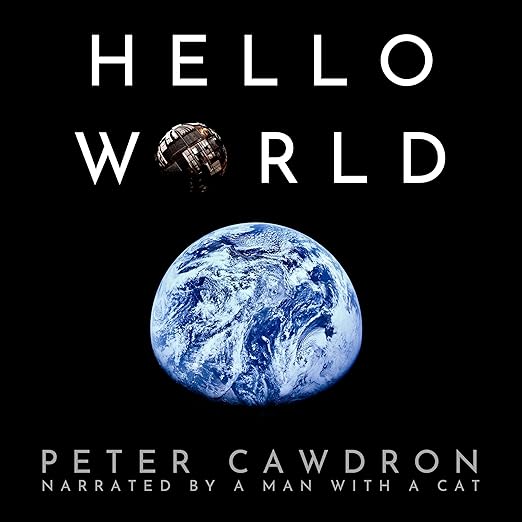
A book about algorithms published in August 2018 and heard in the summer of 2026 is going to be judged on one question before any other, and I may as well put it first: does it still hold? My answer is a qualified yes, with the qualification mattering. Hannah Fry’s Hello World is not a survey of current systems, and anyone who buys it expecting one will be disappointed within an hour. It is a book about how to think about handing decisions to machines, and that framework has aged considerably better than any list of technologies could have.
Six hours and fifty-one minutes, read by the author herself, and a 4.5 average across more than two thousand three hundred ratings. Those are good numbers for popular science, a category where readers are quick to punish either condescension or obscurity. What I find most persuasive is the shape of the argument. Fry does not tell you whether algorithms are good or bad. She keeps putting you in the chair where the decision has to be made, and lets the discomfort do the teaching.
About the Audiobook
The book opens with a run of dilemmas, and they are the best advertisement for it. You stand accused of a crime: would you rather a human or an algorithm decided your fate? The algorithm is more consistent and less prone to lapses of judgement. The human, though, can look you in the eye before sentencing you. Then: you need a liver transplant. An algorithm can match donors to patients and save many more lives overall, but it may also put you at the back of the queue. Then: you are buying a driverless car, and one model will minimise total deaths in a collision while another promises to put its own passengers first. Which do you choose?
Those questions establish the method for everything that follows. This is not a book about how algorithms work, though it explains enough of the mechanics for the arguments to land. It is about the trade we keep making without noticing: consistency in exchange for accountability, aggregate benefit in exchange for individual fairness. Fry’s tour covers the good, the bad and what the publisher cheerfully calls the downright ugly, across healthcare, transport, finance, security and who gets sent to prison.
The pitch of the thing is well judged. The material divides into self-contained case studies, which suits listening in segments. The risk in that shape is a certain evenness, since each domain arrives with a similar rhythm of scenario, mechanism and complication, and by the later stages you can feel the pattern coming. A mild criticism of a book whose consistency is mostly a virtue.
The publisher’s central question is how much we should rely on these systems and what kind of future we want. Eight years on, the second half of that has become the more urgent, which is an argument for the book rather than against it.
The Narration
Fry reads it herself, and the publisher copy says so plainly: this is the audiobook edition, written and read by Hannah Fry. That matters more here than the usual self-narration bonus, because the book’s whole rhetorical strategy depends on the sound of a specific kind of person talking. The argument is being made by someone unimpressed by both the utopian and the apocalyptic positions, and the tone required is a sort of amused precision. Hire a professional and you get a clean read of a sceptical text. Have the sceptic read it and you get the scepticism itself.
The dilemmas that open the book are the clearest demonstration. Each one is a small trap, offered in good faith, and it only works if the reader genuinely does not appear to be steering you towards an answer. An author reading her own even-handedness is more convincing than a narrator performing it, because you can hear that the balance is a position rather than an instruction. Fry lets the awkward pause sit after each question rather than hurrying past it.
The technical demand is register control across very different material. Numbers must be delivered clearly enough to follow without a page, legal and medical case material requires a straight face, and a persistent thread of dry humour would curdle if pushed. Her pacing is disciplined rather than showy: she slows for the parts that need holding and moves briskly through the connective tissue. Just under seven hours also sits well inside the range a non-professional reader can sustain, which is worth saying, because self-narration on much longer books frequently does not.
What Readers Say
The most detailed review in the pool is a five-star one that lists the ground covered, from data collection and the justice system through medicine, autonomous transport, crime prediction and art, and credits Fry with managing it “in an engaging and fascinating way”. The reviewer calls the book eye-opening and at times shocking, which is a fair description of the cumulative effect rather than of any single chapter.
The four-star review is the one I would press into a prospective listener’s hands, because it addresses the ageing question head-on. It calls the book a “concise and readable account of how AI works” and how it affects our lives for better and worse, then adds the caveat directly: “remember that this was written before the advent of Chat GPT so things have changed”. That reviewer’s conclusion is nuanced and, I think, correct. The specifics have moved on. The questions about how we deal with these systems and how we regulate them have not.
A third reviewer offers the shortest and best summary of the reading experience: “This book gave me hope and fear in equal measure.” They single out “the questions around philosophy, ethics, and how we might apply them in an increasingly automated world” as the most fascinating material. That is a listener describing a book that unsettled them productively, which is precisely what this one sets out to do.
Who Should Listen?
Curious non-specialists are the intended audience and the book serves them extremely well. If you have opinions about automated decision-making but have never had the underlying trade-offs laid out cleanly, this is a short, well-argued and genuinely enjoyable way to acquire them. It also works well for anyone who wants an ethical vocabulary for these arguments rather than a technical one, and for listeners who prefer their popular science delivered by the person who wrote it.
Software engineers and data scientists will find the mechanics too introductory, though the case studies may still repay the time. Anyone wanting an account of large language models and the systems that arrived after 2018 needs a newer book, and one reviewer says so plainly. And if you want a firm verdict on whether algorithms are a good thing, Fry refuses to give one, on principle. That refusal is the book’s central argument, and you should know it is coming.