Clara’s Verdict
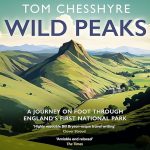
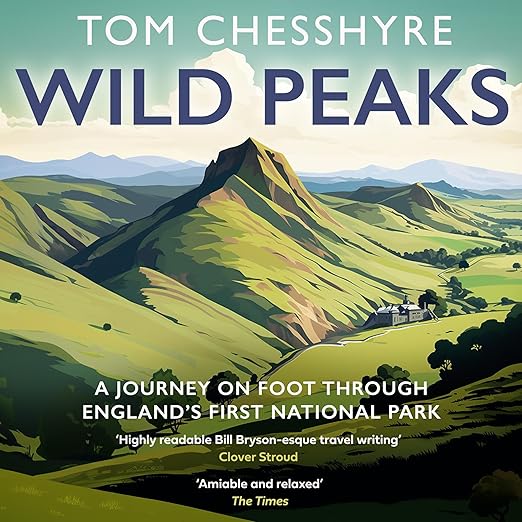
The Peak District sits in the middle of England in almost every sense – geographically central, historically contested, culturally loaded – and Tom Chesshyre has written a celebration of it that is also, in the best tradition of British landscape writing, a meditation on access, ownership, and the particular English relationship to land that we still have not fully resolved. Wild Peaks marks the park’s 75th anniversary with a 360-mile ramble that is neither self-congratulatory about what the right-to-roam movement achieved nor wistful about what has been lost since. It is curious, funny, occasionally polemical, and well-observed throughout. Matthew Parris’s verdict – “effortlessly readable” – is apt. This is a book that earns the right to be comfortable without sacrificing the right to be pointed.
I have reviewed a number of British landscape books in recent years, and the best of them share a quality that is harder to achieve than it looks: they make the history of a place feel inseparable from its present experience. Chesshyre has that quality.
About the Audiobook
The frame is simple: Chesshyre walks the Peak District, roughly 360 miles of it, across gritstone plateaus and limestone valleys, past ancient inns and mountain rescue huts, through villages that have been fought over and farmed and photographed and touristed for centuries. Along the way he talks to everyone he can find: landowners and farmers, historians and mountaineers, right-to-roamers and rangers, publicans with strong opinions, mystics on Kinder Scout, and fellow walkers of every kind. The cast of characters he assembles gives the book its texture and prevents it from being merely descriptive.
The history is what gives it depth. The 1932 Kinder Scout mass trespass – 400 ramblers, many of them young working-class men from the mill towns of Lancashire and Yorkshire, demanding the right to walk land closed off for grouse shooting by wealthy landowners – is one of the most significant acts of civil disobedience in modern British history. Six of the walkers were imprisoned. The right to roam that followed, eventually, nearly two decades later, was hard won. The Peak District established as Britain’s first national park in 1951 is the direct legacy of that action, and Chesshyre traces that inheritance through everything he observes: the ongoing tensions between farming and access, between rewilding and working landscape, between the millions who come to walk and the people who live there year-round.
The book handles the present pressures on the Peak – climate change, overtourism, the housing crisis in rural communities – without becoming polemical or losing sight of why people love the place. It is, at its heart, a love letter written by someone who thinks critically about what he loves.
The Narration
David Thorpe narrates, and his voice – dry, measured, with occasional warmth – suits Chesshyre’s prose and tone. Travel writing benefits from narrators who do not oversell the material or impose their own emotional response on the listener, and Thorpe does not: he lets the descriptions, the history, and the characters do their work. At ten hours and fifty-one minutes, this is a listen you can take over several evenings, and Thorpe’s steady, unhurried pacing makes that feel like a pleasure rather than a commitment to be discharged.
What Readers Say
This title is newly released and does not yet carry listener reviews. Tom Chesshyre has an established readership from his previous travel writing, and early interest in Wild Peaks has been strong among walkers, local historians, and readers of British landscape writing more broadly. The Peak District has a fiercely loyal community of enthusiasts – walkers, climbers, cyclists, birders, and the descendants in spirit of those 1932 trespassers – and the 75th anniversary occasion gives the book an obvious moment of cultural relevance.
Who Should Listen?
For walkers and hikers who enjoy reading about the landscapes they love as much as they enjoy walking them – and who want that reading to do more than describe the views. Also for anyone interested in the ongoing politics of land access, a subject with real and unresolved contemporary urgency in England, or in the broader question of what national parks are for in an era of climate crisis, mass domestic tourism, and contested land use. The anniversary context gives the book a natural structure, but the arguments it raises – about who the countryside is for and what obligations come with public access – are perennial ones that Chesshyre handles without oversimplifying.
An excellent companion for a visit to the Peak District itself, or a generous substitute when the visit is not currently possible. Strongly recommended for listeners who have enjoyed Robert Macfarlane’s landscape writing, Nick Hayes’s The Book of Trespass, or any of Chesshyre’s previous travel books. David Thorpe’s steady narration makes the ten-hour runtime feel like time well spent.
Listen to Wild Peaks on Audible UK – celebrating 75 years of Britain’s first national park.