Clara’s Verdict
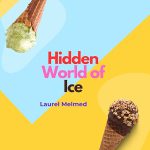
There are holes in the Greenland ice sheet, cryoconite holes, where microorganisms carry on living at temperatures that ought to forbid life altogether. That single image earned this audiobook its place in my queue. Built around the fieldwork of climate scientist Marco Tedesco, Hidden World of Ice follows the arc of a typical research day on the ice and uses it to smuggle in everything else: long-extinct creatures such as the polar camel, the epic deeds of the great Arctic explorers, and the legends of the rare populations who call the region home.
The result is part science and part elegy, and I mean both as compliments, with one caveat. At just under four hours this is an overview, a field notebook rather than a survey, and the constant movement between hard measurement and poetic reflection will strike some listeners as a book unsure of its own register. I found the mixture affecting. I can also see why others find it thin.
What This Edition Is and Who It’s For
Credited to Laurel Melmed and published in audio by Tantor Media on 18 August 2020, this recording runs a brisk 3 hours and 58 minutes. It sits across two shelves, science and the outdoors, which is fair warning of its hybrid nature: the climate data arrives wrapped in landscape writing.
A listener gets a compact briefing on why Greenland matters, what is changing there and how fast, delivered through the routine of one scientist’s working day rather than through chapters of methodology. It is, by its own admission, a tribute to a beautiful place that may be gone too soon, and it never pretends to neutrality about that loss.
Joel Richards Reads the Ice
Joel Richards has just under four hours in which to manage two very different registers: the sober delivery that scientific evidence demands, and the lyricism the book reaches for when it considers what that evidence means. Material like this fails in audio when a narrator flattens it into a lecture, and fails differently when he inflates it into a eulogy; the job is to hold the line between the two.
The runtime is this production’s quiet advantage. Short enough for one long walk or a single wintry afternoon, it invites exactly the kind of continuous, undistracted listening that lets the figures settle and the imagery do its work.
What Readers Say
I owe you honesty here. This title holds 3.2 stars from 13 ratings, a lukewarm showing, though from a very small sample. No written reviews are attached, so the reasons remain a matter of inference, but books that straddle data and reflection do tend to divide their audiences, disappointing those who wanted more of one and less of the other. Set your expectations accordingly: this is an impressionistic field account, not a comprehensive climate text, and listeners who know that going in will, I suspect, fare considerably better.
Who Should Listen?
Curious generalists are the natural audience: anyone who wants a vivid, human-scale sense of Arctic research without committing to a doorstop. Armchair travellers who collect remote places will enjoy the local colour, and the short runtime makes it a painless experiment. Specialists after rigorous glaciology should look elsewhere, as should anyone who prefers science untinted by lament. Go in for the cryoconite holes and the polar camels. Stay for the uncomfortable arithmetic of a melting island.