Clara’s Verdict
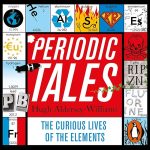
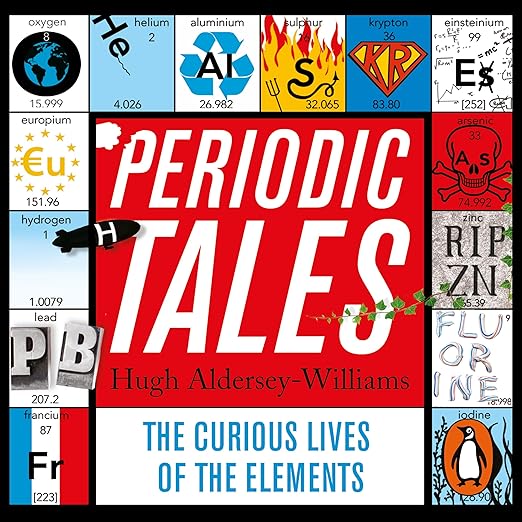
Science writing fails most often when it forgets that human beings, not molecules, are its actual audience. Hugh Aldersey-Williams never forgets this. Periodic Tales is a remarkable book – part chemistry, part cultural history, part literary anthology – that traces the stories of the chemical elements as if they were characters in a vast, strange novel that happens to encompass everything in the universe. Aldersey-Williams is a writer of genuine elegance, and John Sackville’s narration gives the book the measured, curious delivery it needs. This is science writing at its proper best.
I came to this one without any particular attachment to chemistry, and left it wanting to revisit every chemistry teacher who had made the subject seem dull by comparison.
About the Audiobook
The organising premise is simple but generative: each element has a personality, a history, a set of cultural associations that often have very little to do with its atomic weight. Aldersey-Williams explores these associations with genuine delight. Iron, he shows us, falls from the sky in meteorites and has shaped human warfare for millennia. Noble gases, inert and characterless in chemical terms, light up the vice districts of the modern city in neon and argon. Lead carries its long history of toxicity and prophecy; zinc has an unexpectedly intimate relationship with coffins and preservation.
The connections Aldersey-Williams draws are often surprising: between the calcium in our bones and the limestone of Washington’s public buildings; between the sodium in table salt and the orange glow of sodium streetlamps. He is interested in what the elements mean to us – in art, in medicine, in folklore, in industry – as much as what they are in strictly chemical terms. This humanistic approach means the book rewards the non-scientist listener rather than excluding them, while offering the scientist something they won’t get from a textbook: context.
At thirteen and a half hours, this is ideal for sustained listening across a week – or for dipping in and out, since each element’s chapter functions as a self-contained essay that doesn’t require the previous one as background.
The Narration
John Sackville has a measured, unhurried quality that suits a book which asks the listener to pause and reflect rather than be swept along. He navigates the book’s considerable tonal range – from anecdote to analysis, from lyric description to historical detail – without jarring. When Aldersey-Williams attempts to recreate Brand’s seventeenth-century preparation of phosphorous in his own kitchen, Sackville brings exactly the right note of gleeful absurdity. His pronunciation of element names and scientific terminology is reliable and unselfconscious, which matters more than one might think across thirteen hours.
What Readers Say
A 4.4 rating from 620 listeners is a strong endorsement for a popular science title. UK readers have been characteristically discerning: one called it “science writing at its best, a fascinating and beautiful literary anthology” and wished chemistry had been taught this way at school. Another, while noting some passages that were “a little stodgy”, praised the book for delivering its rewards to those who persevere. Comparisons to Sam Kean’s The Disappearing Spoon appeared in several reviews – both books mine the periodic table for human stories, though Aldersey-Williams is the more literary writer. One reader, who identified as being interested in the history of science, singled out the section on the Swedish chemist Jacob Berzelius as particularly illuminating.
Who Should Listen?
Periodic Tales is for curious general readers who enjoy intelligent non-fiction with a literary sensibility – the kind of person who reads The Periodic Table by Primo Levi and wonders where to go next. It is emphatically not a chemistry textbook, and no scientific background is required. It would also make an excellent gift for anyone whose relationship with science has been complicated by dry or reductive teaching. If you enjoy Bill Bryson’s approach to large subjects – lots of human colour, rigorous research worn lightly – you will find Aldersey-Williams a similar pleasure.
Available now on Audible UK.