Clara’s Verdict
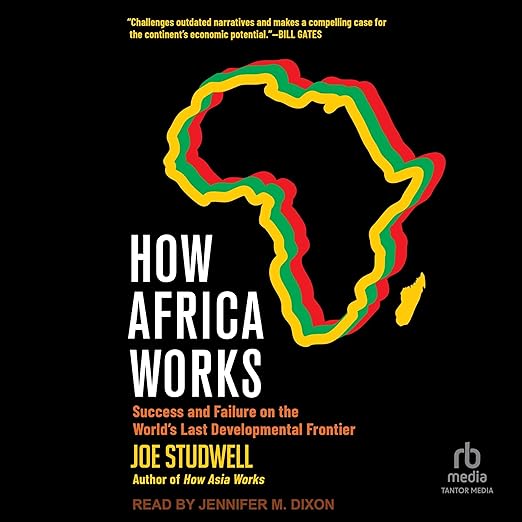
Joe Studwell has a talent for taking economic questions that appear impossibly complicated and rendering them navigable without condescension or oversimplification. His earlier book, How Asia Works, is one of the best pieces of development economics writing for general readers produced in the past twenty years. How Africa Works follows in that tradition – an attempt to understand, with real rigour and evident affection for the continent, why some African nations have achieved remarkable economic growth while others remain mired in poverty, and what that tells us about the path forward.
About the Audiobook
The book’s central argument is a deliberate challenge to the fatalistic narratives that often dominate Western coverage of Africa: that geography, colonial legacy, or corruption make development essentially impossible. Studwell instead identifies a clear developmental path that successful nations have followed – drawing on extensive research and travel across the continent – and examines four countries that have walked some version of it: Botswana, Mauritius, Ethiopia, and Rwanda.
Each case study illuminates something different: Botswana’s management of diamond revenues; Mauritius’s transformation into a high-income economy through deliberate policy choices; Ethiopia’s agricultural development under difficult conditions; Rwanda’s remarkable post-genocide reconstruction. These are not presented as perfect models – the book is alert to the particular challenges of each context, including the authoritarian tendencies of some successful governments – but as evidence that development is achievable and that there are patterns to follow.
Crucially, Studwell centres African voices and African leadership rather than defaulting to an external perspective. The rapidly rising population, often framed in Western media as a crisis, is reframed here as potential – a demographic dividend waiting to be unlocked through investment in education and appropriate economic policy.
The Narration
Jennifer M. Dixon reads with composed authority, which suits material of this nature well. The book covers a good deal of statistical and policy ground, and Dixon’s ability to maintain engagement through complex economic argument is commendable. At fifteen hours, this rewards listeners who are genuinely curious about the subject rather than those seeking light entertainment, but it never becomes impenetrable.
What Readers Say
Early response has been positive, with a rating of 4.4 stars from thirteen reviews. Detailed individual reviews are not yet widely available, but the book’s reception tracks with the broader enthusiasm that greeted Studwell’s earlier Africa-adjacent writing – readers who engage with development economics seriously tend to find his approach both refreshing and substantive.
Who Should Listen?
Essential listening for anyone who wants a serious, evidence-based understanding of African development that goes beyond the standard narratives. Recommended for students of politics, economics, and international relations; for policymakers and development practitioners; and for general readers who want to understand one of the most important stories of the coming century. If you found How Asia Works valuable, How Africa Works is an obvious companion. If you are new to Studwell, this is an excellent place to start.
Listen to How Africa Works on Audible UK – find it here. Also available on Kobo, Scribd, and Storytel.