Clara’s Verdict
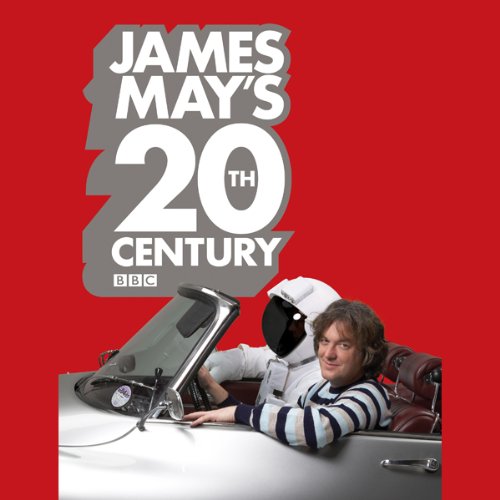
James May occupies a peculiar position in British intellectual life: he is genuinely curious, clearly well-read in his areas of obsession, and has the rare gift of making technical subjects feel like a conversation in a pub rather than a lecture. James May’s 20th Century, originally released alongside a BBC television series, showcases these qualities at their best and reveals their limits. When May is in full flow on aviation, early computing, or the Theremin, this is irresistible listening. When the research gets thinner or the editing careless, you feel it. Read by May himself, it has an authenticity no professional narrator could replicate – and a few rough edges he couldn’t avoid either.
Four and a half hours of May asking “how does this stuff work?” is, on balance, a very enjoyable way to spend a weekend afternoon.
About the Audiobook
The book is structured thematically rather than chronologically, which is both its strength and its occasional weakness. May roams across flight, space travel, mechanised warfare, television, medicine, computers, electronic music, skyscrapers, and espionage – arriving at each with genuine enthusiasm and a fondness for the counterintuitive detail. The questions animating each chapter are good ones: how did the Zeppelin fail to dominate air travel? What were the tipping points that made the car and the internet unstoppable? Why did the motorcycle sidecar never properly catch on?
He’s particularly good on the human stories behind invention – the garden-shed tinkerers and the accidental discoveries, the moments when something that looked like a dead end turned out to be the path forward. The connection between Winnie the Pooh and the artificial heart is explained and is genuinely surprising. The question of whether teenagers existed before 1950 is addressed with the wry precision you’d expect from someone who thinks about these things properly.
The Narration
May reads with exactly the cadence you’d recognise from his television work: slightly hesitant in places, occasionally self-deprecating, capable of sudden enthusiasm when a subject catches him. His voice is not trained for audiobook performance, and there are moments where sentence construction trips him up – one reviewer specifically notes some clunky passages that jar in the otherwise conversational style. But authenticity counts for a great deal here. You are listening to a man who actually cares about this material, and that comes through on every page. Running at four hours and 32 minutes, it’s an ideal companion for a long drive or a few commutes.
What Readers Say
The book holds a 4.3-star rating from 557 listeners – substantial, consistent approval with a few dissenting voices keeping the score honest. Graduate engineer John Hardy found it accurate in technical areas, suggesting the research is more solid than some critics allege. “Another great book from May” notes his characteristic “chatty, conversational style” and the prevalence of garden-shed inventors. A more critical voice from 2017 flags factual errors and Wikipedia-grade research in places, and honestly, that rings true for some chapters. The majority verdict: enjoyable, informative, best approached as a companion to curiosity rather than a definitive reference.
Who Should Listen?
Anyone who’s enjoyed May’s television work – Top Gear, James May’s Toy Stories, Our Man in… – will find this an easy, pleasurable listen. It’s also well-suited to curious generalists: people who want to understand how the modern world came to be without committing to heavy academic reading. Strong for commutes, long drives, and any occasion when you want something genuinely interesting without needing to take notes. Not recommended as a technical reference.
Listen on Audible UK: Get James May’s 20th Century on Audible UK.