Clara’s Verdict
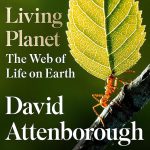
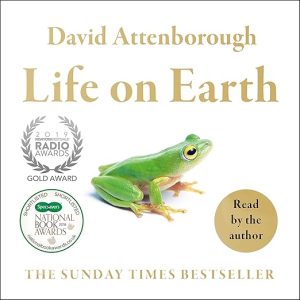
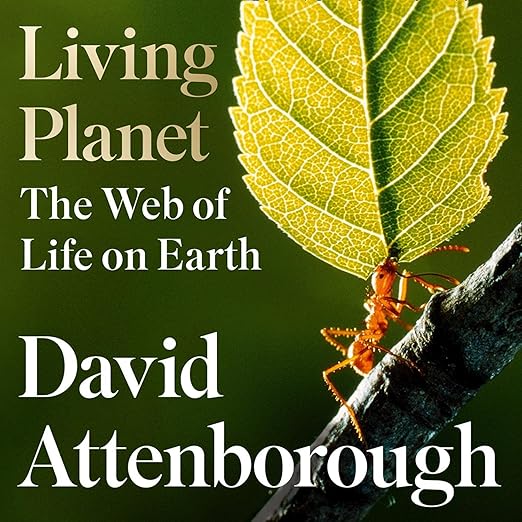
There is a particular kind of listening experience where the voice of the narrator is so entirely right for the material that to imagine any other voice would be to imagine a different book entirely. Living Planet by David Attenborough is that experience – and the fact that Attenborough reads his own work, updated and expanded for a 2021 edition, makes this an audiobook that transcends its own genre category. This is not simply a natural history book read aloud. It is an act of witness from a man who has spent ninety-plus years watching the world with more sustained attention than almost any other living person.
I put this on during a long walk in the Peak District last autumn, which turned out to be exactly the right context. The book’s opening passages, describing how life has adapted to every extreme of climate and habitat that the planet offers, landed differently in the middle of actual landscape – the moors, the sky, the kestrel doing its hovering thing above the path. Attenborough has a gift, which no amount of technical descriptive skill quite accounts for, of making the familiar feel extraordinary. Fish that walk. Snakes that fly. Bears with hair on the soles of their feet. He has spent decades accumulating these astonishments and deploying them with perfect timing.
About the Audiobook
Living Planet was originally published in 1984 as a companion to the BBC television series. This audiobook edition, released by William Collins in October 2021, is a fully updated narrative version – Attenborough and zoologist Matthew Cobb have added recent discoveries in ecology and biology, and the book now addresses the urgent questions that were not on the table in the 1980s: climate change, pollution, mass extinction of species. The result is a book that functions simultaneously as a classic work of natural history and as a contemporary reckoning with what has changed since it was first written.
The structure moves through Earth’s major habitats – polar regions, tundra, forest, desert, ocean, mountain, city – examining in each case the extraordinary adaptations that allow life to persist. Attenborough is not a writer who imposes emotional narrative onto nature; he is a describer and an explicator, and his enthusiasm for the ingenuity of individual species is so genuine and so sustained that it becomes the book’s driving energy. By the end, as the synopsis notes, it is difficult to say which is more astonishing – the inventiveness of individual creatures or the complexity of their interdependence.
The new photography section does not translate to audio, and listeners who want the visual apparatus of the updated edition will need the print version alongside this. But the narration compensates amply.
One of the book’s more striking qualities is its refusal to separate wonder from urgency. Attenborough does not hold the natural history material and the climate sections in separate boxes – one celebratory, one cautionary – but integrates them, so that the ingenuity of a walking fish and the precariousness of the habitat it depends on are presented as parts of the same story. This is not polemical writing. It is the kind of argument that works precisely because it does not announce itself as an argument. By the time the book addresses climate change and mass extinction directly, you have been shown, rather than told, exactly what is at stake. That integration is the mark of a writer who understands how persuasion actually works.
The Narration
Attenborough narrates his own work, which makes any discussion of narration quality something of a formality. His voice is one of the most recognisable in British broadcasting, and it carries into the audiobook format with undiminished authority. What strikes you listening to him read his own prose is how precisely the rhythms of the writing anticipate the rhythms of the delivery: these are sentences designed to be spoken, not just read. At 11 hours and 33 minutes the experience never exhausts itself. One UK reviewer noted they love his voice so much they listen to it in bed to help fall asleep – which is slightly at odds with the material’s capacity to produce wide-eyed wonder, but speaks to the profound comfort the voice provides.
What Readers Say
With a 4.8-star rating from 418 listeners, Living Planet sits among the most consistently praised audiobooks in the natural history category. Harry called it a clear, simply written account of our situation on this lovely, probably unique planet, noting its importance not just as description but as a guide to understanding what must be done to keep it safe. Hydee described it as fantastically informative and fascinating from the first word, calling Attenborough a British treasure and, not incorrectly, a genius. The reviews are unanimous in one respect: none of them are disappointed.
Who Should Listen?
This is for everyone, with the practical caveat that the updated photography section cannot be experienced in audio. For natural history enthusiasts, for anyone with a persistent sense that we are not paying close enough attention to the world outside our windows, and for listeners who want to understand the ecology of the planet with both scientific rigour and humane warmth – this is exactly the right book. Listen to it outdoors if you can. It makes a difference.