Clara’s Verdict
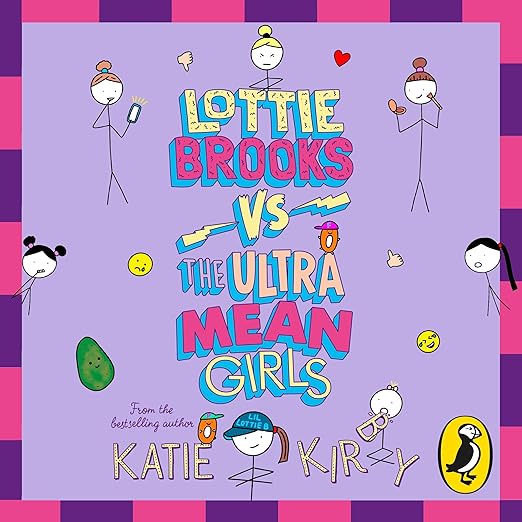
Katie Kirby’s Lottie Brooks series has earned its place on every primary school reading list in the country, and book eight – Lottie Brooks vs The Ultra Mean Girls – demonstrates precisely why the series has become such a phenomenon. These are not children’s books that talk down to their readers. Lottie’s interior monologue is chaotic, funny, mortifying, and absolutely true to how eleven-year-olds actually experience the world. The friendship drama at the heart of this instalment is handled with more emotional intelligence than most adult fiction manages, and Kirby wraps it in enough comedy to make the whole thing feel like a treat rather than a lesson. I have now reviewed enough children’s audiobooks to recognise clearly the difference between a writer who merely remembers childhood and one who is actually writing from inside it. Kirby is the latter.
The eighth book in a running series might be expected to show signs of fatigue. It does not. The emotional stakes here feel higher, if anything – partly because we know these characters well by now, and partly because the friendship dynamics Kirby is exploring become more complicated as her protagonist ages.
About the Audiobook
Book eight picks up with Lottie facing the particular devastation of a best friend who has defected to the enemy. Amber, erstwhile Queen of Eight Green, has somehow joined the Ultra Mean Girl Gang, leaving Lottie, Poppy, Molly, and Evie to navigate school without their number – and with Lottie’s scheme-prone brain working overtime to retrieve her. The plans escalate from flower deliveries to hypnosis to emotional blackmail via a BFF photo montage, in typical Lottie fashion. Strategy sessions are documented in the kind of bullet-pointed lists that will be immediately recognisable to anyone who has spent time with children aged nine to twelve.
What lifts the series above its competitors is Kirby’s refusal to resolve things too easily or too cleanly. The friendship dynamics here feel messy and real: the way groups fracture under social pressure, the way loyalty and self-interest pull in opposite directions simultaneously, the way someone you know very well can become, temporarily, a stranger. Meanwhile, Lottie’s home life provides additional layers of comedy – a mother newly returned to work who expects domestic contributions, a baby sister with a biting habit, and a dog with an unfortunate and persistent interest in the anatomy of other dogs. The book manages to be genuinely funny and genuinely affecting in equal measure, which is not a trivial achievement.
The Narration
Charlie Sanderson narrates, and she is excellent. Sanderson captures Lottie’s breathless, slightly panicked inner voice without tipping into caricature, and she differentiates the supporting cast convincingly across what is, by this point in the series, a fairly large ensemble. The diary format – with its handwritten lists, catastrophically ill-conceived plans, and dramatic asides – translates remarkably well to audio, largely because Sanderson commits to the comedy without overplaying it. Timing in children’s comedy is everything, and she has it. At five and a half hours, this is a comfortable listen for younger audiences and a genuinely enjoyable one for adults who have been roped in as co-listeners on family car journeys.
What Readers Say
Listeners rate this instalment at 4.8 out of 5 stars. Parents and children alike have reviewed the series warmly across all eight books. One parent noted that the books are “funny, full of embarrassing moments, and super relatable for kids around the age of 9-12,” while another described reading and laughing together as a way of processing their child’s difficult days at school – the situations Lottie encounters becoming conversation starters about friendship, fairness, and how to handle unkindness without becoming unkind yourself. A reviewer whose niece finished it in two days and immediately moved on to the next book in the series offered the most concise possible endorsement. One review – from a parent who has followed the series from the beginning – included the heartfelt plea: “No more cliff hangers.” A fair request, given the series’ habit of ending on precisely that.
Who Should Listen?
The sweet spot for this series is children aged nine to twelve, particularly those navigating the social complexities of upper primary school. It is brilliant for car journeys, long commutes, bedtime listening, or any reluctant reader who needs to discover that books can be genuinely funny. Parents who listen alongside will find it a surprisingly useful starting point for conversations about friendship, peer pressure, and the merits of not kidnapping your best friend to win her back. New to the series? Start with book one – The Extremely Embarrassing Life of Lottie Brooks – but do not let that stop you.
Listen to Lottie Brooks vs The Ultra Mean Girls on Audible UK – the eighth book in the beloved series.