Clara’s Verdict
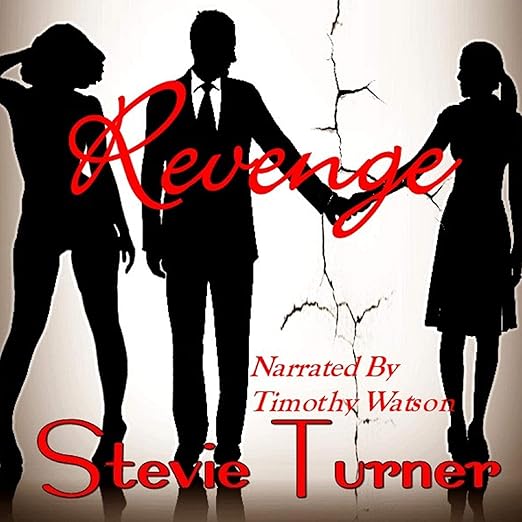
Seventeen hours and ten minutes is a serious investment of your attention, and Revenge asks for all of it. Tom Bower’s book on Meghan Markle, Harry and the Windsors reached number one on the Sunday Times list, arrives here on a Blink Publishing credit dated 21 July 2022, and is read by Andrew Wincott. It holds 4.4 from 11,391 ratings, which is a very large pool for a royal biography and tells you the subject has lost none of its pull.
I should say at the outset what kind of book this is, because you will have a much better time if you know before you press play. Bower is described on his own listing as Britain’s leading investigative biographer, and Revenge is investigative journalism with a case to make. It is not a balanced survey. The reviews on the page are written by people who came looking for exactly that.
About the Audiobook
The publisher’s premise is crisp. A wedding watched and cheered across the world was supposed to open a new chapter for the Windsors, and inside twelve turbulent months it had turned into something closer to a crisis. Bower works through what followed, the departure and the television interview that defined it, and puts three questions on the table: where Meghan goes next, what the institution she married into has become, and whether its reputation is recoverable.
The method is the selling point. The copy promises deep research, well-placed sources and testimony from people who had kept quiet until now, and it sketches the territory as legal battles, palace manoeuvring and childhood ambitions that came to nothing. The Times quotation on the listing picks out exactly that: “Accounts from insiders who have never spoken before”. The Sun calls it explosive and the Mirror calls it a bombshell. That is the register the tabloid press reaches for as a matter of course, and it should be discounted accordingly.
Two things about the listing need flagging. The description breaks off in mid-word while promising a story of love, betrayal and secrets, so the page will not give you the complete publisher pitch. More substantially, the copy speaks in the present tense of a long-trailed streaming documentary reaching viewers at last, which is not something a description written on the stated release date could say. The likeliest explanation is that the description belongs to a later, updated edition while the date belongs to the original. It is not a scandal, but if you are buying specifically for the documentary coverage, verify which text you are getting.
Nothing places this in a sequence, and nothing needs to. It stands alone and assumes only the level of familiarity any newspaper reader in Britain already has.
The Narration
Andrew Wincott takes the reading, across seventeen hours and ten minutes. I have not come across his work before, so what follows is an assessment of what this assignment requires rather than a report on a career.
The central demand is restraint, and it is a harder demand than it sounds. Bower’s prose already carries a considerable charge, since the accusations, the insider testimony and the pattern they build up need no help from anyone. A narrator who adds emphasis to material that is already emphatic tips the whole thing into editorial, and the book stops sounding like reportage and starts sounding like a monologue. The correct approach is a level, unhurried delivery that leaves each listener to form their own view of each episode, and that is the standard I would hold this recording to.
The second challenge is stamina. That is a long stretch of courtroom drama and courtier politics, which is the terrain the publisher itself maps out, and the reading has to manage pace so that the procedural passages do not flatten into a drone between the dramatic set pieces. Insider testimony in particular needs to sound like testimony rather than performance. It is worth noting that one reviewer specifically praises the book for having, in their phrase, “no slushy emotion, just facts and details which can be checked for yourself”, which is exactly the quality a narrator can either preserve or destroy.
Anyone strongly partisan about this subject in either direction should be aware that a narrator’s inflection on contested material will land heavily on them. Sampling before you commit is sensible here in a way it would not be on a novel.
What Readers Say
Eleven thousand ratings amounts to a substantial endorsement by any measure, and the reviews attached here run longer and argue harder than most. Two of the three praise the same quality, which is the book’s plainness. One five star reader likes how clear and straightforward it is, praising the absence of sentiment and the checkable detail, and adds a fond word for the photographs at the end of the book.
A second five star review is the most analytical of the three. That reader argues the value lies less in fresh revelation than in consolidation, writing that “Much was already known, but there are some revelations”, and that pulling the proven incidents together in one place is what exposes the pattern. The same reviewer notes that Bower admits he was unable to include a great deal more, which is a candid thing for an author to concede and worth knowing.
The four star review is the most measured and, I think, the most useful. It calls the book “Well written and clear”, finds that neither of the Sussexes emerges from it well, and singles out Meghan’s father Thomas Markle as, in that reader’s judgement, one of the biggest victims of the whole affair. Notably, every review surfaced on the listing is broadly sympathetic to Bower’s thesis. That is a real signal about who is reviewing this book, and a reader looking for the opposing case will not find it represented in the feedback here any more than in the text.
Who Should Listen?
Buy this one knowing what it is. If you follow British royal reporting closely, if you have read Bower before and value his sourcing, or if you want the investigative case assembled in one place with names and dates attached, seventeen hours will not feel long. It also works as a study in modern reputation management, and readers with an interest in how public narratives are constructed and contested will find plenty to chew on beyond the personalities.
Steer clear if you were hoping for something more temperate, because the book is not built that way. Admirers of the Sussexes will find it relentless, and anyone who dislikes the whole genre of royal tell-all should take the tabloid quotations in the publisher copy as a fair warning of the tone. One further practical note: the photographs a reviewer prizes are a print feature, so if the visual material matters to you the recording will leave you short. Come for the argument and the reporting, and give the book the long, cumulative stretch it was built for.