Clara’s Verdict
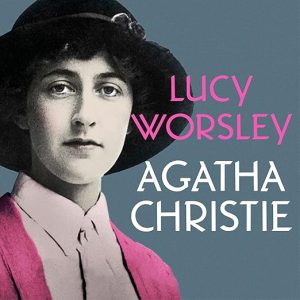
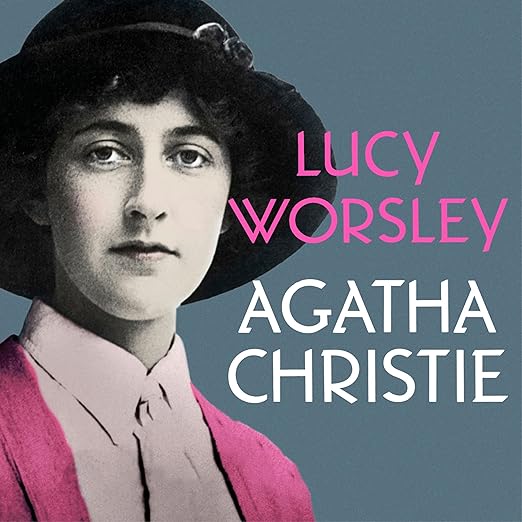
Lucy Worsley is, professionally speaking, a historian with an unusual gift for the popular: her television documentaries and books combine scholarly rigour with genuine narrative enthusiasm in a way that feels more deliberate than it appears. Her biography of Agatha Christie – the bestselling account of Britain’s Queen of Crime, running to thirteen hours and forty-six minutes and narrated by Worsley herself – is her finest work to date, and one of the most genuinely illuminating literary biographies I have read in recent years. It does something genuinely difficult: it makes you look at an enormously familiar subject as if for the first time. I have read Christie since childhood, I know the plots, I know the received biography, and I found myself repeatedly arrested by Worsley’s reframing of what I thought I already understood. The Times called it “a smart and highly entertaining portrait of a literary powerhouse,” and for once the marketing quote understates the case.
About the Audiobook
Worsley’s central argument is that Christie has been systematically misread – as cosy, as comfortable, as the patron saint of a particular kind of middle-England gentility that has little to do with the actual texture of her life or her work. The biography dismantles that reading with considerable precision. Christie, born in 1890, went surfing in Hawaii. She drove fast cars with evident enthusiasm. She was fascinated by the new science of psychology and used her understanding of mental illness and human motivation both in her fiction and in managing the devastating personal breakdown that attended the collapse of her first marriage. She was, Worsley argues persuasively, “thrillingly, scintillatingly modern” – a woman who refused the constraints of her era in ways both public and intensely private, and whose novels are not cosy puzzles but careful psychological investigations wrapped in the conventions of the genre.
The biography draws on personal letters and papers that have rarely been available to researchers, and the access shows throughout. The account of Christie’s eleven-day disappearance in December 1926 – still one of the great unsolved mysteries of literary life – is handled with characteristic Worsley discipline: here are the documented facts, here are the plausible explanations, here is what genuinely remains unknown, and here is why that unknowability matters to understanding the woman. Worsley moves with ease between the biographical and the literary, using the novels as evidence of Christie’s psychology rather than as separate objects for analysis, which illuminates both the life and the work simultaneously.
The Narration
Worsley reading her own work is an excellent pairing, and thirteen-and-a-half hours of her voice is a pleasure rather than a test. Her television presence – engaged, slightly breathless with enthusiasm, always clearly invested in her subject – translates naturally to audio. She has delight in Christie without uncritical reverence; her performance of the more analytical passages carries the same energy as the narrative ones, which is a harder trick than it sounds. The pacing varies appropriately between the analytical and the biographical, and the voice never becomes fatiguing even at extended length.
What Readers Say
The audiobook holds a 4.5-star rating and the reviews are detailed and appreciative. One reader who had grown up reading Christie and worked in publishing wrote a nuanced assessment praising Worsley’s “revisionist and sympathetic” approach, noting that Christie “was not cosy at all” once you read the novels with attention. Another listener came to the biography after watching Worsley’s documentary and found their high expectations met and exceeded. A third review singled out Worsley’s ability to illuminate “why Christie was a woman who wrote the twentieth century” – a formulation that captures the book’s central argument with unusual economy. Wider critical reception has been uniformly strong: the Guardian listed it among their books of the year; the Daily Mail praised it for “firmly busting the myth that she, or her novels, were cosy.”
Who Should Listen?
Indispensable for Christie readers – but also for anyone interested in the history of women’s lives and professional ambitions in twentieth-century Britain, the psychology of creative individuals under extreme personal pressure, and the relationship between private experience and public art. Worsley brings everything she has to this subject, and it shows on every page. One of the best literary biographies of the past several years, and a particularly satisfying audiobook.
One of the most valuable elements of Worsley’s approach is the way she uses Christie’s fiction as biographical evidence. The mysteries are not treated as a separate category from the life – they are read as documents of Christie’s preoccupations, her anxieties, her understanding of human psychology, and her response to the world she was living in. This makes the biography unusual and particularly rewarding for readers who know the novels well: Worsley constantly sends you back to the books with new questions. That quality – of a biography that enriches rather than replaces engagement with the primary work – is rarer than it should be.