Clara’s Verdict
There is a version of reviewing The Art of War that consists largely of observing how extraordinary it is that a text written roughly 2,500 years ago remains in continuous print, continuous study, and continuous application. I prefer to say something more specific and more useful: Sun Tzu is a great writer, and the Lionel Giles translation – first published 1910 and the standard English version for more than a century – is a great translation. The text is compact, aphoristic, and rewards re-reading in a way that most of the business self-help books that have borrowed its structure and claimed its authority simply do not.
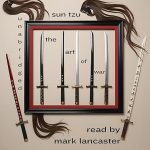
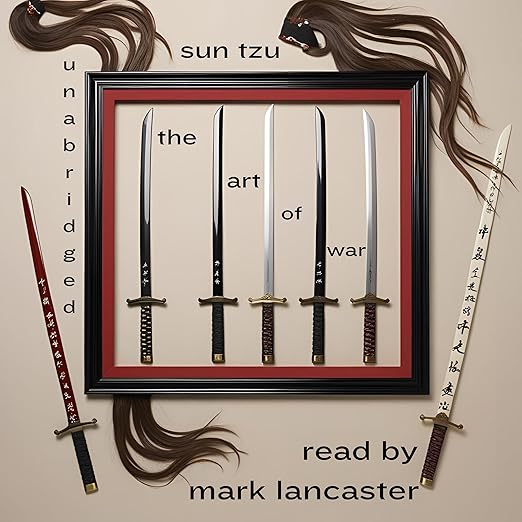
At under ninety minutes, this Fort Raphael edition narrated by Mark Lancaster is an ideal introduction to the text or a useful refresher for those who know it. The price of entry, for a work of this historical and strategic significance, is very low. The return on that investment, if you engage with it properly, is considerably higher.
About the Audiobook
Sun Tzu, the Chinese general and philosopher to whom this treatise is attributed, composed The Art of War as a practical guide to military strategy. It is organised into thirteen chapters, each addressing a distinct aspect of warfare: planning and calculation, tactical positioning, terrain, the use of fire and water, the management of spies, the relationship between deception and intelligence, and the correct temperament for command at the highest level. The advice across these chapters is specific enough to have been applied directly by military commanders across millennia and simultaneously adaptable enough to have been applied productively in every context from competitive sport to corporate strategy to negotiation.
What makes the text genuinely durable – beyond its military content – is the underlying philosophy about the nature of conflict and the conditions for winning it. Sun Tzu is consistently and almost paradoxically interested in winning without fighting: in the supremacy of intelligence, preparation, and deception over brute force and direct confrontation. The ideal general, in his account, defeats the enemy before the battle begins, by ensuring that the strategic situation leaves the enemy no viable response. This counter-intuitive position for a military text is precisely what has made The Art of War compelling to readers far outside the military sphere for centuries.
The Giles translation preserves the aphoristic quality of the original Chinese – each chapter presents a series of brief, dense propositions rather than extended argument or narrative. This suits the audiobook format particularly well; the text moves quickly, individual maxims have time to register before the next arrives, and the listening experience has a quality of concentrated attention that repeated re-reading on the page sometimes loses. At just under ninety minutes, it is possible to listen through the complete text twice in an afternoon, which is a productive approach given the density of what’s being said.
The Narration
Mark Lancaster narrates this edition with a measured and deliberate approach – the appropriate register for a text that benefits from allowing each aphorism space to settle and resonate before the next arrives. He avoids the trap of making the material feel either didactic (too slow, too emphatic, too solemn) or glib (too quick, too light, inadequately weighted). The result is a narration that treats the text with appropriate seriousness without making it feel ponderous or difficult of access.
For a text this short, the pacing decisions made by the narrator carry unusual weight – there is little room to correct an error of tone. Lancaster makes the right choices consistently, and the production quality from Fort Raphael is clean and reliable throughout the ninety-minute runtime.
What Readers Say
This particular Fort Raphael edition has a single Audible UK rating of 5.0 – too small a sample for a meaningful statistical picture of this edition specifically. The underlying text, however, is one of the most extensively reviewed works in the entirety of human literature; its quality requires no statistical support from any individual edition. What matters for the audiobook format is the quality of the translation and the production, both of which are solid here.
Who Should Listen?
The genuine audience for this text is broader than its martial origins might suggest. Military historians, business strategists, competitive athletes and their coaches, game theorists, negotiators, and anyone with an interest in classical philosophy will find substantive material here. It’s also an excellent first audiobook for someone who finds the format unfamiliar or intimidating: at ninety minutes, it’s a low-stakes listen with very high cultural and intellectual reward.
For those already familiar with the text in print, this narrated version offers the opportunity to hear the Giles translation read aloud – a meaningfully different cognitive experience from reading it silently, and one that regularly surfaces passages that previously registered without truly landing.
Listen on Audible UK: Get The Art of War by Sun Tzu on Audible UK. Also available on Kobo, Scribd, and Storytel.