Clara’s Verdict
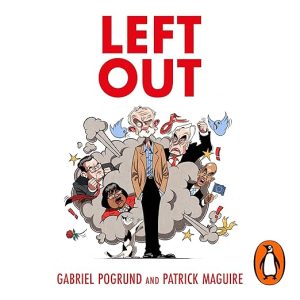
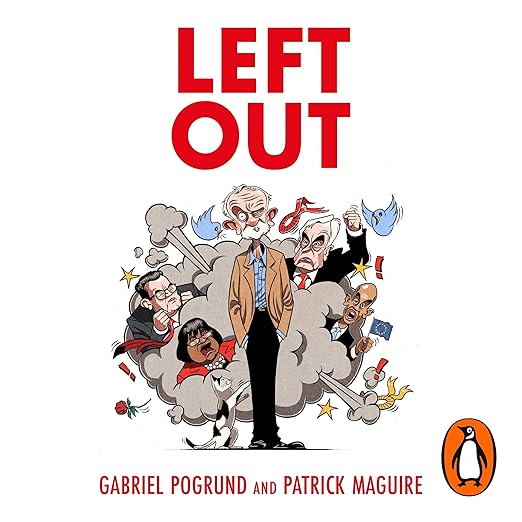
Political insider accounts of recent British history have become something of a cottage industry, and the less scrupulous examples of the genre are obvious: settled scores dressed up as journalism, selective memory presented as revelation. Left Out is a more honourable example. Gabriel Pogrund and Patrick Maguire had extraordinary access to both Jeremy Corbyn’s inner circle and the party’s various internal opposition factions, and the result is a book that is simultaneously a gripping political narrative and a genuinely illuminating study of what happens when ideological purity, organisational dysfunction, and the grinding demands of parliamentary politics collide in a single party over four years of sustained crisis. Matthew Spencer’s narration brings the right balance of journalistic authority and dramatic momentum. This is the book to read if you want to understand how Labour became the party it currently is.
About the Audiobook
The period covered runs from the shock of the 2017 hung parliament – when Corbyn’s Labour came unexpectedly close to power and the left-wing project that had seemed like a permanent opposition suddenly appeared viable – to the 2019 election disaster and the subsequent election of Keir Starmer as leader. The authors use this arc to examine factionalism within Labour with granular, sometimes vertiginous detail: the anti-Semitism crisis and the catastrophic series of decisions taken in response to it, the Brexit paralysis that paralysed decision-making for two years, the coups that were planned and abandoned, the sexual harassment complaints, the relationships that fractured under the weight of proximity to power.
What distinguishes Left Out from more polemical accounts is its even-handedness. Pogrund and Maguire have sources across the ideological spectrum within Labour, and they allow multiple perspectives genuine room – the true believers, the sceptical MPs who stayed out of calculated pragmatism, the officials who found themselves implementing policies they privately opposed, the journalists managing impossible relationships with a leadership that regarded the media as an adversary. Corbyn is rendered as a genuinely complex figure – principled to the point of rigidity, inspiring to his followers, bewildering to those who needed him to be strategically flexible, and ultimately unable to translate moral clarity into the mundane requirements of electoral politics. It is neither hagiography nor hatchet job, which means it will satisfy neither devoted Corbynistas nor dedicated detractors, but will inform everyone else considerably.
The Narration
Matthew Spencer narrates political non-fiction of this character with controlled authority. The material presents real challenges: a cast of more than a hundred politicians, shifting alliances, multiple overlapping timelines, and passages of considerable emotional weight sitting alongside dry procedural detail. Spencer manages the clarity demands throughout, maintaining the narrative thread without simplifying the complexity. He brings appropriate gravity to the more sombre passages – the anti-Semitism testimonies in particular – without sensationalising the drama elsewhere. At fifteen hours and forty-seven minutes, this is a significant commitment, and Spencer makes it feel worthwhile rather than effortful.
What Readers Say
With a 4.3 rating from listeners, Left Out draws considered and substantive responses across the ideological spectrum. “This is a thoughtful and balanced account of the crazy political situation that unfolded in the UK,” wrote one UK listener, who provided a detailed and fair-minded analysis of the 2017-2019 period. Another described it as confirming “much I suspected but could not prove,” while engaging critically with the structural limitations of Corbyn’s project. A third called it “a brilliant read and an excellent insight.” One reviewer who was less engaged noted that the book rewards those who followed British politics closely during the period – a fair caveat, and an honest indication that international listeners without close familiarity with the specific cast of characters may find the experience more demanding.
Who Should Listen?
Penguin Audio has produced this with the care the material deserves. The audio quality is consistently good throughout a long and complex listen, and Spencer’s narration is supported by a clean, professional production that respects both the journalism and the listener’s time.
Essential for anyone with serious interest in British political history of the recent past, and particularly for those seeking to understand the structural tensions and cultural conflicts within the Labour Party that continue to shape British politics today. Journalists, political scientists, and anyone who lived through this period with strong views in either direction will find it instructive and, probably, at least occasionally infuriating – which is the appropriate response to material this carefully and honestly assembled. For international listeners without close familiarity with British political geography, the cast of characters requires patience, but the broader lessons about political movements, the relationship between ideology and power, and the human cost of institutional dysfunction are universal.
Listen to Left Out on Audible UK and prepare to have your assumptions about heroes, villains, and the grinding complexity of everything in between tested with considerable rigour.