Clara’s Verdict
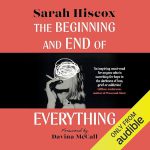
Addiction memoirs arrive in such numbers that it takes something particular for one to stand out, and what distinguishes Sarah Hiscox’s is the quality of her attention to herself. She is not interested in being forgiven, and she is not interested in the version of the story where the reader admires her courage. She is interested in what actually happened and in how a person becomes the thing she became, which is a much harder book to write and a considerably better one to listen to.
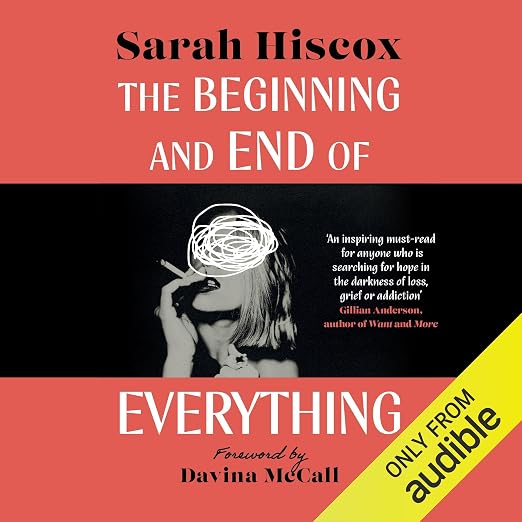
Eight hours and ten minutes is well judged for it. Long enough to sit inside the years of relapse without compressing them into a montage, short enough that the cumulative weight does not become unbearable. It sits at 4.7 from 108 ratings, a high figure and, given how recently it appeared in July 2026, a very early one. It is climbing the UK charts at the moment, helped along by an unusually strong set of endorsements, of which more shortly.
About the Audiobook
The origin point Hiscox identifies is disarmingly early. Her problems with self-esteem and dependency begin in childhood, when she is given powerful sleeping pills for her nightmares, and the book treats that as a genuine beginning rather than a convenient one. A toxic relationship with food in young adulthood then becomes a full heroin dependency, and the memoir is unsparing about the fact that neither a loving marriage nor a new baby was enough to stop it. That last detail is where the book announces what kind of memoir it intends to be.
What follows is years of cycling between relapse and fresh starts, with relationships wrecked along the way, until rehab forces a confrontation with herself and everything she has lost. Hiscox is honest that even this is not the turning point, and it takes repeated attempts before she understands that her worst day of abstinence still beats her days of relapse. That sentence is the spine of the whole book, and it is a far more useful thing to say to somebody in the middle of it than any amount of encouragement.
The threads of hope she describes are specific and small: a desire to see her children grow up, a friend called Davina, a sister, and an ex-husband who somehow still loved her through it. The endorsements reflect what she has made of that material. Gillian Anderson calls it “An inspiring must-read for anyone who is searching for hope in darkness of loss, grief or addiction”, and Charlotte Tilbury describes it as “The ultimate story of hope, self-belief and the magic of love”, adding that she laughed and cried in equal measure. The laughing part is not a throwaway. There is real humour in this book, mostly at the author’s own expense.
The Narration
The listing does not name a narrator, which for a memoir is the single most consequential piece of missing information, because the identity of the voice changes what kind of experience this is.
If Hiscox reads it herself, and Audible Studios memoirs of this kind frequently are self-read, the effect is entirely different from a professional performance. Self-narrated recovery memoir has an authority nothing else replicates. The listener hears the actual person describing the actual thing, hears where the voice tightens, hears which passages are still difficult to say aloud years later. Those hesitations are not flaws in the recording. They are the most informative thing in it. A professional reader, however skilled, cannot manufacture them without it becoming performance.
The counterargument is real too. Eight hours is a demanding stretch for a non-professional, and material this raw can defeat an author in the booth, either through flattening into monotone as a defence or through an emotional pitch that leaves the listener no room of their own. My advice is simply to sample and listen for that quality of unguardedness. It will tell you within two minutes which kind of recording you are getting, and both kinds can work provided you know which one you have chosen.
What Readers Say
The written reviews here are more interesting than the headline figure, because they keep praising the same unfashionable virtue, which is fairness.
It was beautifully written and never shied away from interrogating her own imperfections and motives.
The reviewer who wrote that goes on to describe Hiscox’s handling of her own difficult childhood, and specifically her relationship with a beautiful but brittle mother, noting that there is no bad blood in the telling. Hiscox understands why her mother could not mother her as she might have, and the result is a portrait of trauma travelling down through a family rather than an accusation. Cami found it “so well written and excruciatingly honest”, was struck by how much the book has to say about a generation of war babies raised by emotionally scarred, bereaved parents, and concluded simply that “it is mostly about LOVE”. Lucy0497 came to it after watching Hiscox in conversation with Davina, and called it “a story of resilience and true love that has me sobbing”.
The consistency is worth noting. Nobody here is praising it for being shocking, though it is. They are praising it for being fair, to her mother, to her ex-husband, and least comfortably to herself.
Who Should Listen?
I would put this in the hands of anyone who has watched somebody they love come apart and not understood how it happened. That is the readership the book is really for, and it is much larger than the readership for recovery memoir generally. Hiscox explains the interior logic of dependency without ever asking to be excused by it, and that combination is genuinely rare.
It will also matter enormously to people currently in it or newly out of it, though with the caveat that the material is graphic about drug use, self-destruction and the damage done to a family, and it does not arrive at hope quickly. Anyone at a fragile point should choose their moment. The book is uplifting by the end, but it earns that ending across seven hours of not being uplifting at all, and skipping ahead is not really an option.
Readers of literary memoir will find more craft here than the subject matter might lead them to expect, particularly in the generational material about her mother’s own upbringing. Those wanting a practical recovery guide or a structured programme will not find one here, since this is a life rendered honestly rather than a method. On its own terms it is a remarkable piece of writing, and the UK charts are better for having it in them.
Listen to The Beginning and End of Everything free with an Audible trial