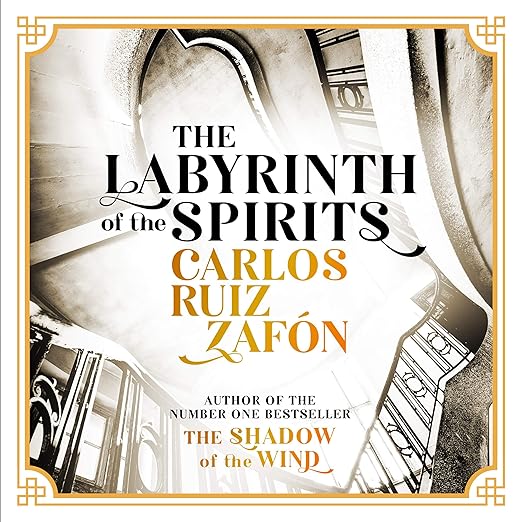
Clara’s Verdict
Carlos Ruiz Zafón spent the better part of two decades building the world of the Cemetery of Forgotten Books, and The Labyrinth of the Spirits is its triumphant, carefully constructed conclusion. I read The Shadow of the Wind when it arrived in English translation and remember vividly the particular quality of absorption it produced – the feeling of being inside a city that exists simultaneously in the past and in fiction, where atmosphere is thick enough to taste and every street has a story pressing against its walls. This fourth and final volume is longer, more complex, and more politically charged than any of its predecessors. It’s the book in which the historical weight of Franco’s Spain comes fully into focus. In Daniel Weyman’s hands, it’s also one of the finest literary audiobooks I’ve encountered in recent years. At nearly twenty-eight hours, this is a genuine commitment of time and attention. It rewards that commitment fully.
About the Audiobook
The story takes place in the Barcelona of the late 1950s, deep under the shadow of Franco’s dictatorship. Daniel Sempere – whom readers have followed from his boyhood discovery of a forgotten novel in the mysterious Cemetery of Forgotten Books – now runs the family bookshop with his father and his wife Bea. He has a son of his own, named for a character from the first book. But the mystery of his mother’s death still gnaws at him despite all the efforts of those around him to help him move forward. When Alicia Gris arrives – a brilliant, damaged intelligence agent who carries a childhood injury from the Civil War bombing of Barcelona and works for the regime’s most feared functionary – Daniel’s past cracks open again. Alicia leads him toward the truth about his family’s history at a cost neither of them can fully foresee. Zafón weaves multiple storylines across decades with extraordinary structural control, building toward a finale that resolves not just this novel but the entire saga. Old threads from earlier books are picked up and honoured; new characters are introduced with the same care as familiar ones. The book is a meditation on memory, on the power of books and storytelling to preserve what authoritarian regimes attempt to destroy, and on the long, terrible reach of political violence into the texture of ordinary private lives. It is the most explicitly political of the four, and arguably the richest.
On Reading the Series Out of Order
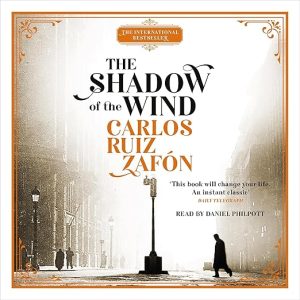
Several reviewers note that this novel works independently even without memory of the earlier books – Zafón provides enough context for the story to function without the full backstory. That said, the emotional resonance of the ending depends significantly on knowing where Daniel started and what he’s spent his life looking for. If you’ve never read the series, consider beginning with The Shadow of the Wind – it remains one of the finest literary thrillers of the past thirty years, and the journey from that book to this one is part of what makes the conclusion feel earned rather than simply conclusive.
The Narration
Daniel Weyman is a superb choice for this material. His voice carries the right quality of measured intelligence – he understands the literary register of Zafón’s prose without becoming stagey or declamatory. He handles Spanish names and Barcelona locations with natural ease, gives each character consistent vocal distinctness across a very large cast, and sustains the novel’s particular atmosphere – Gothic intensity shot through with dark humour – across an extended listening time. Weyman is the kind of narrator who makes you forget you’re listening to a performance at all. At nearly twenty-eight hours, that capacity for self-effacement is essential.
What Readers Say
The response is emphatic. Reviewer “Hades” calls it “800 pages of total absorption” and notes the series was available for 99p – a bargain that apparently prompted multiple re-reads. Bookliterati gives a careful account of how the novel draws together all four books into a satisfying whole. Richard Brown, who read the earlier volumes over many years with the specific texture of each now hazy, finds this final instalment works powerfully even with incomplete memory of its predecessors – though he notes the full context enriches it. WhiteHorses, mid-read and already deep into the book, reports being “totally enthralled and absorbed” with no signs of diminishing engagement.
Who Should Listen?
If you’re new to Zafón and wondering where to start: begin with The Shadow of the Wind, published in Spain in 2001 and in English translation in 2004. It remains one of the most beautifully atmospheric literary thrillers of the past quarter century, and everything in this final volume builds on its foundation. The journey from Zafón’s first Barcelona novel to the last is one of the more rewarding extended reading experiences available in contemporary literary fiction. For readers who love literary fiction with a strong sense of place, historical weight, and genuine narrative suspense. If you haven’t started the series, begin with The Shadow of the Wind – you’ll want the full context, and the earlier books are just as rewarding. If you’ve been following Daniel Sempere since the beginning, this is the conclusion you deserve. Listen to The Labyrinth of the Spirits on Audible UK and let Zafón take you back to Barcelona one final time.