Clara’s Verdict
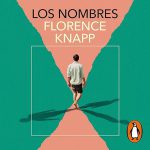
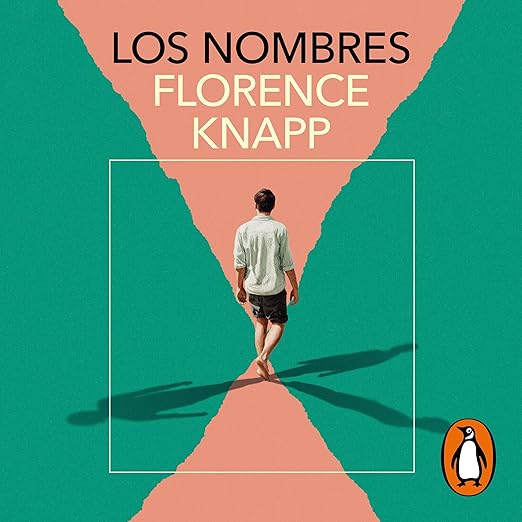
Every so often a debut arrives with so much noise around it that the sensible critical instinct is to wait a year and see what is left standing. I waited. The Names is still here. Florence Knapp’s novel took the number one spot on the Sunday Times list, won the British Book Awards Debut Novel of the Year in 2026, has sold, by the listing’s own account, over half a million copies, and is still on the Audible UK bestseller chart more than a year after its May 2025 release. It has earned every bit of that.
The premise sounds like a writing exercise and turns out to be a structure. In 1987, with a great storm just past, Cora walks to the register office with her small daughter to record her son’s birth. Tradition, and her husband, require that the boy be named for his father, as the domineering men of that family always have been. Cora makes a choice at the registrar’s desk, and Knapp then follows all three of the lives that choice could have produced.
About the Audiobook
Phoenix issued the audio on 5 May 2025, narrated by Dervla Kirwan, running nine hours and forty-one minutes. The structure is the thing. Seven years on, Cora’s son is Bear, a name his sister picked out in the hope it would make him brave and generous. Or he is Julian, which is what his mother wanted, chosen so that the boy might belong to himself. Or he is Gordon, carrying his father’s name and being brought up to match it. Knapp returns to the three branches at intervals, so the novel accumulates as a set of parallel lives rather than as one story with alternatives bolted on.
What makes it work, and what the premise cannot convey, is that this is not really a novel about names at all. It is a novel about what a woman is permitted to decide, and about how far a single act of quiet refusal can travel through a family. One reviewer put it better than I can, observing that the book is “more about the consequences of the choice made than the name itself”.
A note on the listing. The synopsis published with this audiobook breaks off mid-sentence, which is a small irritation if you are trying to work out the shape of the book before committing to it. What it cuts off is the beginning of the question the novel spends nine hours answering, which is whether the Gordon branch has any way out. The press quotations attached to it are unusually strong even by publicity standards. The Observer called it “Wildly original and emotionally profound”. The Times went further: “An unadulterated success: moving, evocative and utterly convincing”. The Sunday Times reviewer opened with “I’ve just been blown away by the best debut novel in years”.
The Narration
This is the audiobook’s central technical problem, and Dervla Kirwan solves it. A three-branch structure with the same characters in every branch is far more confusing to hear than to read, because print gives you a section break and a name at the top of the page while audio gives you nothing at all. The listener has to know within a sentence which life they have re-entered.
Kirwan manages it without a single artificial signpost. Bear, Julian and Gordon are audibly the same person and audibly three different men, which is genuinely difficult: the family resemblance has to survive while the temperature changes completely. Her Gordon is the achievement. She resists every opportunity to make him monstrous, which would let the listener off the hook, and instead gives him his father’s rhythms of speech in a voice still recognisably belonging to the boy from the opening chapter. Cora is the other pillar, aged across decades with almost no obvious technique, mostly by letting the pauses lengthen and the certainty drain out. This is restrained, unshowy work of a kind that only announces itself when you notice you have never once been lost.
What Readers Say
Over fifty-five thousand ratings sitting behind an average of 4.4 is about as robust a sample as any reviewer could ask for, and the striking thing is how consistent the written responses are about the book’s difficulty. Georgia, who rated it five stars, warns that “parts of the book are by no means easy to read” while describing it as compelling from the very start, and adds a line I have been thinking about since: “not all my tears were sad ones.”
This novel is a masterclass in storytelling and psychological depth, built around a simple yet profound premise: what if your life changed based on the name you were given at birth?
That is A M Flynn, at four stars, and the reservation implicit in that rating is one I share a little. The concept is so clean that you occasionally feel the architecture rather than the people inside it. A third reviewer, who calls it “my favourite book ever” and has been pressing it on everyone she knows, is a useful counterweight, and the sheer volume of that kind of response is what has kept the book charting for well over a year.
Who Should Listen?
This one asks something of you and rewards it. It suits listeners who want literary fiction with a genuine structural idea rather than a decorative one, and who are prepared for a novel in which a father’s cruelty is depicted rather than gestured at. The audio format actively helps here: hearing three lives emerge from one voice makes the resemblance between them a felt thing rather than an intellectual one, and that is not an effect the page can reproduce.
Be careful with it if domestic abuse and coercive control are difficult subjects for you. The Gordon branch in particular is sustained, close-range and unsparing, and nine hours is a long time to spend in that house. Be careful too if you need a novel to resolve tidily, because Knapp’s ending is right rather than comforting, and those are not the same thing at all. For everyone else, this is a debut that has fully earned the year of noise around it.