Clara’s Verdict
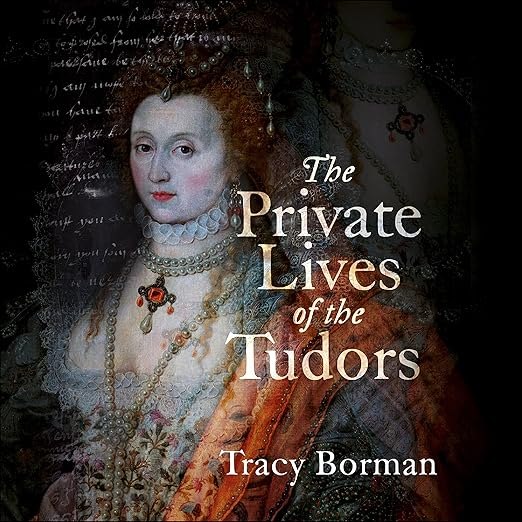
Tracy Borman has made a career of finding the human being inside the historical figure, and The Private Lives of the Tudors is perhaps her finest exercise in that particular art. The conceit is elegant: rather than viewing the Tudor monarchs through the conventional lens of political history, Borman reconstructs their private lives through the testimony of the servants who attended them constantly – the grooms, ladies-in-waiting, physicians, and body servants who saw everything that the official record was designed to conceal. The result is Tudor history that feels genuinely inhabited: immediate, specific, and full of the kind of human detail that makes the past legible as something other than costume drama. Narrated by Jonathan Keeble across 15 hours, this is history writing at its most accessible and its most illuminating.
About the Audiobook
Borman’s method is to work outward from the most intimate details of daily Tudor life – how the monarchs ate, slept, dressed, washed, worshipped, reproduced, and eventually died – using the accounts of attendants who were present for all of it. The device sounds academic but it produces history that reads like very good narrative non-fiction. Henry VIII’s daily purging regime, administered by a dedicated groom of the stool, sits alongside the tears he shed for his son Arthur. Mary I’s phantom pregnancies – a source of speculation for centuries – are examined through the testimony of the women who slept in her chamber and knew the truth. Elizabeth I’s famously elaborate public image is peeled back to reveal a woman who was acutely conscious of her own ageing, managing her appearance and her mythology with a shrewdness that was as political as any treaty negotiation.
What distinguishes Borman’s approach from previous social histories of the court is her sustained focus on the attendants themselves – not just as witnesses, but as people with their own interests, loyalties, and fears – which gives the book a second layer of human interest alongside the monarchs. Borman draws on an impressive range of contemporary sources – letters, household accounts, diplomatic dispatches, court records, privy chamber registers – and presents them with the pace and readability of narrative non-fiction rather than academic history. Her sympathy for her subjects is evident throughout, but never at the expense of honest analysis. The chapter on Catherine of Aragon’s final years is quietly devastating; the treatment of Edward VI’s childhood is unexpectedly tender; the portrait of Elizabeth I navigating the contradictions of female royal power is as nuanced as any I’ve encountered in popular Tudor history.
The book covers all five monarchs of the dynasty – Henry VII, Henry VIII, Edward VI, Mary I, and Elizabeth I – treating each with comparable depth and care. At 15 hours, it is perfectly calibrated for the subject: comprehensive without overstaying its welcome.
The Narration
Jonathan Keeble is one of the most reliable voices in British non-fiction audio, and his performance here is exemplary. He brings warmth to the intimate passages and appropriate gravity to the more sombre moments, and his handling of the period’s unfamiliar names, titles, and court terminology is consistently clear without becoming ponderous. The production is clean, and Keeble’s measured pacing gives Borman’s prose the space it deserves without dragging.
What Readers Say
Listener response has been enthusiastic and consistently positive. One UK reviewer – who described herself as someone who always thought she knew everything about the Tudors – found the book’s social history focus genuinely illuminating: “Borman discusses in a lot of detail about the clothing the Tudor monarchs wore – how they were designed, made and even laundered – and the different remedies for complaints I found particularly interesting.” Another called it “a good book for all” providing “much background information and giving a better understanding of the main royal characters and their attendants,” singling out the treatment of Elizabeth’s relationship with Dudley and the humanisation of Raleigh. A third praised the “wonderful, enlightening perspective about the real lives of the Tudors as people,” noting how social history reveals the human beings behind the political figures. The book holds a 4.4 rating from 3 listeners. The Sunday Times called it “a very human story of a remarkable family”; The Times called it “wonderful”; The Observer called Borman “authoritative and engaging.” Those assessments are well earned.
Who Should Listen?
Essential for anyone with an interest in Tudor history, whether newcomer or specialist – Borman’s angle is fresh enough to offer something new even to those who have read extensively in the period. Particularly recommended for listeners interested in social history, the lives of women in early modern England, or the mechanics of power as exercised through the body and the household rather than through formal political channels. It pairs well with Borman’s other work – her Thomas Cromwell biography and her study of Henry VIII’s court – and with the writings of Alison Weir and David Starkey for a comprehensive overview of the period. Available on Audible UK, Kobo, Scribd, and Storytel.