Clara’s Verdict
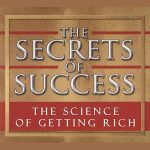
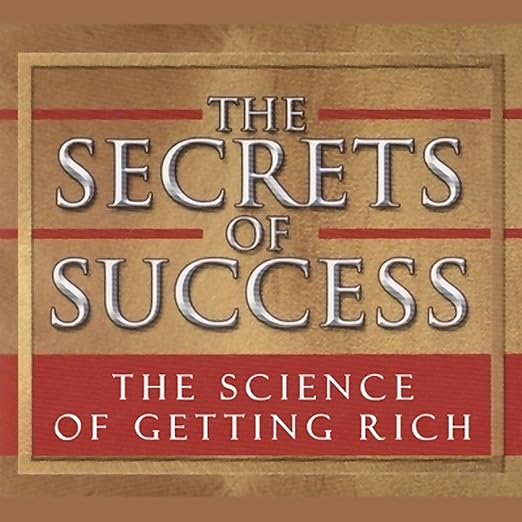
Wallace D. Wattles published The Science of Getting Rich in 1910, five months before he died, and it has never gone out of print. That longevity tells you something considerable. This is not a practical business manual – there are no spreadsheets, no investment frameworks, no advice about diversified portfolios. It’s a philosophical argument that wealth begins in the mind and that clarity of intention, combined with right action, is the underlying mechanism of material success. Whether you find that compelling or implausible will depend entirely on your temperament, but I’d argue it deserves a hearing even from confirmed sceptics. At just over two hours, the audio version narrated by Kevin T. Norris is a very short investment of time for what is genuinely a foundational text in the personal development genre.
About the Audiobook
Wattles’ central argument is deceptively simple: becoming wealthy is a science, not a mystery or an accident of birth. It follows definite laws, in precisely the same way that chemistry or engineering follows definite laws, and anyone who learns and consistently applies those laws will produce the same results. His framework is built on the philosophical position – drawn from New Thought tradition – that there is a “thinking stuff” pervading and underlying all of material reality, and that focused, grateful, purposeful thought can shape that substance into concrete form.
What distinguishes Wattles from many of his successors in this tradition – and he has had many, up to and including Rhonda Byrne’s The Secret and various manifestation gurus of the social media era – is his directness and his refusal to mystify. He states his ideas plainly and then explains, with considerable specificity, how to apply them. He also insists on something that later popularisers sometimes downplay: that thinking is not sufficient on its own. Acting in “a certain way” – with faith, with gratitude, with efficient effort – is as essential as thinking in a certain way. This gives the book a practical edge that pure visualisation frameworks lack.
The God-inflected language will jar with secular readers, and some of the sociological assumptions are unmistakably of their era – this is a book written by a white American man in 1910, and certain passages reflect that context with a directness that hasn’t aged elegantly. But the core ideas about the relationship between thought, intention, clarity, and action have a secular application that is not dependent on the theological scaffolding. Readers who can set aside the metaphysics and engage with the practical framework – what do you actually want? how clearly can you picture it? what are you doing each day to move towards it? – consistently find it more useful than those who need the premises to be ideologically comfortable first.
The comparison to Napoleon Hill’s Think and Grow Rich is apt and frequently made. Wattles predates Hill and in some respects articulates the philosophy more cleanly. Readers who have engaged with one will find the other illuminating, even where the frameworks diverge.
The Narration
Kevin T. Norris reads the text clearly and without embellishment, which is exactly the right approach for material this direct. At two hours and five minutes, this is one of the briefest audiobooks in the personal development genre, and Norris doesn’t pad it. His delivery is steady and unhurried – Wattles’ prose benefits from being taken at a measured pace rather than rushed through – and the overall effect is of someone reading a text they respect but do not over-dramatise.
What Readers Say
The book holds 4.4 out of 5 from 10 Audible UK listeners, a solid score for a work over a century old. Rosie credits it with helping her “change destructive thinking patterns and sow the seeds of a better life,” and describes it as a book she returns to repeatedly. Audirello took the unusual step of waiting for measurable results before writing a review – and returned to give it five stars. Paige calls it her “favourite manifestation/law of attraction book” and praises its conciseness. One more measured review from J2016, who finds it “not particularly practical,” nonetheless acknowledges that the principle of getting genuinely clear about what you want is itself useful. The division between enthusiastic adherents and engaged sceptics has always characterised response to Wattles, and it remains so today.
Who Should Listen?
This is for listeners curious about the philosophical foundations of the personal finance and self-development genre – Wattles is where much of it begins, and understanding him contextualises everything that followed. It’s also genuinely worth a listen for anyone in a period of financial uncertainty who is open to examining their own relationship with money, ambition, and effort. Given the brevity of the recording, the risk is minimal. Fans of Napoleon Hill, Earl Nightingale, Bob Proctor, or Rhonda Byrne will find this essential background reading. Available on Audible UK, Kobo, and Scribd. Listen on Audible UK: Get The Science of Getting Rich on Audible UK