Clara’s Verdict
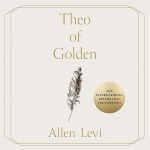
Every few years a novel arrives without a marketing campaign behind it and becomes enormous anyway, and Allen Levi’s Theo of Golden is the current example. It reached number one on the New York Times list by the least fashionable route available, which is people telling each other about it, and the newspaper itself has described it as a word-of-mouth smash hit. A 4.6 average built from over 151,000 ratings is the kind of figure that only accumulates when a book has been passed hand to hand for a long time.
Let me be plain about what it is, because the gap between how this novel is discussed and how it actually reads is wide. It is quiet. Almost nothing happens in the conventional sense. A man arrives in a town, buys portraits, and asks for stories, and that is the plot. Whether that sounds like an empty afternoon or like the best idea you have heard all year will determine everything about your experience of it. For me it was the second, though it took a while to settle into.
About the Audiobook
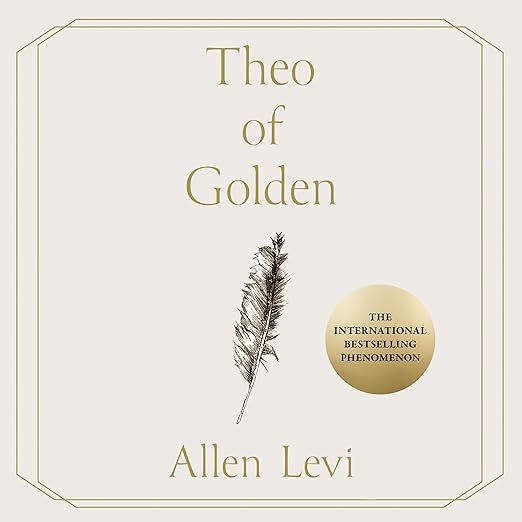
One spring morning a stranger named Theo arrives in Golden, a small Southern city, and does not explain himself. He does not say where he has come from or why he is there. He visits the local coffeehouse, where pencil portraits of the people of Golden hang on the walls, and he begins to buy them, one at a time. Each portrait he then gives to the person it depicts. In exchange he asks for one thing only, which is that person’s story.
That is the whole architecture, and it is a very good one. Portrait by portrait, person by person, secrets come out, regrets are admitted, and ordinary lives are altered by being looked at properly. The novel is about giving and receiving, about seeing and being seen, and about what the listing calls the quiet miracles that happen when we choose kindness and wonder. It is, in structure, a series of encounters, which happens to suit audio unusually well, since each new person arrives as a fresh voice and a self-contained piece of listening.
Two things about this particular listing need saying plainly. The audio edition is dated October 2026, so this may be a forthcoming or newly issued recording rather than one that has been available all along. No running time is shown, and no narrator is credited. That is a meaningful amount of missing information, and the enormous rating count almost certainly reflects the book’s existing readership across editions rather than verdicts on this recording specifically. I would check the product page for a duration and a narrator credit before deciding, and it is the reason the section below is shorter and more provisional than I would like.
The Narration
With no reader named, I can only tell you what this book will demand of one, and it demands a great deal that is easy to underestimate.
The structure is a sequence of people telling their own stories, which means the narration has to sustain a large number of first-person accounts, each belonging to a different age, temperament and degree of reticence. These are not dramatic monologues. They are ordinary people admitting things, and the reading has to find the difference between an eighty-year-old who has told her story before and a younger person saying it aloud for the first time. Flatten them into one voice and the novel becomes repetitive very quickly, because the repetition is the form.
The second demand is restraint. This is a book about kindness, and kindness is the easiest quality in fiction to overplay. A narrator who reaches for warmth in every line will turn a genuinely moving novel into something cloying within an hour. What it needs is a reader who trusts the material and stays plain, letting the emotion arrive from what is being said rather than from how it is being said. Theo himself is the hardest part of the assignment, since he must remain slightly unknowable throughout without ever seeming cold or affected.
Sample it when the recording is available, and the question to hold in mind is whether the reader is pushing. That single quality will tell you most of what you need to know.
What Readers Say
The readership here is vast and remarkably unified, and the reviews are unusual in how often they mention having been moved to write at all. One reader noted that they had read two hundred books and this was the only one that had ever prompted them to leave a review, which is a better recommendation than any adjective.
The story is filled with kindness, warmth, and heartfelt moments that stay with you long after finishing the final page.
Maria Snowball’s five-star review also praises the mix of characters, noting that each brings something distinct and that their relationships make the book feel authentic rather than sentimental. That distinction comes up repeatedly and is the crux of whether this novel works for a given reader. Bill Pickard, at four stars, called it “a wonderful story that celebrates all things of excellence” and drew attention to the fact that the book does not hesitate to point towards the source of what it admires, which is a fair signal that there is a quiet spiritual current running underneath. It is never preached, but it is present, and some readers will welcome it while others would rather know in advance.
Beyond the reviews, the endorsements have come from broadcasting rather than from literary quarters. It has been chosen by both the Katie Couric and Jen Hatmaker book clubs, and Hoda Kotb called it, simply, a treasure.
Who Should Listen?
The audience for this one is unusually wide, which is exactly what its sales suggest. If you have ever pressed a gentle, humane novel on a friend and worried it might seem naive, this is that book done properly, and done with enough craft in the individual portraits to survive a sceptical reader.
It suits listeners who like fiction built from encounters rather than from plot, who enjoy short self-contained sections, and who want something to hold onto during a difficult stretch. The episodic shape makes it forgiving of interrupted listening in a way that few novels are, and I would happily recommend it as a first audiobook for someone unsure whether the format suits them.
Anyone who needs narrative propulsion should be warned honestly: there is no mystery about Theo that gets solved, no antagonist, and no reversal waiting at the end. Readers allergic to earnestness will find it earnest, because it is, and a light spiritual undertow runs through the closing stretch. Those are not defects, they are the design. Given that this listing shows no runtime and no narrator, my practical recommendation is to check both details before committing. Once you have, and if the premise moves you at all, this is a novel that has earned its readership the slow way and will very likely earn you as well.