Clara’s Verdict
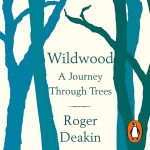
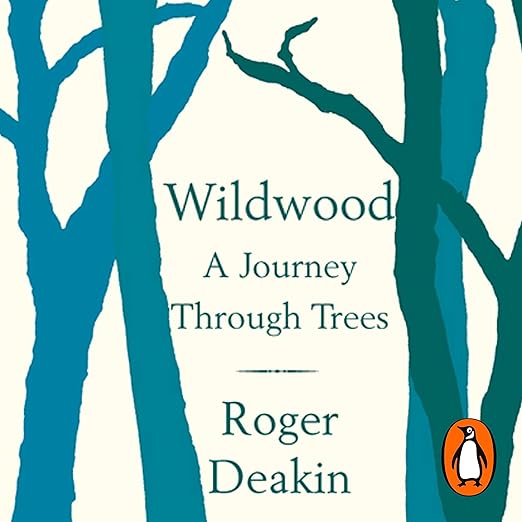
Roger Deakin died in 2006, and the loss to British nature writing has never fully been repaired. Wildwood – published posthumously in 2007 and now available in this beautifully produced Penguin Audio edition narrated by Roy McMillan – is his tribute to wood and trees: not as abstract ecology but as material culture, social history, and lived experience. Deakin went places other nature writers wouldn’t – Aboriginal Australia, the wild apple groves of Kazakhstan, the coppiced woodlands of Suffolk – and wrote about them with a quality of total attention that makes reading him feel like an education in how to notice things. McMillan’s narration is one of the finer environmental audio productions I’ve encountered.
About the Audiobook
Wildwood begins at home – the walnut tree in Deakin’s moated farmhouse garden in Suffolk – and expands outward from there in an enquiry that is ostensibly about wood but is really about the human relationship to the natural world and what we lose when that relationship is severed. Deakin travels through Britain documenting traditional crafts – hurdle-making, charcoal-burning, coppicing – then moves across Europe and into Central Asia in search of the wild apple groves of Kazakhstan, the orchard geography that predates any domesticated variety. A late section in the Australian outback, hunting bush plums with Aboriginal women, is among the most affecting writing in the book.
The intellectual range is extraordinary. Deakin moves from ecology to cultural history to autobiography to traveller’s memoir without apparent effort, and the connections he draws – between our use of wood and our conception of nature, between landscape and identity, between material culture and spiritual life – are consistently illuminating. He writes about elm death, ancient hedgerows, and the social world of craftspeople with equal fluency and affection.
This is not, it should be said, a book to rush. At nearly fourteen hours, Wildwood rewards a slow, attentive approach. There are passages of dense natural history, and one or two chapters – as a reviewer with otherwise high praise honestly noted – are more demanding than others. But overall, this is one of the finest pieces of British nature writing, and McMillan’s voice gives it a second life in audio.
The Narration
Roy McMillan has a voice ideally suited to the material: unhurried, warm, capable of the kind of quiet authority that allows lyrical writing to breathe rather than perform. He reads Deakin’s long, exploratory sentences with a naturalness that suggests genuine comprehension of the material, and the passages of dense botanical or ecological content are handled with care rather than speed. The Penguin Audio production is excellent – clean, well-balanced, and giving McMillan the space the text requires. A narration that enhances rather than merely accompanies the writing.
What Readers Say
Wildwood holds a remarkable 4.6 stars from 640 listeners – a strong result for a work of serious nature writing. Reviews describe it consistently as “impossible to categorise” and celebrate both the writing and the personality behind it. One reader called it “one of those delightful books you stumble on from time to time” and described Deakin as “a true English eccentric.” Another found it “fascinating and even spiritual,” tracing the book’s coverage from ecological habitats to skilled craftsmanship to art. Several reviewers note that it rewards a slow approach – it is a book to “dip into when you have the chance” rather than consume quickly. The Mail on Sunday’s Craig Brown called it “enchanting, very funny” and “one of the greatest of all nature writers.” The Penguin Audio release introduces this singular work to a new generation of listeners.
Who Should Listen?
For devotees of British nature writing – readers of Robert Macfarlane, Richard Mabey, or Deakin’s own earlier Waterlog. Also richly rewarding for anyone interested in craft traditions, environmental history, or the social world of rural Britain. Listeners who find themselves increasingly drawn to the natural world, or who simply want to spend nearly fourteen hours in the company of one of the most genuinely curious minds in recent English literature, will find this essential.