Clara’s Verdict
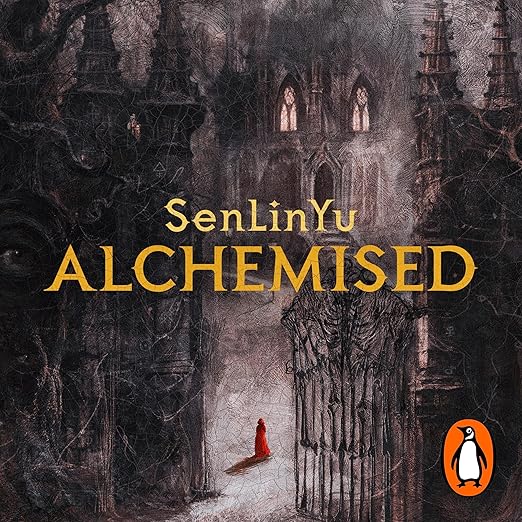
Debut novels rarely arrive with this much noise attached, and noise is usually a warning. In this case it is not, though the noise is describing the wrong book. Alchemised has been positioned as dark romantasy, complete with trope lists and a spice rating, and one of the sharpest reviewers on the UK listing argues that the framing does it a disservice. Having spent thirty-six hours with it, I agree.
What SenLinYu has actually written is a gothic novel about memory, complicity and the aftermath of a lost war, which happens to contain a love story of a distinctly uncomfortable kind. It is long, it is deliberately slow, and it is far more interested in psychological damage than in swordplay. That will delight one sort of reader and exhaust another, and the reviews reflect exactly that division.
About the Audiobook
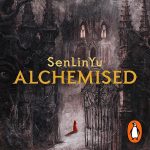
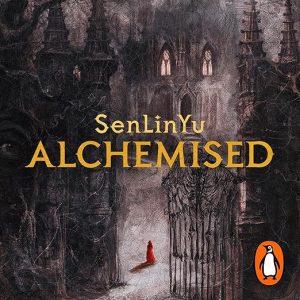
Helena Marino was once a promising alchemist. She is now a prisoner twice over, of war and of her own fractured mind. The Resistance has been crushed, her allies are dead and her abilities are suppressed. The world she knew is gone, replaced by the rule of Paladia’s corrupt guild families, their necromancer overlords and the vile undead creatures that serve them.
The question the book turns on is whether Helena matters at all. Resistance records claim she was a healer of little importance, but her inexplicable memory loss makes her enemies wonder whether that record is a cover, and whether the Resistance’s final secret lies buried somewhere in the gaps. To find out, she is delivered into the hands of the High Reeve, Paladia’s most feared and merciless necromancer, and held on his crumbling estate. She must fight to protect what remains of herself while excavating the truth from her own mind, her prison and her captor.
I want to flag the central dynamic plainly, because it is the thing most likely to determine whether this is for you. This is a captor and captive story, sustained at enormous length, in which the man holding her is the man sent to break her. SenLinYu writes it with considerable psychological seriousness rather than as wish fulfilment, and one of the more thoughtful reviewers on the listing pushes back firmly against readers who dismiss the relationship on the strength of the premise alone. It remains, however, exactly what it is, and thirty-six hours and fifteen minutes is a long time to spend inside it. The novel is self-contained, with nothing further required of you afterwards.
The Narration
Saskia Maarleveld carries the entire thirty-six hours, and the assignment is more demanding than the page count suggests. Helena narrates from inside a damaged mind, with memories missing and her own reliability constantly in question, and the performance has to convey uncertainty without becoming vague. Maarleveld does this by controlling temperature rather than volume, keeping Helena cool and watchful in the present while letting the recovered fragments arrive with a warmth that is almost painful by contrast.
Her handling of the High Reeve is the other test, and she passes it by refusing to make him seductive. The register is clipped, cold and almost administrative, which is far more frightening than menace would be and far more honest about what the book is doing. The scenes between them work because neither voice concedes anything to the other.
Across a listen this long, stamina becomes a real critical category. The prose is dense and heavily figurative, and a reader who over-inflected it would grow wearing within five hours. Maarleveld holds a controlled, slightly austere line throughout and lets the writing supply its own intensity. My only reservation concerns the second act, where the material itself slackens and the reading, faithfully, slackens along with it.
What Readers Say
Twenty-eight ratings produce an average of 4.6 stars here, a modest pool for a title released in September 2025, and the written reviews are the most interesting I have read on any listing in some time, because they are arguing with one another.
Alchemised is utterly breathtaking – the kind of story that seeps into your bones and stays there.
Nessa Dolan’s five-star review continues in that register, praising a lyricism she describes as almost sacred and worldbuilding that is rich yet intimate. The most substantial review comes from Maddy G., who also gave five stars and objected to the marketing rather than to the book, listing the themes she found at its centre: the cost of war, manipulation, blackmail, the erasure of women’s contributions, exploitation, sacrifice, revenge, religious fanaticism, and moral complexity. That is a fair inventory and a better description of the novel than the publisher’s own copy manages.
The dissent deserves equal attention. Pern88 awarded four stars and called the book engaging and interesting but firmly not the masterpiece it has been declared, welcoming the fact that social media is bringing new readers into the genre while suggesting they go on to Robin Hobb or David Gemmell to see the form at full strength. The specific complaint is length: a very long book in which, by that reviewer’s account, not a great deal actually happens, well written but with rather too much of the writing. I think the criticism is legitimate, and that it will matter far more to some listeners than to others.
Who Should Listen?
Readers who want gothic atmosphere sustained at novel length will be well served here, particularly those comfortable with a morally compromised central relationship and fond of prose that draws attention to itself. If you like your fantasy patient, interior and preoccupied with what a war does to the people who lose it, you will find a great deal to sit with.
Two groups should think carefully. Anyone coming for a fast-moving romantasy with a trope checklist will find the pace glacial and the romance withheld for a very long stretch. And anyone uncomfortable with captivity narratives should take the premise at face value, since the imprisonment is not a brief inciting incident but the setting of most of the book, and the psychological pressure on Helena is described in detail.
Given the running time, I would sample an hour before committing. The voice establishes itself early, and you will know quickly whether thirty-six hours in Paladia reads as a prospect or as a sentence.