Clara’s Verdict
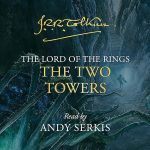
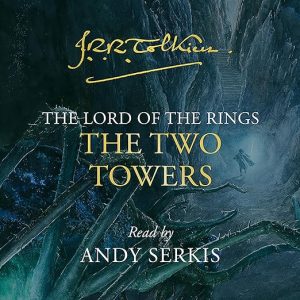
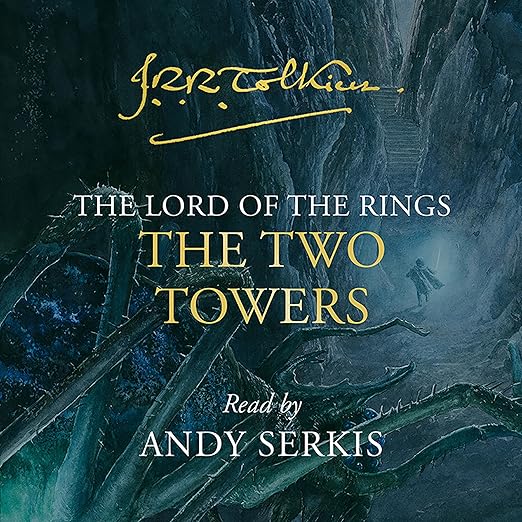
Casting Andy Serkis to read The Two Towers is the kind of decision that looks obvious only after somebody has made it. This is the volume in which the creature following Frodo and Sam down the Anduin becomes a central presence, and handing the book to the actor most closely associated with that role on screen gives the recording a charge no neutral reading could match. HarperCollins knew exactly what they had.
The result is twenty hours and forty-seven minutes of unabridged Tolkien, read with more theatrical commitment than this text usually receives. The 4.8 average on the UK listing is drawn from a small number of ratings, so treat it as an early indication rather than a settled consensus, but it matches my own assessment closely. This is a serious, unhurried, properly acted reading of a book that rewards precisely that treatment.
About the Audiobook
The company of the Ring has been torn apart. Frodo and Sam go on down the great River Anduin by themselves, or very nearly so, since a mysterious creeping figure follows wherever they go. That is the whole of what the publisher will tell you, and it is enough. The Two Towers divides its attention between that small desperate pair and the scattered remainder of the fellowship, and the structural boldness of running two entirely separate narratives in sequence rather than intercutting them still startles.
This volume continues the tale begun in The Fellowship of the Ring and reaches its awesome climax in The Return of the King, so the reading order is fixed and this is very much a middle book. It cannot be started here. What it does better than either of its neighbours is establish the texture of Middle-earth as a place with history, weather and inhabitants who were present long before the plot arrived. The Ent material, the long ride through Rohan and the approach to Mordor are among the finest sustained descriptive passages in twentieth-century fantasy.
This is a brand-new unabridged recording rather than an adaptation, which is worth stating plainly. Nothing is cut, which means the poetry and the long descriptive stretches that some readers skim on the page all arrive in full. That fidelity has a cost in running time, and I regard it as time exceptionally well spent. Serkis is credited by the publisher as a BAFTA award-winning actor, director and author, and all three occupations are faintly audible in how he handles the text.
The Narration
Serkis reads rather than performs for most of the running time, and that restraint is the first thing worth praising. He has a reputation for physical transformation, and the temptation to turn an unabridged classic into a one-man show must have been considerable. He resists it entirely. The narrative voice is warm, deliberate and unaffected, and Tolkien’s prose is allowed to set its own pace.
Then the creeping figure speaks, and the recording changes character completely. Whatever expectations you bring, the performance is more disturbing and more pitiable than a familiar impression would be, because Serkis is working from the text rather than from a screen memory, and the version on the page is stranger and sadder than the one most people carry in their heads. Those scenes alone are reason enough to choose this recording specifically.
Elsewhere the character work is consistently strong without calling attention to itself. The Ents are given a genuine slowness rather than a comic one, the riders of Rohan carry a distinct weight, and Sam is played with a plainness that resists sentiment at every turn. Across nearly twenty-one hours Serkis maintains the whole cast without audible strain, and the verse is delivered as verse rather than skated past, which not every reader of this text has the nerve to attempt.
What Readers Say
The score here rests on only sixteen ratings. That is a small pool, and worth reading as an early signal from one specific edition rather than as a settled judgement on a book of this standing. The written reviews complicate matters further, because most of them are about Tolkien rather than about this recording.
The second part of the Lord of the Rings. Excellently written and with a rising note of tension and risk as the ring travels eastward.
Badman’s five-star note is representative in its brevity. A reviewer writing as Rob M gave five stars and devoted the entire review to Tolkien’s descriptive gift, quoting the passage about the fury of the Ents to illustrate the point and arguing that the poetic quality of the writing is the trilogy’s real achievement. Nat Whilk, also five stars, wrote a long and very entertaining piece about the bewildering array of print editions available, which tells you a great deal about publishing history and nothing whatsoever about the audiobook. My reading of this is that listeners are so confident in the text that it does not occur to them to assess the reading. If you want an evaluation of the narration itself, you will have to rely on a sample or on a critic.
Who Should Listen?
Take this if you want Tolkien complete and uncut, performed by an actor with an unusual claim on the material, and if you have the appetite for twenty hours of dense, slow, magnificently detailed prose. It is also a strong recommendation for anyone who has only ever seen the films and assumes they know the story, because the differences in this volume are substantial.
Anyone who has not read or heard The Fellowship of the Ring first should start there instead. This book begins in the middle of a scene and explains nothing. Listeners who found Tolkien’s pacing difficult on the page should also be honest with themselves, since an unabridged reading accelerates nothing and the long descriptive stretches take exactly as long as they take.
That reader will find this close to definitive, and I would happily give it the whole of a winter.