Clara’s Verdict
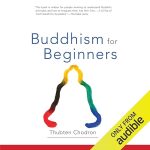
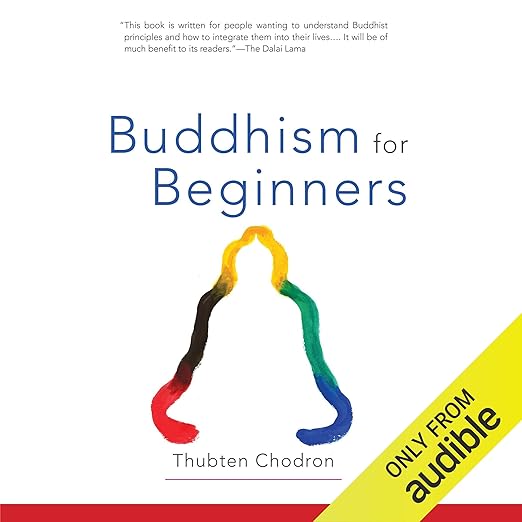
I came to Buddhism for Beginners on a quiet Saturday morning, not in any kind of spiritual crisis but in the more mundane state of feeling as though I had too many tabs open in my mind and no idea how to close them. Thubten Chodron’s book had been on my list for some time, recommended by a colleague who described it as the one Buddhism book she keeps returning to. Having now listened to it in full, I understand what she means. This is not an academic survey, not a philosophical treatise, and emphatically not a lifestyle-branding exercise. It is, as the title says with disarming directness, a guide for beginners – and it is a very good one.
Chodron is an American Tibetan Buddhist nun who studied under the Dalai Lama, and that background is present on every page. She writes from within the tradition, not as an observer of it, and that gives the book a quality of directness that introductions to Buddhism often lack. She does not hedge around the difficult questions or smooth them into palatability. When a student asks whether all phenomena being empty means nothing exists, she does not offer a reassuring non-answer. She engages the question honestly and with evident pleasure. The result is a book that respects the reader’s intelligence.
About the Audiobook
The structure is question and answer throughout, which turns out to be an excellent choice for audio. Each section begins with a question that a real student might actually ask, and Chodron answers it clearly, precisely, and without condescension. The questions range from the foundational – what is the essence of the Buddha’s teachings, what is karma, what is Buddha-nature – to the more immediate and practical: how do I establish a meditation practice, how do I deal with fear, what qualities should I look for in a teacher.
The Q&A format means that the book is genuinely easy to navigate on audio, which is not always the case with spiritual or philosophical texts. You can pause after a section, sit with it, return when ready. There is no compulsive forward momentum that makes you feel you are missing something by stopping. This suits the material perfectly – Buddhism is not a tradition that rewards rushing.
Chodron’s treatment of the more philosophically challenging aspects of Buddhist thought – emptiness, interdependence, the relationship between karma and free will – is careful and honest about the difficulty. She does not pretend that these ideas are easy to grasp, but she does make them approachable. Her wit, which several reviewers mention, is present but never flippant. The 4 hours and 43 minutes feels comfortable at that length: enough to give the major concepts real space, short enough not to overwhelm a newcomer.
The Narration
Gabra Zackman narrates, and she is an exceptionally good fit for this material. Zackman’s voice has a warmth and attentiveness that feels active rather than merely pleasant – you sense that she is genuinely engaged with what Chodron is saying, not simply rendering text into sound. For a book built around dialogue and inquiry, this quality matters enormously. She makes the Q&A format feel like a real conversation rather than a staged exchange, and she handles the passages of Buddhist philosophical terminology with clarity and care. This is a production from Audible Studios, released in December 2014, and the quality of the audio matches the quality of the narration.
What Readers Say
With a rating of 4.5 stars from 975 listeners, Buddhism for Beginners has built a substantial and consistent reputation over more than a decade on the platform. UK reviewers echo each other with notable consistency. One reviewer, who purchased four or five books on Buddhism before finding this one, described it as by far the most concise and perfect for beginners. Another noted that despite the title it is not just for beginners – the question-and-answer format makes it a useful reference for seasoned students as well, and the teachings are clarified rather than simplified. A reviewer called lynnegal caught something important: Chodron has a wit and honesty that resonates truth and wisdom, and feels very relevant today. That combination of rigour and humanity is what sets this apart from the many more generic introductions to the subject.
Who Should Listen?
This is for the genuinely curious listener who wants to understand what Buddhism actually teaches, rather than what a wellness brand thinks it teaches. It is equally good for someone who has been practising meditation for a while and wants to understand the philosophical tradition behind it. It is not for listeners who want a purely secular mindfulness guide with the Buddhist elements stripped out – Chodron writes within a full religious and philosophical framework and she does not apologise for it. But if you are open to that encounter, this is one of the best places to start.