Clara’s Verdict
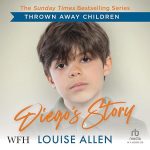
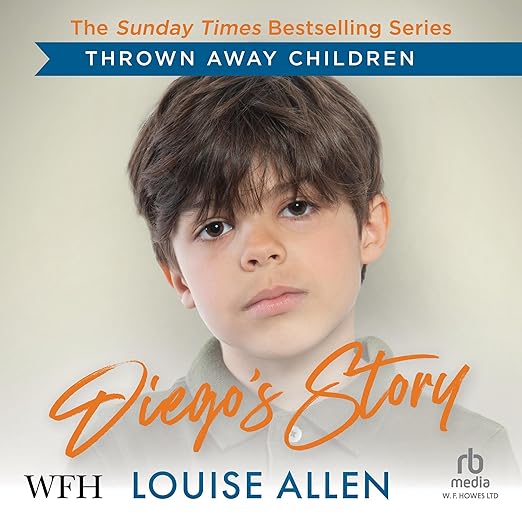
Louise Allen’s Thrown Away Children series occupies a specific and important space in British non-fiction: memoirs of foster care that don’t flinch from the realities of the children who pass through the system, written by a carer who has spent decades in the work. Diego’s Story is the thirteenth instalment, and it addresses County Lines – the exploitation of vulnerable young people by drug gangs – with the directness the subject demands. Melanie Crawley’s narration is sensitive and controlled, and the story’s emotional weight is handled with the care it deserves. This is not comfortable listening, but it is important and, in its own way, hopeful.
About the Audiobook
Diego is fourteen years old. He lives in desperate poverty with an absent father, an alcoholic mother, and younger siblings who depend on him for everything. He has been invisible to the institutions that should have noticed him – until County Lines gang members do. They can see exactly what Diego is: vulnerable, isolated, desperate, and therefore exploitable. Entrapped, used, and witness to terrible violence, Diego eventually escapes – and is placed with Louise Allen and her family.
What follows is the familiar Thrown Away Children structure: the arrival of a traumatised child, the gradual building of trust, the negotiation of a household that must somehow hold both its existing family and this new, damaged young person. Allen writes about fostering with authority and without sentimentality, and she’s equally frank about the danger that County Lines gangs can represent to the households they follow children into. The series has consistently avoided the trap of easy resolution, and this entry is no exception. Running to 6 hours and 40 minutes, published by W. F. Howes Ltd in March 2026.
The Narration
Melanie Crawley navigates the emotional range of the material with considerable skill. The story requires a narrator who can handle both the quiet warmth of Allen’s family scenes and the considerably darker material surrounding Diego’s exploitation and escape, and Crawley moves between these registers without jarring. She captures Allen’s authorial voice – direct, compassionate, occasionally indignant – and gives Diego’s perspective the care it deserves. For a subject matter as serious as this, the narration is exactly what the material requires: present, unflinching, human.
What Readers Say
The audiobook carries a 4.2-star rating. An avid reader from the UK described reading it “in one go, captivated by the story,” finding the County Lines elements particularly resonant given their local prevalence. MRS RL FOWKES praised Allen’s characteristic refusal to “sugar coat things” and her commitment to the children in her care, adding that the book produced genuine tears. Shona Scott, who has listened to the entire Thrown Away Children series in audio, called it “excellent” without qualification and expressed eagerness for the next instalment. One review concerned delivery rather than content, which can be disregarded as irrelevant to the audio edition.
Who Should Listen?
For anyone who wants to understand what County Lines exploitation actually looks like from inside the life of a child caught up in it – and what it takes, institutionally and personally, to help that child find safety. Readers of the earlier Thrown Away Children books will come here naturally. Those new to the series can enter here, though the accumulated emotional context of earlier entries enriches the experience. Essential reading for anyone involved in social care, education, or youth work. Available on Audible UK.