Clara’s Verdict
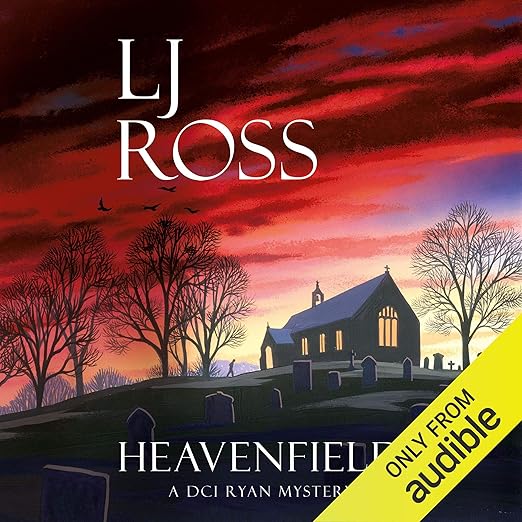
A body turns up at the remote church of Heavenfield, and by the copy’s own account DCI Ryan is “the only other person for miles around”. That is the premise of Heavenfield, and it is a very good one: the closed circle of classic detective fiction, with the detective standing inside it as the obvious suspect.
Before I go further, the practical advice. This is the third of the DCI Ryan Mysteries and it does not behave like a standalone. The description opens with Ryan “Already suspended from Northumbria CID”, a state of affairs it makes no attempt to explain, and one reviewer puts the matter bluntly: “I strongly advise that you read the other two books first”. I agree entirely.
Taken in its proper place, this is an efficient and atmospheric audiobook of eight hours and eighteen minutes. It is not literary crime and has no ambition to be. It is a puzzle with a landscape attached, and the landscape is doing more work than usual.
About the Audiobook
The police, the copy tells us, have “no weapon, no motive and no other suspects”. Ryan is suspended, under suspicion and fighting to clear his name, and then the situation escalates: “prominent members of the mysterious Circle begin to die”. Somebody intends Ryan’s name to be “next on the coroner’s list”, and survival depends on unmasking a killer who, in the book’s own phrase, “looks just like everybody else”.
What lifts the novel above its mechanics is the setting. LJ Ross writes Northumbria as a genuine presence rather than as scenery, and the publisher’s promise of a “spectacular Northumbrian landscape” is doing real work. Heavenfield itself, an isolated church with nothing around it for miles, is precisely the sort of location that makes the closed-circle structure feel plausible instead of contrived. A body in an empty landscape raises questions that a body in a city never even prompts.
Audible Studios released it on 3 May 2016 and it runs eight hours and eighteen minutes, short enough to finish inside a working week. This is a whodunnit with a returning ensemble around the investigation and a continuing personal story running underneath it, closer in temperature to a comfortable television mystery than to the bleaker end of the genre.
The Narration
The copy is explicit that the police have no other suspects, which throws the weight of this book onto character rather than onto a line-up. That makes it a specific test for whoever reads it, and Jonathan Keeble is credited with the reading.
In print you can turn back a page and check who said what. In audio you cannot, so the narrator carries the burden of keeping a returning ensemble distinct, and of making the members of the Circle individual enough that their deaths land as more than plot machinery. A series this far in has accumulated a cast that new listeners meet cold and returning listeners expect to recognise instantly, and one reading has to serve both.
The second demand is regional. This is a book rooted in Northumbria, and a reading that flattens everyone into received pronunciation loses a good deal of what makes the series feel tied to its place. A reading that overplays the accent loses something else again. Holding that balance is the whole job.
Nothing in the review text available here mentions the narration, the voices or the audio. On that, the recording has to speak for itself, because the readers have not.
What Readers Say
Nearly forty-five thousand readers have rated this, and the average of 4.4 suggests a book that satisfies its intended audience without trying to convert outsiders. That is a perfectly respectable thing for a mid-series crime novel to be. Every response here comes from a reader, not a listener.
The four-star review from Stephen Clynes is the most detailed and the most useful. Beyond the advice to read the first two books first, it confirms what carries across from them: “Same characters, more romance, further character development”, and the return of the Circle. Its overall judgement is that each book including this one is a good four-star read, and that “the books get a little better each time”, which is worth knowing before you decide where to start.
Both five-star reviews reach for the same phrase. One praises the “twists and turns in the plot line to keep you wondering” who is responsible, and reports having already read two others with the rest still ahead. S Leeson describes “twists and turns right to the very end, just as a true crime thriller should be”. That tells you less about this book than about the shelf it sits on, but it does confirm the novel delivers what its readers came for.
Who Should Listen?
If you are already two books into the DCI Ryan Mysteries, this is your next stop and you need no further persuasion from me. It will also suit readers who like British crime with a strong sense of place, and anyone who enjoys a puzzle plot that respects the classical rules while moving at a modern pace. The detective-under-suspicion setup is an old device, and the remoteness of the location gives this one more room than most.
Do not start here. That is the firmest thing I can say about this audiobook. The suspension, the Circle and the relationships all arrive pre-loaded, and beginning at book three costs you most of what makes them land. Approach with caution too if you want forensic realism or moral bleakness, because this series keeps its darkness on the plot side rather than in the texture.